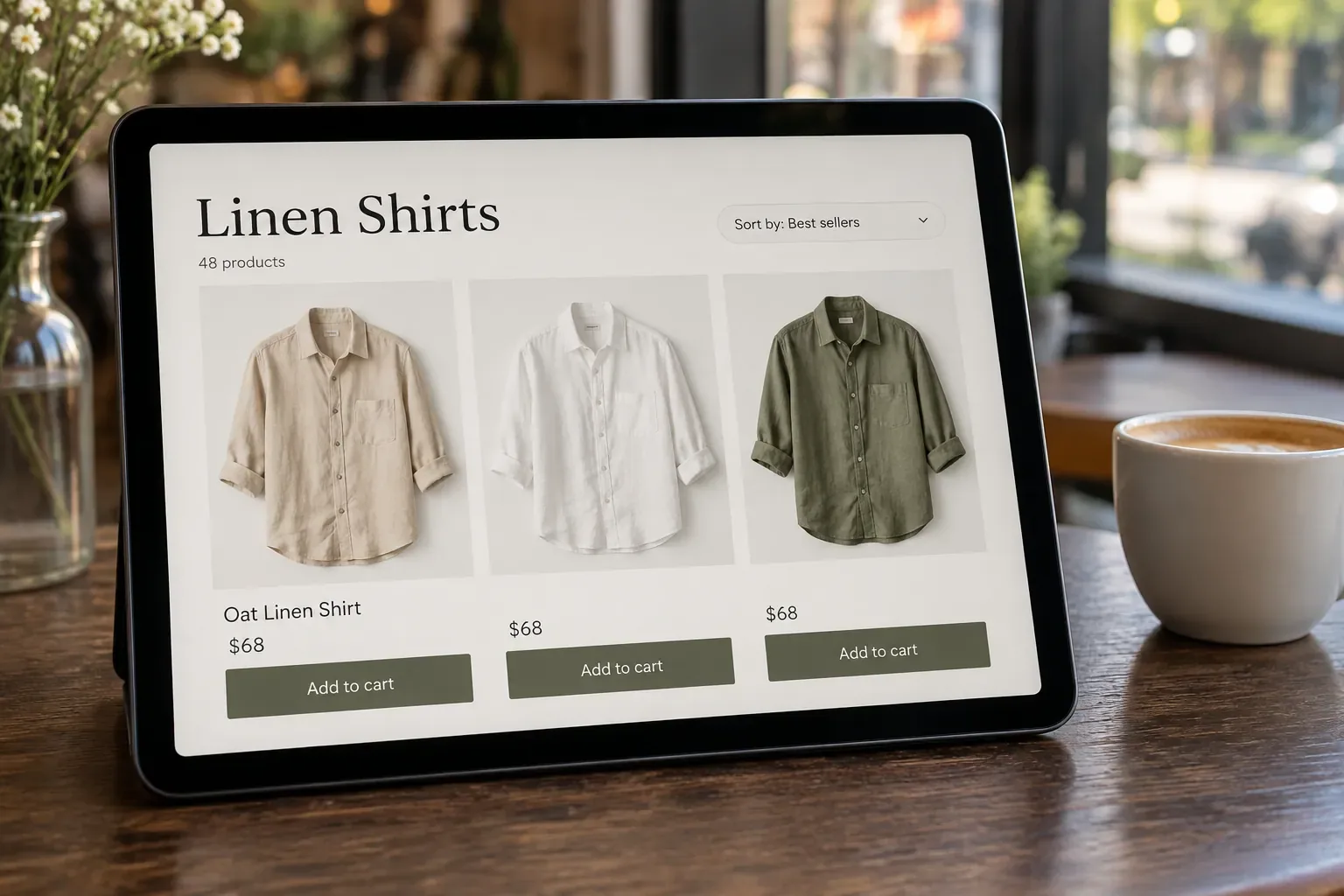
- Category pages bring most of a store's search traffic, because they match broad shopping searches.
- Each category needs its own search phrase, a clear title and a short text that helps buyers choose.
- Filters can create thousands of near-duplicate URLs. Decide which filter pages deserve indexing and keep the rest out.
- Product pages need unique descriptions, Product schema and a plan for out-of-stock items.
Contents 8 sections
- How do you choose keywords for an online store?
- How do you optimize category pages?
- How do you stop filters from creating duplicate pages?
- How do you optimize product pages?
- How should a store handle out-of-stock and discontinued products?
- How do internal links help a store rank?
- What technical basics does an online store need?
- Should an online store have a blog?
Ecommerce SEO is the work of getting an online store's category and product pages to rank in Google for the searches buyers make. Category pages carry most of the traffic, because they match searches such as "women's running shoes" or "cast iron skillets". Product pages win searches for a specific model or brand. The technical side, mostly filters, variants and duplicate URLs, decides whether Google can make sense of the store at all.
How do you choose keywords for an online store?
Map one main search phrase to each category and each important subcategory. Start from how buyers describe what they want, not from your internal names. A category called "Footwear Collection 2" should be "Women's Wide Fit Shoes" if that is what people search for.
- Category searches. Product type plus a key attribute, such as "wide fit women's sneakers" or "stainless steel water bottles".
- Product searches. Brand and model, such as "Makita XFD131", often with a model number.
- Question searches. "How to choose a mattress for back pain" fit guides that link to categories.
Google Search Console shows which searches already bring impressions. Google Ads Keyword Planner and the search suggestions in Google show what else people type.
How do you optimize category pages?
- Title and H1. The category search phrase, written naturally, such as "Women's Wide Fit Sneakers".
- Short intro above the grid. One or two sentences on what the category includes and who it is for.
- Helpful text below the grid. How to choose, the differences between types and answers to common questions. A few hundred words that a buyer would actually read.
- Subcategory links. Links to narrower categories at the top help both buyers and Google understand the structure.
- Enough products. A category with two products is a weak page. Merge thin categories or fill them.
How do you stop filters from creating duplicate pages?
Filters for size, color, price and brand create a new URL for each combination. A store with a few hundred products can produce tens of thousands of filter URLs. Google wastes time crawling them, and many near-identical pages compete with the main category.
- Choose indexable filter pages. Some combinations match real searches, such as "black leather boots". Turn those into proper landing pages with a clean URL, their own title, H1 and text.
- Keep the rest out of the index. Point other filter URLs to the main category with a canonical tag, or add noindex to them.
- Limit crawling of endless combinations. Avoid crawlable links for multi-filter combinations and sort orders, so Googlebot does not follow them.
- Keep pagination crawlable. Page 2, 3 and so on should be normal links, so Google reaches all products. Each page can have a self-referencing canonical.
How do you optimize product pages?
- Unique descriptions. The manufacturer's text appears on many sites. Write your own, with the details buyers ask about.
- Clear titles. Brand, product type, model and key attributes, the way people search.
- Product schema. Name, image, brand, price, currency, availability, GTIN and aggregate rating, so Google can show price, stock and stars.
- Variants handled consistently. One page per product with options, unless people search for each variant by name, such as a phone color.
- Image alt text. A short description of each photo, such as "black leather Chelsea boot side view".
We describe the buyer side of product pages in product page best practices. Most of what helps buyers decide also helps the page rank.
How should a store handle out-of-stock and discontinued products?
Do not delete a product page that ranks just because the item is out of stock. Keep it live, mark it out of stock in the page and in Product schema, and show similar products. When a product is discontinued for good, redirect its page to the closest replacement or the category. Return a 404 only for pages with no traffic and no links.
How do internal links help a store rank?
Breadcrumbs with BreadcrumbList schema show the path from the home page to each product. Links from the home page and menus tell Google which categories matter most. Related products, "shop the look" blocks and links from buying guides to categories spread authority to deeper pages. A product that can only be reached through five filter clicks is hard for Google to find.
What technical basics does an online store need?
- An XML sitemap with categories and in-stock products, updated automatically.
- Fast product and category templates on mobile, especially image-heavy grids.
- One version of each URL, with HTTPS, without session IDs or tracking parameters in indexed URLs.
- A product feed in Google Merchant Center for free listings in the Shopping tab.
- Correct redirects whenever categories or products are renamed.
Should an online store have a blog?
Yes, if the articles help people choose and link to the products. Buying guides, comparisons, size and care guides bring searches that category pages cannot rank for, and they are often what AI assistants quote when people ask for recommendations. A blog that posts news about the store helps little.
Our ecommerce SEO covers category and product copy, filter and duplicate handling, schema and monthly reporting as part of SEO and GEO management at $100/mo.
Questions and answers
Should category pages have text?
Yes, a short block that helps buyers choose, such as what to look for, how products differ and which one suits whom. Put a sentence or two above the product grid and the longer part below it, so products stay visible.
Should I index filter pages?
Only the ones people search for, such as a color or material combined with the category, like black leather boots. Give those their own title and text. Keep other filter combinations out of the index with canonical tags or noindex.
What should I do with discontinued products?
If a close replacement exists, redirect the old product page to it with a 301 redirect. If the product will return, keep the page live and mark it out of stock. If neither applies and the page has no links or traffic, it can return a 404 or 410.
Thank you. Share the article with someone who needs it.
Tell us what was missing in the article and we will reply. Ask a question