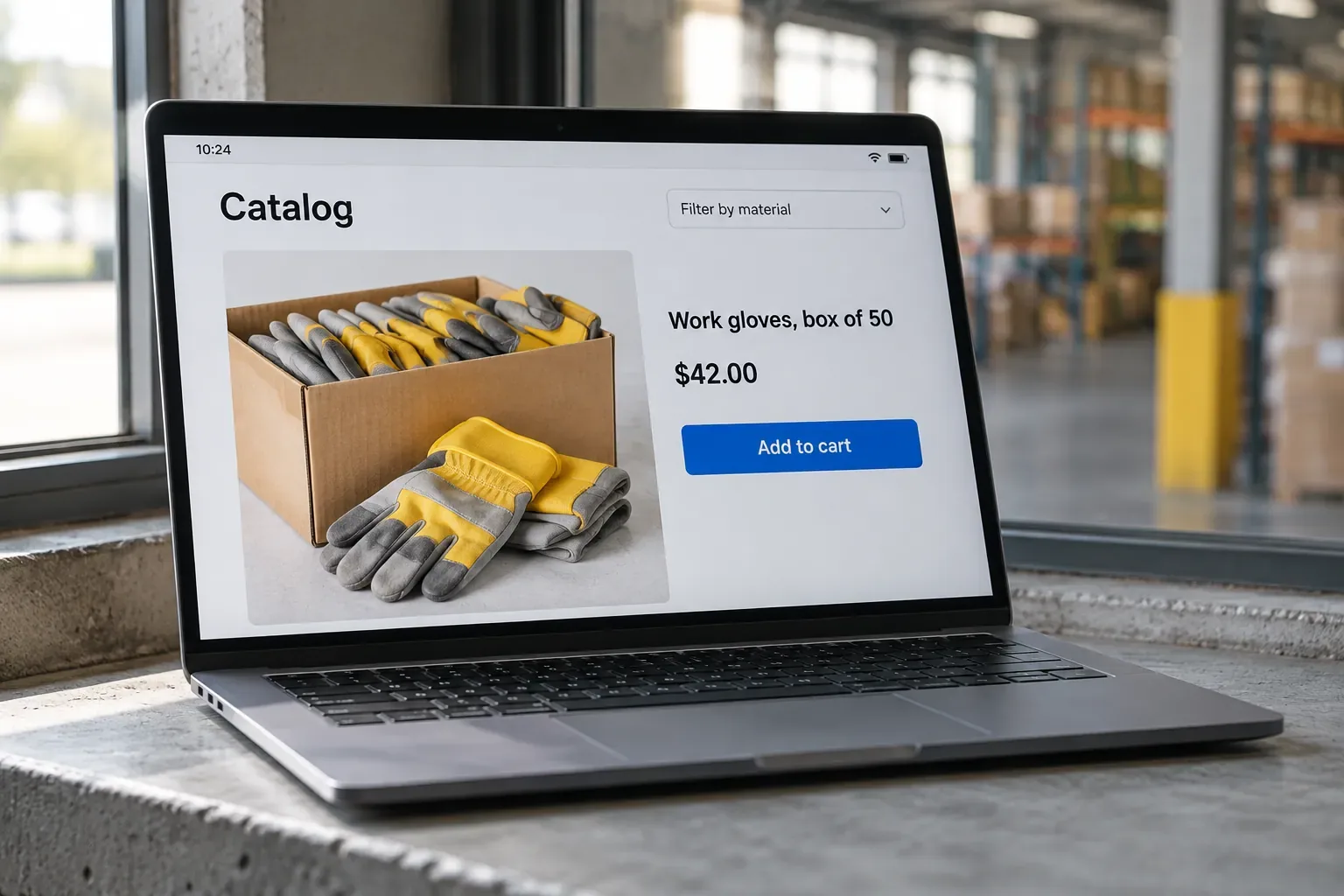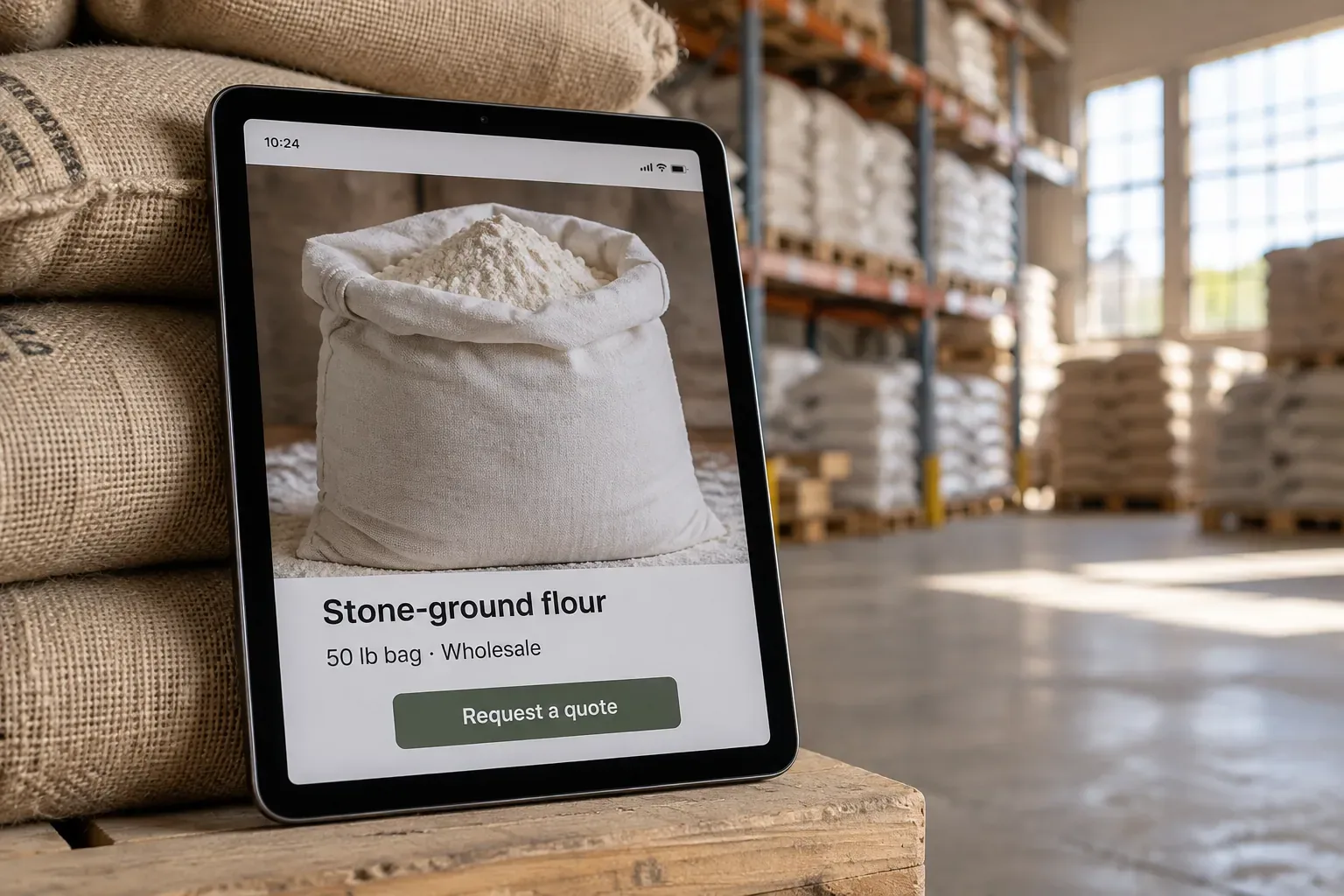
- Pick a catalog with a quote form if prices vary by volume, region or buyer, and an online store if prices are fixed.
- The right model follows your pricing, not your industry.
- Many manufacturers and distributors need both, so a hybrid site can show prices for stock items and quotes for bulk orders.
- A quote form should ask for product, quantity, unit, delivery ZIP code and specs, and allow a file upload.
- A store with prices can run Google Shopping ads, which a catalog without prices cannot use.
Contents 7 sections
- Which model fits which manufacturer or wholesaler
- Quote catalog and online store compared side by side
- When a catalog with a quote request form works better
- When an online store with prices works better
- Can one site show prices for stock items and quotes for bulk orders
- How much each option costs with us
- Mistakes manufacturers make when choosing a B2B site
Choose a catalog with a quote request form if your prices depend on volume, region or the buyer, if you set minimum order quantities (MOQ), or if products are made to spec and deals take weeks. Choose an online store with prices if your price list is fixed, your products are standard and customers reorder the same items in small batches. Many manufacturers and distributors need both on one site.
Which model fits which manufacturer or wholesaler
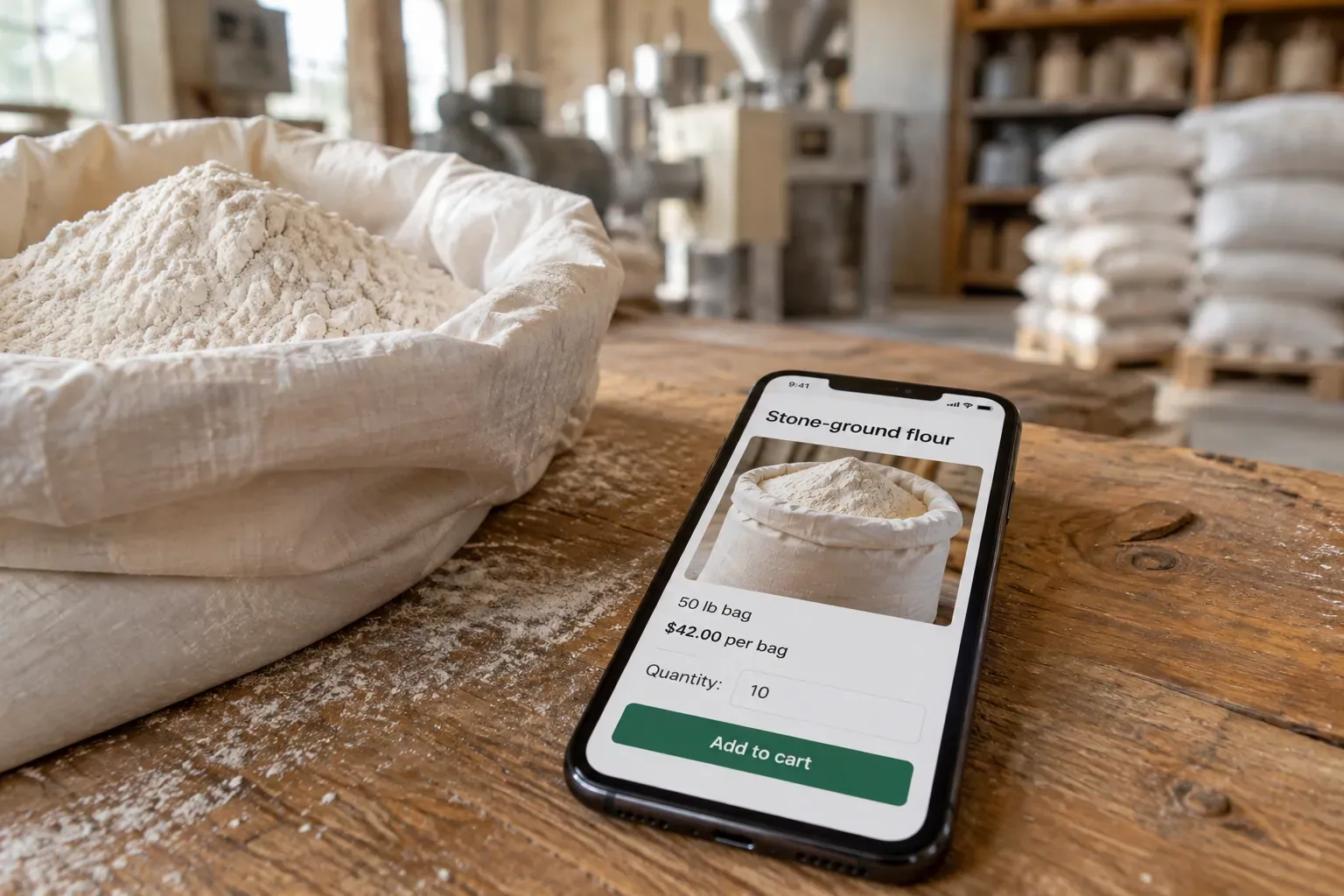
The right model follows your pricing, not your industry. A flour mill selling 50 lb bags at a list price and a flour mill selling custom blends by the truckload need different sites.
- Fixed prices, small orders, repeat buying lead to an online store with a cart and checkout.
- Negotiated prices, MOQ, custom specs, long sales cycle lead to a catalog with a quote request form.
- A mix of stock items and bulk deals leads to a hybrid site with a cart for standard items and a quote form for volume orders.
Quote catalog and online store compared side by side
| Criterion | Catalog with a quote request form | Online store with prices |
|---|---|---|
| Prices on the site | Hidden or "from" prices | Full prices, tiers if needed |
| Who places the order | Buyer sends a request, manager confirms | Buyer checks out alone |
| Online payment | Usually by invoice after the quote | Stripe, PayPal, Square, Shopify Payments |
| Shipping | Quoted per order, often freight | UPS, FedEx, USPS rates via ShipStation or Shippo |
| Manager's role | Qualifies the lead, prices, negotiates | Handles exceptions and large accounts |
| What reaches the CRM | Request with product, volume, specs, contacts | Order, customer, order value |
| How to measure results | Cost per quote request, request-to-deal rate | Cost per purchase, revenue by channel |
| Cost with us | Catalog website from $350, exact price in the estimate | Online store from $500, exact price in the estimate |
Either model can include an SEO structure for category and product pages. Wholesale buyers search by product name, grade, size and specification, so each product needs its own page with specs, documents and clear headings.
Tracking can be added to either model. Server-side tracking and the Conversions API can send quote requests and purchases to Google and Meta even when the browser blocks pixels, and reports can show spend, leads and cost per lead for each channel.
When a catalog with a quote request form works better
A quote catalog fits when a public price would be wrong for most buyers. Typical signs:
- The price changes with volume, delivery region, packaging or the customer's contract.
- Products are made to order, cut to size or built to the buyer's drawings.
- Buyers need a spec sheet, a certificate, a sample or advice before they commit.
- One deal is large enough that a manager should talk to the buyer anyway.
In this model the form does the selling work. It should ask for product, quantity, unit, delivery ZIP code and specs, and allow a file upload. A manager then gets a request they can price at once, instead of an email that says "send me your prices."
When an online store with prices works better
A store fits when your managers spend their day retyping the same orders. Typical signs:
- The price list is stable and the same for most buyers, or set in a few clear tiers.
- Customers reorder the same SKUs every week or month.
- Orders are small enough that a phone or email round trip costs more than the margin.
- Products ship by parcel carriers, so shipping can be calculated at checkout.
Here the buyer pays by card through Stripe or PayPal, the label is created in ShipStation or Shippo, and the manager only steps in for exceptions. A store with prices can also run Google Shopping ads, which a catalog without prices cannot use. Volume-based price tiers on Shopify or WooCommerce are usually set up through apps or integrations, and we list their scope and cost in your estimate.
Can one site show prices for stock items and quotes for bulk orders
Yes, and for many B2B companies the hybrid is the best fit. Two common setups:
- Catalog with a cart and request forms. Each product page shows specs and, where it makes sense, a price. Buyers collect products in the cart and send them as one request, which a manager then prices and confirms.
- Store with a separate wholesale form. Standard items sell at listed prices, and each product page has a "Request bulk pricing" form for quantities above your MOQ.
A customer account helps regular buyers see their order history and reorder in a few clicks. On WordPress you edit texts, photos and prices yourself, so a price list update does not require a developer.
How much each option costs with us
| Option | Price | Launch | What it can include |
|---|---|---|---|
| Catalog website | From $350 | 14-21 days | Product pages with specs, quote request forms |
| Starter plan (catalog or store up to 100 products) | $500 | 14 days | Cart, request forms or checkout |
| Business plan (up to 1,000 products) | $700 | 21-28 days | CRM integration, installment payments, Google Shopping feeds |
| Pro plan (large catalogs) | From $1,100 | 35+ days | Supplier imports, multiple languages |
The final price depends on the number of products, the forms, the integrations and the design. Development is paid in two parts, 50% before work starts and 50% before launch, and we give a lifetime guarantee on fixing bugs in our work on bugs in our work, so if a form, cart or price display we built stops working as delivered, we fix it at no charge. New features, plugin updates and changes in third-party APIs fall under website support (from $50/mo).
To get the exact price for your catalog or store, send us a short description through the contact page.
Mistakes manufacturers make when choosing a B2B site
- Hiding every price. If some items sell at a fixed price, hiding them sends buyers to a competitor who shows them. Show prices on stock items and keep quotes for volume and custom work.
- A cart on made-to-order products. A buyer who pays for a custom item at a placeholder price creates a refund and an awkward call. Use a quote form there.
- A form with only name and email. Without quantity, unit, specs and delivery location, the manager has to write back before quoting, and the lead goes cold.
- Requests going to a shared inbox. A shared inbox makes it harder to track each request and the ad or search query behind it. A CRM can help with both. Connect the form to HubSpot, Pipedrive, Zoho CRM or Salesforce so each request becomes a deal with its source.
Questions and answers
Should a manufacturer show prices on its website or use a request a quote form?
Show prices for standard items with a stable price list and use a quote request form for products priced by volume, region, contract or custom specs. Many manufacturers may benefit from both. Public prices let buyers order small batches alone, while the quote form collects quantity, specs and delivery location so a manager can price large deals quickly.
Is a catalog website or an online store better for a wholesale business in the US?
An online store is better when wholesale prices are fixed and customers reorder the same items in parcel-sized shipments. A catalog with quote requests is better when you set MOQs, ship freight or negotiate each deal. With us, a catalog website costs from $350 and an online store from $500, and the exact price for either option comes in a written estimate.
Can one website show retail prices to some buyers and quote requests for bulk orders?
Yes. A hybrid site shows listed prices and a cart for standard quantities and adds a bulk pricing form on each product page for orders above your minimum. A customer account lets regular buyers reorder quickly. Separate price levels for approved wholesale accounts are usually added through apps or integrations, and their scope and cost are set in the estimate.
How much does a B2B catalog website with a quote request form cost?
At Bravo Digital, a catalog website with quote request forms costs from $350, and a catalog of up to 100 products with a cart for requests fits the Starter plan at $500. The final price comes in a written estimate. It depends on the number of products, the form fields, a cart for requests, CRM integration, supplier imports and the design. Send your product list and requirements through the Get a quote form for an exact figure.
Can I sell wholesale online with Shopify or WooCommerce if my prices depend on order volume?
Yes. Shopify and WooCommerce support quantity-based price tiers through apps, so buyers see a lower unit price as order size grows. When prices depend on the specific customer or contract, add a quote request form instead of a public price. Many wholesalers use tiers for stock items and quotes for custom orders.
How do I get quote requests from my website into HubSpot or another CRM?
Connect the quote form to your CRM so each request becomes a contact and a deal with product, quantity, specs and traffic source. Forms can usually be connected to CRMs such as HubSpot, Pipedrive, Zoho CRM or Salesforce, and accounting tools such as QuickBooks or Xero. We confirm which connection fits your setup and its cost in the estimate. If you are deciding between a catalog, a store or a hybrid, describe your products and pricing in the Get a quote form on our contact page, to request an estimate.
Thank you. Share the article with someone who needs it.
Tell us what was missing in the article and we will reply. Ask a question