- A landing page is enough when your ads promote one service, product or offer.
- A full website fits better when you sell several services, run a catalog or store, or need separate pages for each ad group.
- The deciding factor is how many separate offers your ads point to, not how big your business is.
- Ads work better when they lead to a page about exactly what the ad promised, not to the homepage.
- Browser pixels miss some leads, so server-side tracking and the Conversions API can pass conversions to Meta and Google.
Contents 7 sections
- When Is One Landing Page Enough for Ads?
- When Do Your Ads Need a Full Website?
- How Do Landing Pages and Full Websites Compare on Cost and Timeline?
- Why Shouldn't Ads Point to Your Homepage?
- What Does the Page Need Before the First Ad Goes Live?
- How Do You Track Leads When Browsers Block Pixels?
- How Do We Build the Page and Launch the Ads?
A landing page is enough when your ads promote one service, one product or one offer. A full website is the better destination when you sell several services, run a catalog or store, or split your campaigns into ad groups that each need their own page. The deciding factor is how many separate offers your ads point to, not how big your business is.
When Is One Landing Page Enough for Ads?
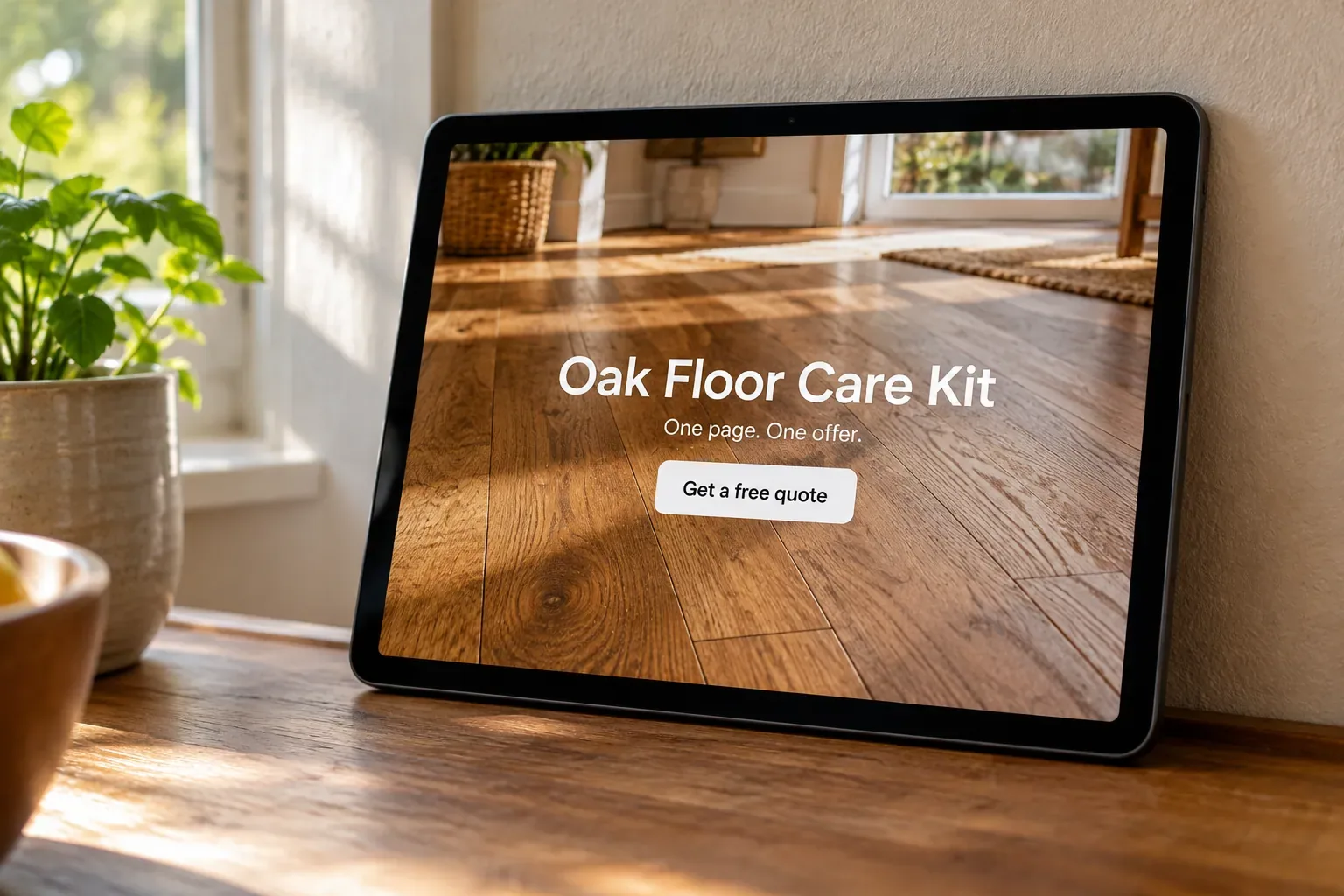
One landing page works when every ad sends people toward the same action. A clinic promoting first visits, an online course with a single program or a manufacturer selling one product fits this case. The visitor arrives, reads about one offer and fills in one form.
A landing page also suits a test. If you want to check demand for a new service before building more, one page and one campaign show whether people respond. Because we build every page with analytics and SEO structure from launch, you can later add pages and grow it into a full site. A landing page costs from $250 and launches in 5-7 days.
When Do Your Ads Need a Full Website?
A full website makes sense when your campaigns cover several services or products and visitors may want to compare them or browse further. A plumber running separate ads for drain cleaning, water heaters and emergency repairs needs a page for each one. An ad group for water heaters should not land on a page that mostly talks about drains. If the offers are unrelated and each campaign stands alone, several separate landing pages can also work, and they can later be joined into one site.
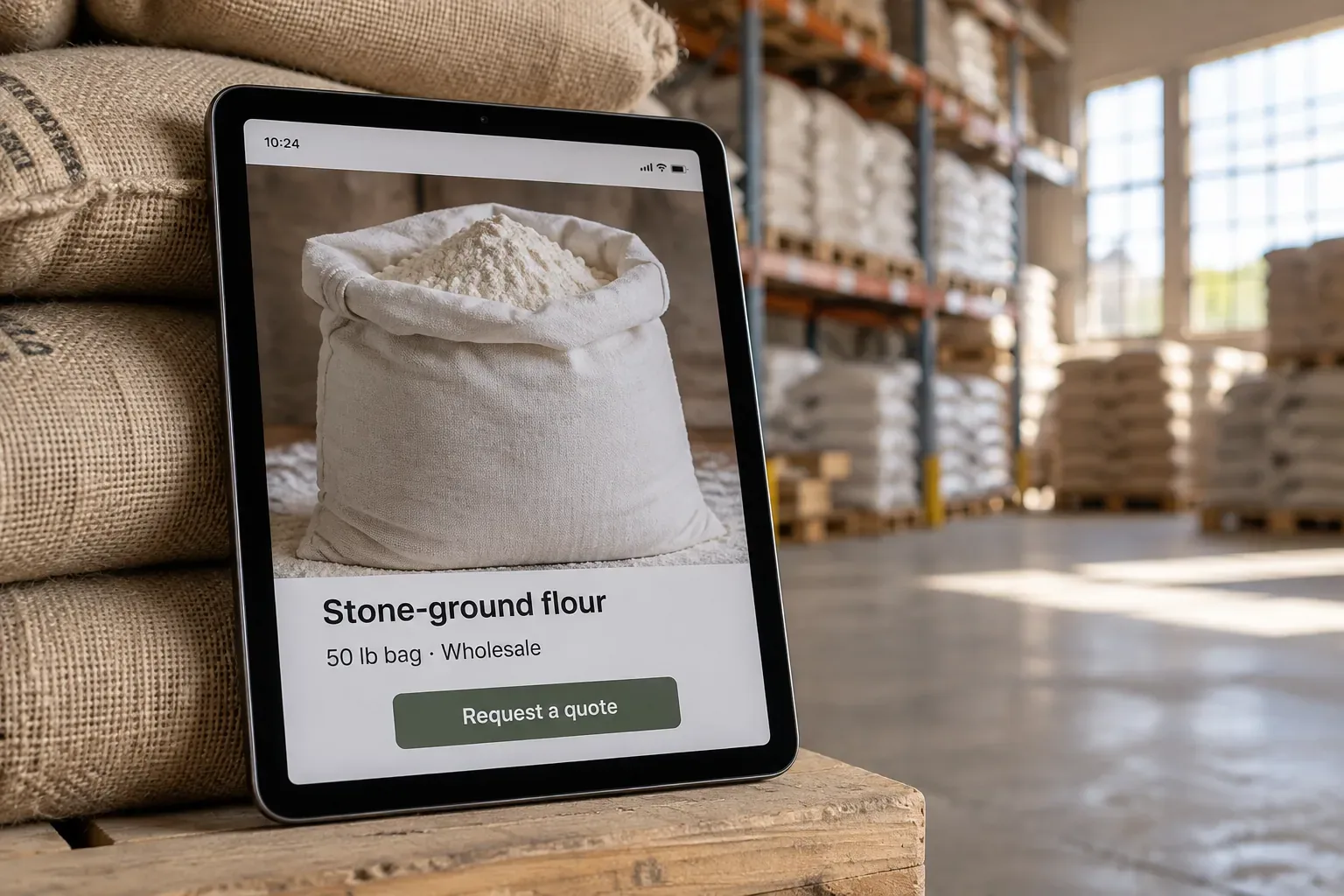
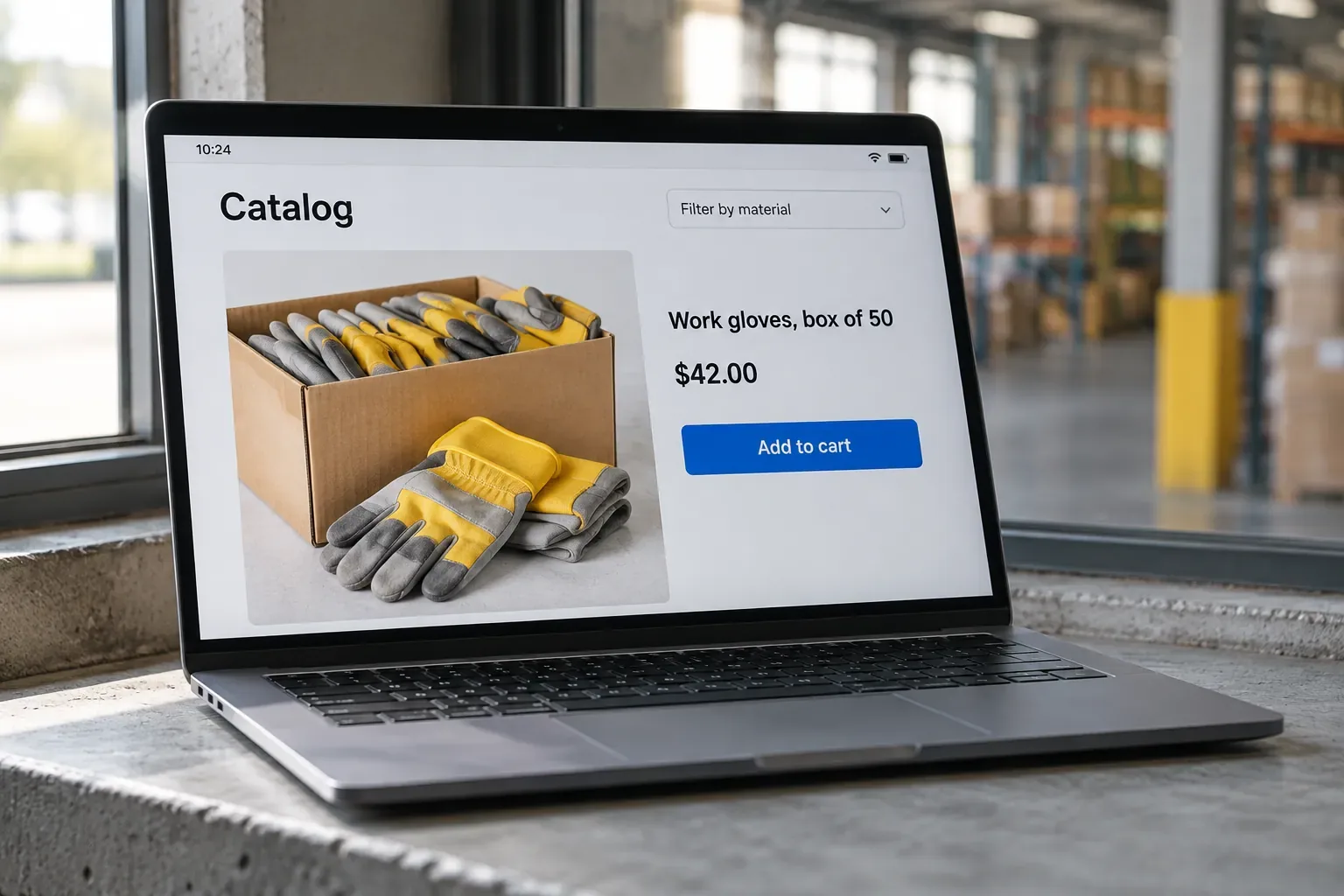
Catalogs and stores need different structures. A manufacturer or wholesaler with dozens of products usually needs a catalog website with product pages and a price request form, without a cart. A shop selling through Google Shopping and Meta catalog ads needs product pages, a cart and checkout with Stripe, PayPal or Shopify Payments. A single page cannot carry either structure. A catalog website costs from $350, and an online store costs from $500.
How Do Landing Pages and Full Websites Compare on Cost and Timeline?
A landing page costs from $250 and a full company website costs from $350. These are starting points, and we confirm the exact amount after you complete a short written brief.
| Option | Price | Timeline | What's included | Best for |
|---|---|---|---|---|
| Landing page | From $250 | 5-7 days | One page, one offer, one form | One service, product or offer |
| Small business website | From $200 | 7-10 days | Several service pages | Local services with a few offerings |
| Catalog website | From $350 | 14-21 days | Product pages with price requests | Manufacturers and wholesalers |
| Online store | From $500 | 14 days on the Starter plan | Product pages, cart and checkout | Selling products online |
Each option includes analytics and an SEO structure in place at launch. The final cost depends on the number of pages, forms, integrations with tools like HubSpot or Pipedrive, and how much content you supply.
To get the exact price for your project, send a request through our contact page.
Why Shouldn't Ads Point to Your Homepage?
Send the click to a page about exactly what the ad promised. A homepage talks about the whole business, so the visitor has to search for the service they clicked on.
Someone who clicks an ad for emergency pipe repair expects to see that service, its price and a way to request it. Someone who clicks an ad for water heater installation expects a different page. Each ad group gets its own page with matching headline, offer and form.
Google Ads also rates the relevance of the landing page when it calculates Quality Score. A page that matches the keyword and ad text helps that rating, while a general homepage usually does not. With three services in your ads, plan three matching pages.
What Does the Page Need Before the First Ad Goes Live?
Check these points before you spend the first dollar on clicks.
- Form or booking on the first screen. People who click an ad usually arrive with a specific need, so the way to act should be visible right away.
- A short form. Ask only for what you need to reply, such as a name and phone number or email.
- Prices on the page. A price list or starting price lets visitors see the cost before they contact you.
- Answers to common questions. List the details people usually ask about, so they do not have to message you first.
- Lead tracking. Every form submission and purchase must reach GA4 and your ad accounts as a conversion.
- Speed on phones. Many people see Instagram and Facebook ads on a phone, so check how the page loads on mobile with PageSpeed and Core Web Vitals.
If you already have a site that loads slowly, we can speed it up without a redesign. Speed optimization costs from $150 and takes 3-7 days.
How Do You Track Leads When Browsers Block Pixels?
Tracking starts with GA4 and Google Tag Manager, where form submissions, bookings and purchases have to be set up as events and marked as conversions.
Browser pixels alone miss part of your leads. Ad blockers, Safari privacy settings and iOS restrictions stop the Meta pixel and Google tags from firing, so your ad accounts see fewer conversions than you actually get. Server-side tracking and the Conversions API can pass leads and purchases to Meta and Google from the server when the browser blocks the pixel. What gets passed depends on how the integration is set up and on user consent, so some gaps can remain.
With more accurate data, Google Ads and Meta have better signals about people who submit forms, and your reports get closer to the real cost of each lead. GA4 and Google Tag Manager setup costs from $150, and server-side tracking costs from $200.
How Do We Build the Page and Launch the Ads?
We build the page and set up the ads as one project, so leads are visible by channel from the first day. Reports show spend, leads, sales and cost per lead for Google, Meta and other channels side by side.
We work in writing. You fill in a written questionnaire, we send the design as a link for your comments, and training comes as written instructions. Development is paid in two parts, 50% before work starts and 50% before launch. We give a lifetime guarantee on fixing bugs in our work in our work. New features, updates and changes in third-party APIs fall under website support, which costs from $50/mo. Google Ads and Meta Ads management each cost $100/mo, and campaign setup takes 3-5 days.
Questions and answers
Do I need a website or just a landing page to run ads?
A landing page is enough if all your ads promote one service, product or offer. You need a full website when campaigns cover several services, a product catalog or an online store. At Bravo Digital websites start from $200, with the exact price set after a written brief.
What is a landing page in advertising?
A landing page is a single page built for one offer that people reach after clicking an ad. It repeats the ad's promise, shows prices and key details, answers common questions and places a form or booking button on the first screen. Its only goal is one action, such as a request, booking or purchase.
Can I build a landing page without a website?
Yes, a landing page can work on its own domain without any other site. Both the page and the ads must follow the policies of the platform you advertise on, such as Google Ads or Meta. Conversion tracking is not a condition for approval, but you need it to see which ads bring leads. We build landing pages with analytics and SEO structure, so you can grow them into a full site later.
How do I create a landing page for my existing website?
Add a new page on your current domain, for example yoursite.com/water-heater-repair, built around one service from your ads. Put a short form on the first screen, list prices, answer common questions and connect GA4 and Google Tag Manager. On WordPress you can then edit texts, photos and prices yourself.
Should Google Ads send traffic to my homepage or a landing page?
Google Ads should send traffic to a landing page that matches the ad group, not to your homepage. A homepage covers the whole business, so visitors hunt for the service they clicked on. A matching page also supports the landing page relevance part of Quality Score. For several services, build one page per ad group.
How much does a landing page cost compared to a full website?
At Bravo Digital websites, including landing pages, start from $200. A landing page usually costs less than a full website because it has one page, one offer and one form. A full site or store adds more pages and integrations. We confirm the exact amount after you complete a short written brief. To plan your page and ads together, send us your request through the contact page.
Thank you. Share the article with someone who needs it.
Tell us what was missing in the article and we will reply. Ask a question