A complicated product route
To bring in goods from abroad, a company has to find and vet a manufacturer, arrange shipping and clear customs. A company doing this for the first time does not know where to start and postpones its first shipment.
Websites, online stores, apps, integrations and support
Google Ads, Instagram and Facebook, Microsoft Ads, TikTok, ChatGPT and marketplaces
Google Search, Google Maps and answers in ChatGPT, Gemini and Google AI
Instagram and TikTok management, Reels and design
GA4, Google Tag Manager, Conversions API and reports
Chatbots, AI agents, workflow automation and CRM
Email campaigns and automated email sequences
Marketing strategy and a free website audit
We built a landing page for Invest Balans. The company imports consumer goods on request and consults businesses, so it hears from buyers of shipments, from companies that need analytics and from manufacturers looking for distribution. The site had to show that Invest Balans takes care of finding the supplier and clearing customs, and give each of these visitors their own request button.
I want a project like this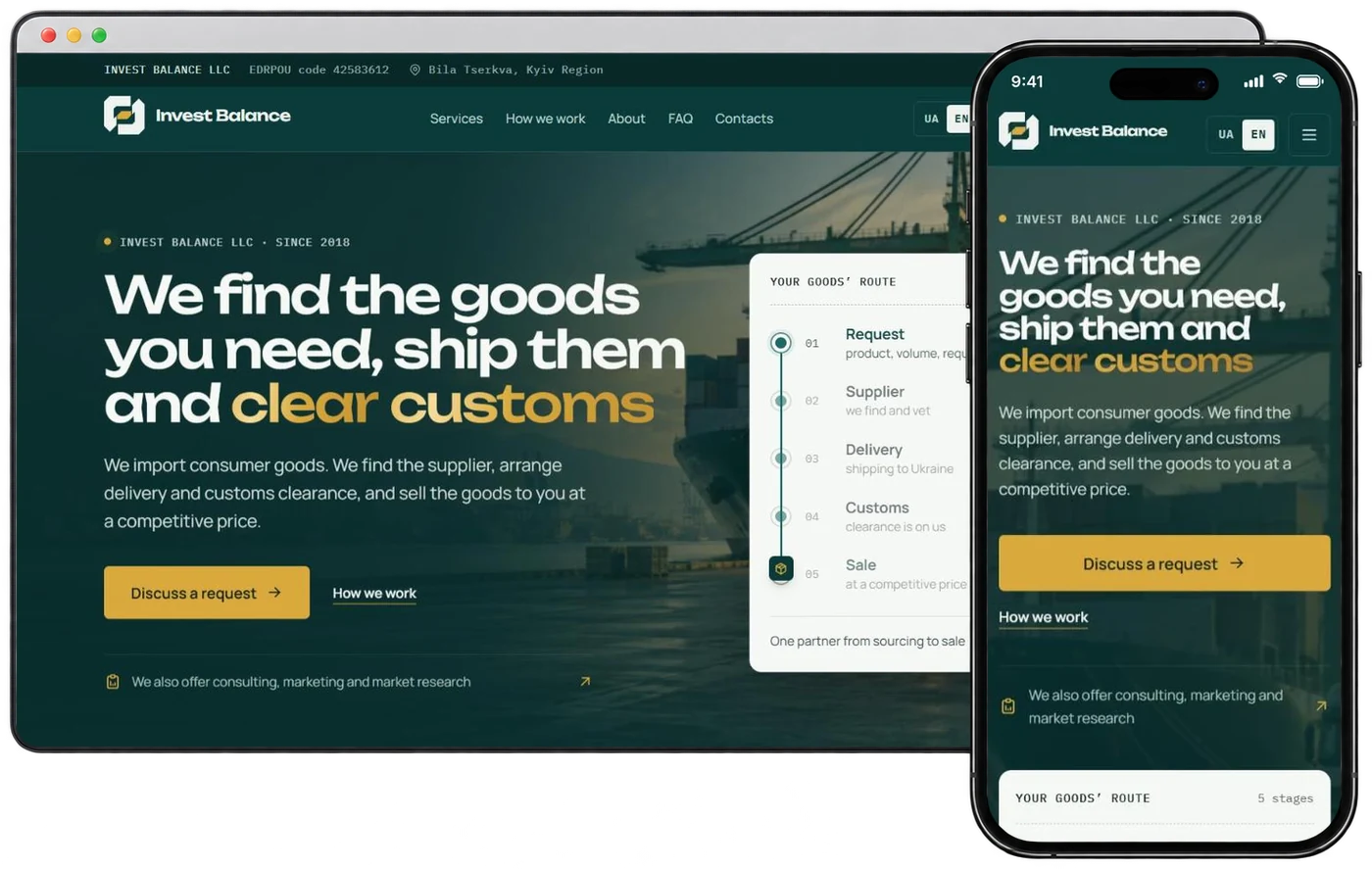
Invest Balans finds consumer goods on a client's request, imports them, handles customs clearance and sells them to the client. The company also offers businesses consulting, marketing and analytics services, from vetting partners to entering new markets. It was founded by an entrepreneur with experience importing consumer goods.

To bring in goods from abroad, a company has to find and vet a manufacturer, arrange shipping and clear customs. A company doing this for the first time does not know where to start and postpones its first shipment.
One client needs a shipment of goods, another needs a partner check or entry into a new market, and a manufacturer wants to offer its products. When everyone writes into one general form, the manager first has to figure out who is writing.
Before signing a contract, a business checks the importer, its legal entity, address and bank account. When this data is missing from the site, the check stretches over several emails.
A client first wants to understand which part of the work the company will do for them. So right below the hero section is the product route, from the request and manufacturer check to shipping, customs and sale, and each stage is described separately further down. It is clear that the company prepares the customs paperwork itself.
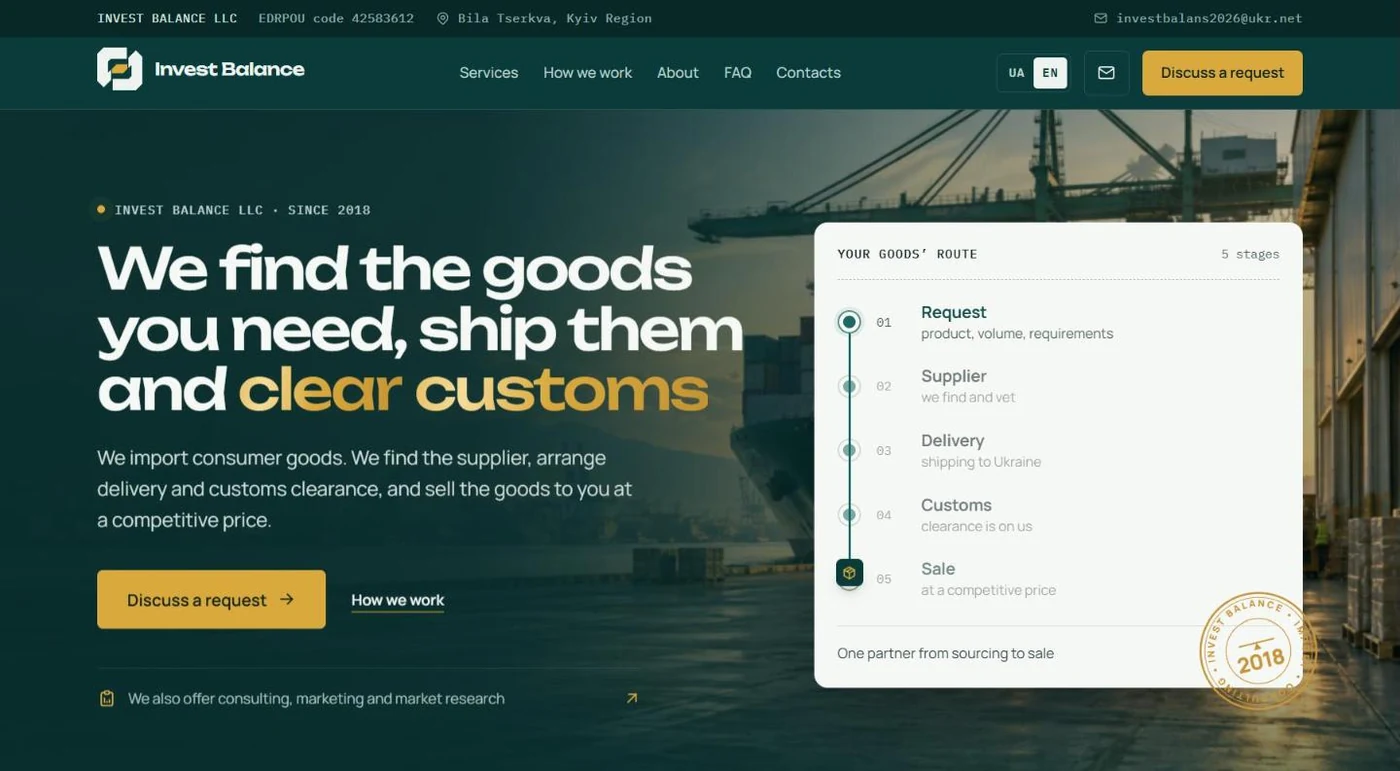
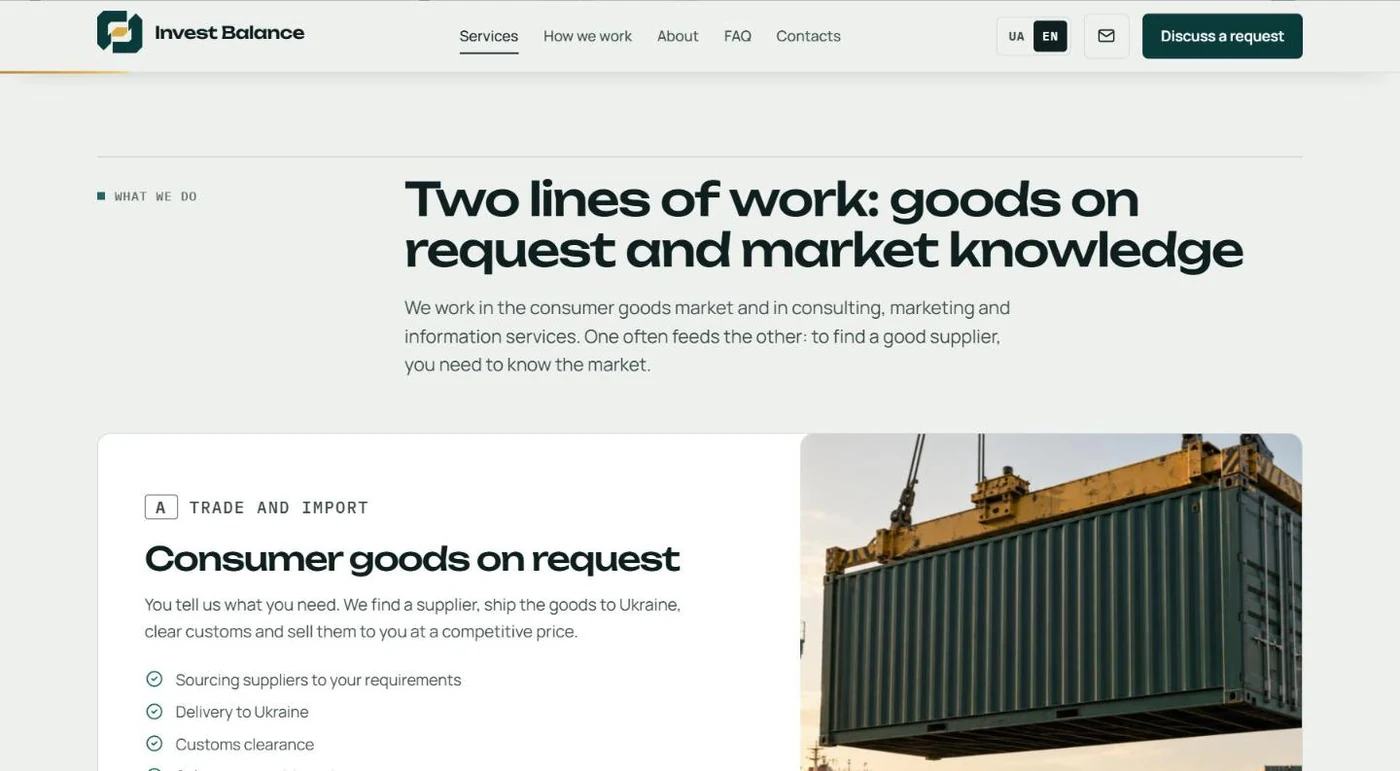
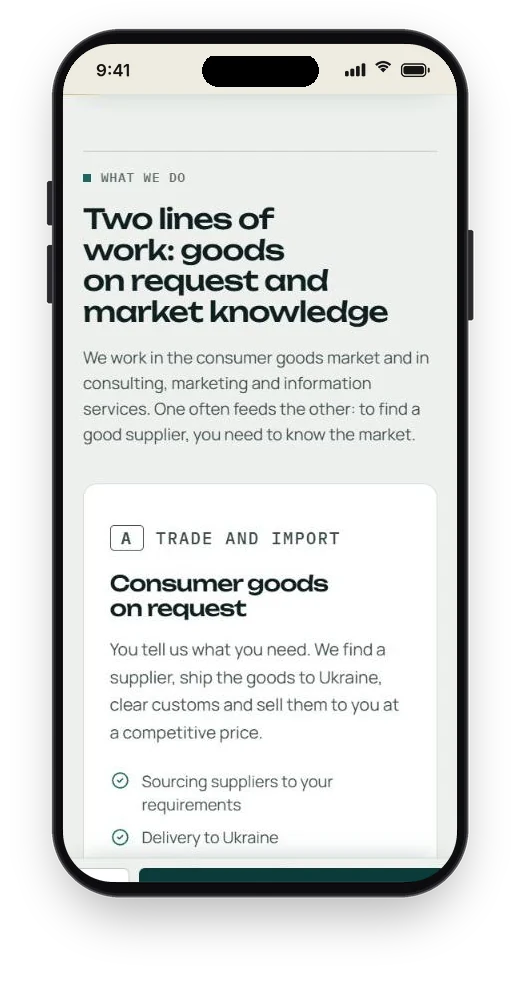
A buyer of a shipment does not need marketing services, and a consulting client does not need procurement. So the two lines of business are split into blocks A and B, each with its own list of services and its own button (a product request or a discussion of the task). The FAQ says separately that consulting can be ordered without buying goods.
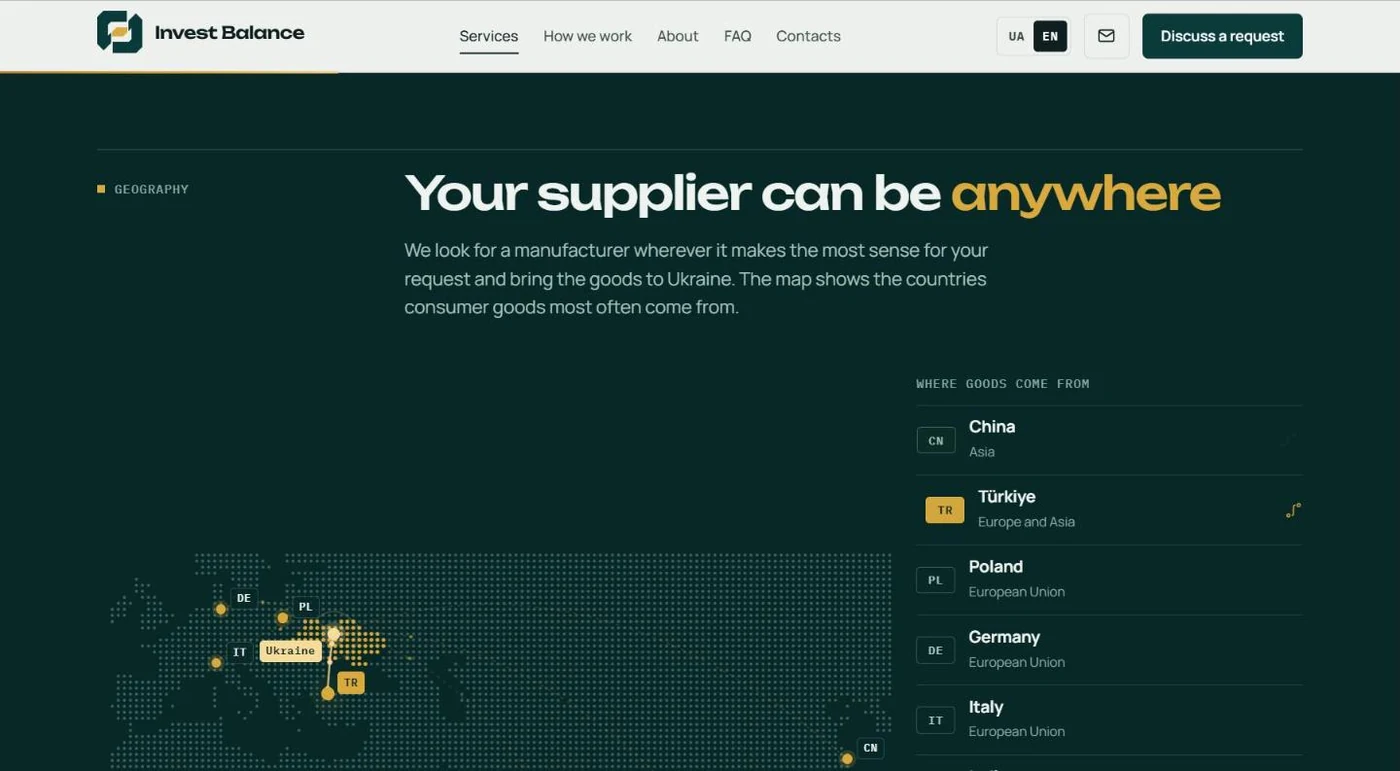
Clients first ask where goods can come from and how. So the geography block shows supplier countries, from China and Vietnam to Poland and Italy, along with shipping by sea, rail, road or air, chosen by volume, timing and budget. A client sees right away whether the company works with the country they need.
On first contact, a client is not always ready to describe the request in writing. So in the form they only pick a topic (product import, consulting or marketing), and only the phone number is required. The manager knows what the conversation will be about before calling.
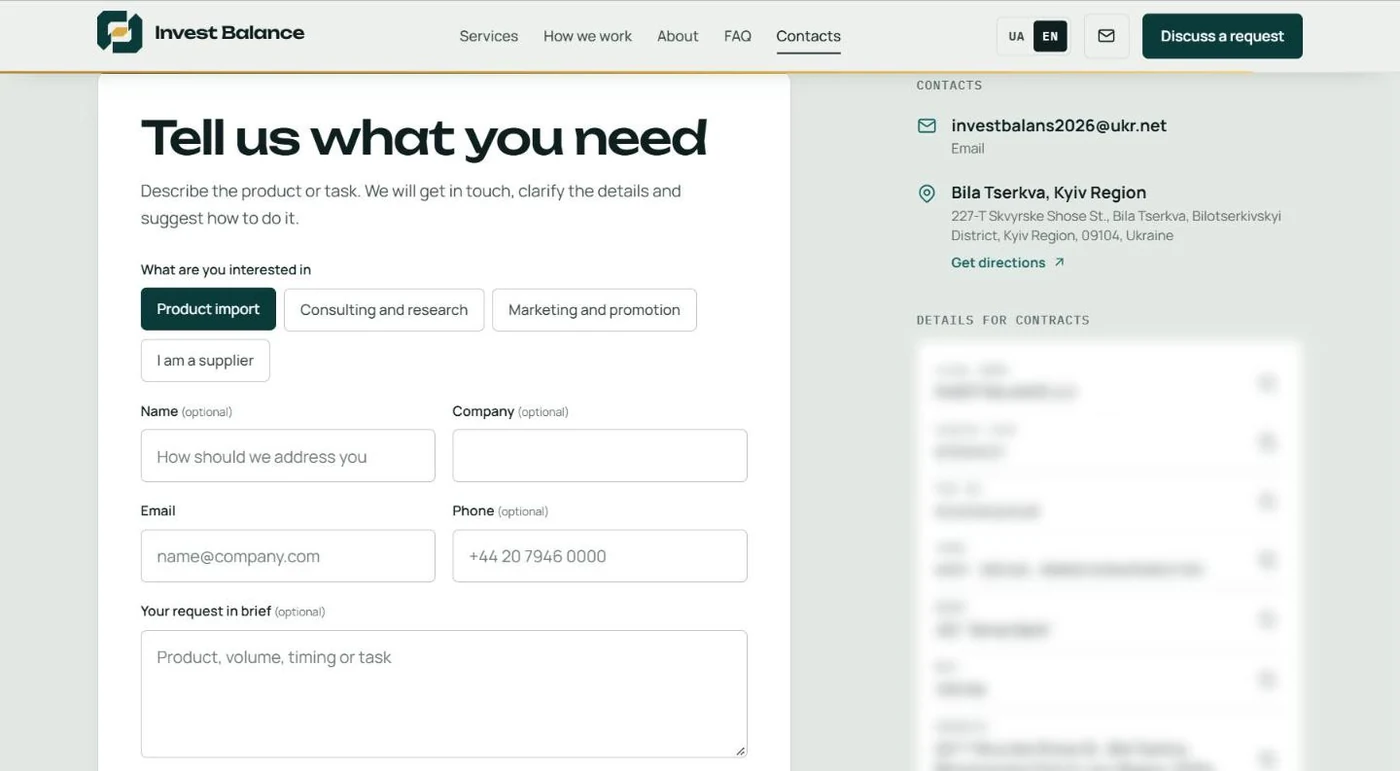
Manufacturers and suppliers see a separate invitation with a “Propose a partnership” button, and the form has an “I am a supplier” option for them. The manager sees right away that a manufacturer is writing.
The legal entity name, IBAN and bank are listed on the site. A partner checks the company and prepares a contract without extra emails.
The founding year, legal entity, address and lines of business are summed up in a short table, next to answers to common questions about the company. Search engines and AI assistants can quote these paragraphs on their own.
Every inquiry arrives with a topic, and a new partner checks the company by its details before the first email.
A client who has never imported goods sees that shipping and customs will be arranged for them.
A company that needs analytics or a partner search does not have to order goods to get a consultation.
The manager sees right away who is writing (a buyer, a consulting client or a manufacturer).
A foreign partner reads about the company in English and finds the details for a contract without asking.
The team edits texts, services and contacts on its own in the WordPress admin.
Lifetime guarantee on fixing bugs in our work, written instructions and training materials for the team.
If your question is not answered here, message us and we reply in writing.
Ask a questionThe bilingual Invest Balans landing page on WordPress was built by the Bravo Digital team.
A landing page from Bravo Digital costs from $250. We confirm the exact amount after a short brief, and the number of sections, language versions and forms changes the price.
Yes. We build an English or other language version with the same sections and a language switcher in the header.
Yes. We add a separate option for suppliers and partners to the form, so you see right away that a request comes from a supplier.
Get a quote
Thank you!