Fear of losing control
A truck owner fears that a dispatcher will book loads without their consent or collect payment from brokers instead of them. If the site says nothing about this, there will be no lead.
Websites, online stores, apps, integrations and support
Google Ads, Instagram and Facebook, Microsoft Ads, TikTok, ChatGPT and marketplaces
Google Search, Google Maps and answers in ChatGPT, Gemini and Google AI
Instagram and TikTok management, Reels and design
GA4, Google Tag Manager, Conversions API and reports
Chatbots, AI agents, workflow automation and CRM
Email campaigns and automated email sequences
Marketing strategy and a free website audit
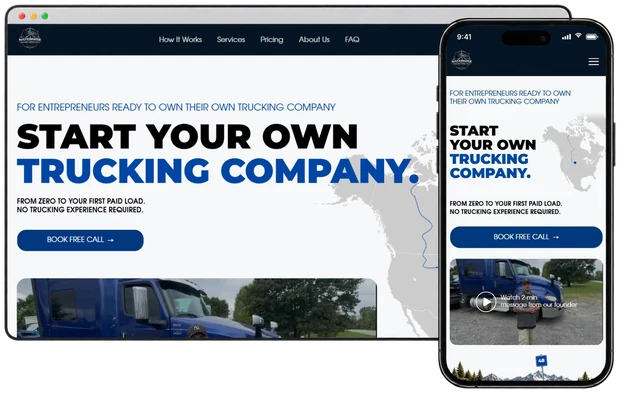
We built a landing page for Inwood, a dispatch service that finds loads for truck owners in the US. When handing the load search to a stranger, a carrier fears losing control over trips and money. So the landing page had to explain who approves loads and who gets paid before it names a price, and capture the lead on the first visit.
I want a project like this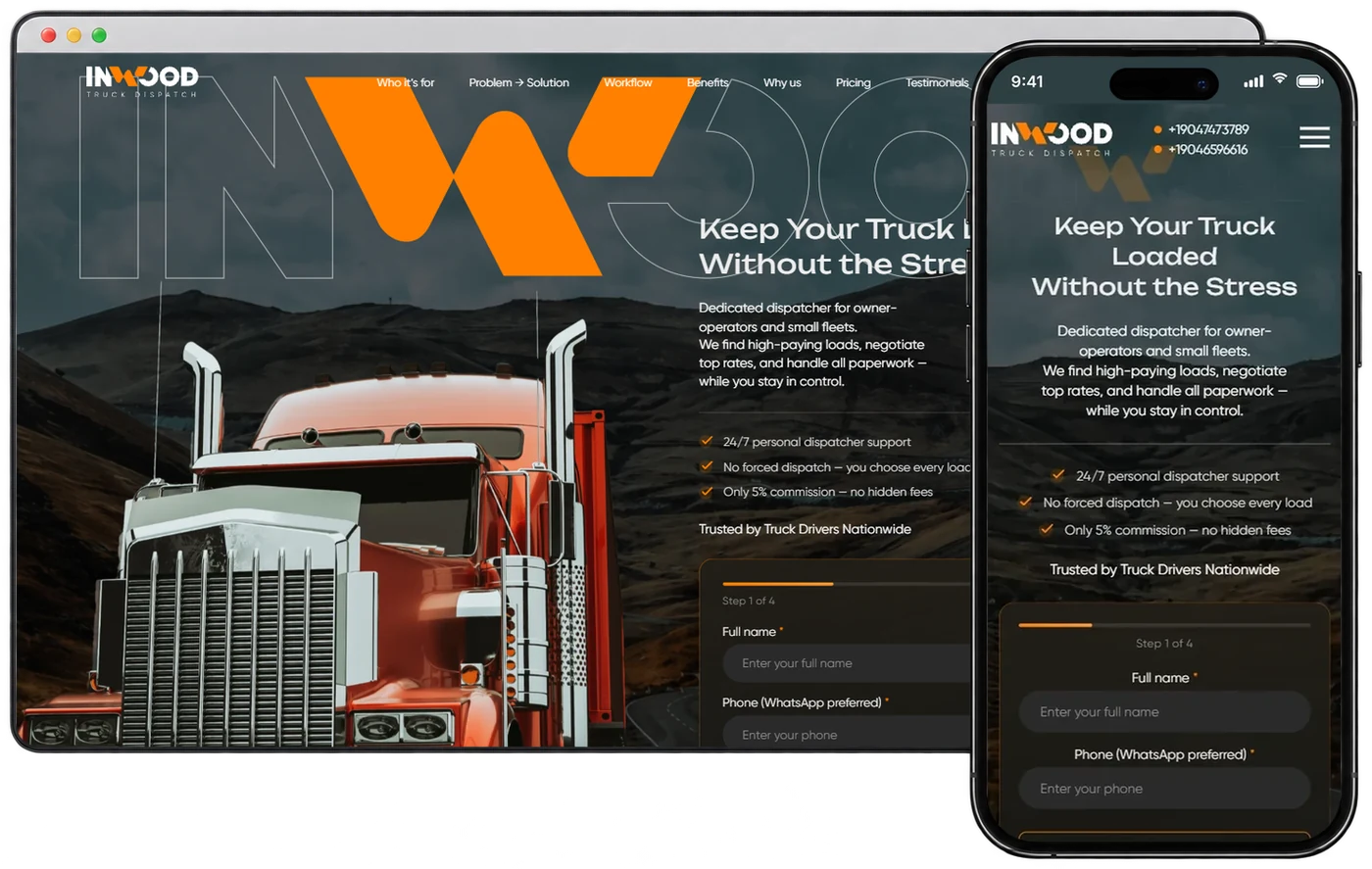
Inwood finds loads for truck owners, small fleets and new carriers with their own MC authority. The dispatcher negotiates rates with brokers, prepares broker paperwork, issues invoices and helps when payments are delayed. The service works across the US with open and enclosed trailers.

A truck owner fears that a dispatcher will book loads without their consent or collect payment from brokers instead of them. If the site says nothing about this, there will be no lead.
A carrier wants to know how much the dispatcher takes and whether they can leave at any time. A service that answers this only by phone loses to those who publish their terms openly.
Inquiries come both from carriers with a freshly issued MC number and from owners of several trucks. A newcomer needs to know that new authorities are accepted, and a fleet owner needs to know the dispatcher can handle several trucks.
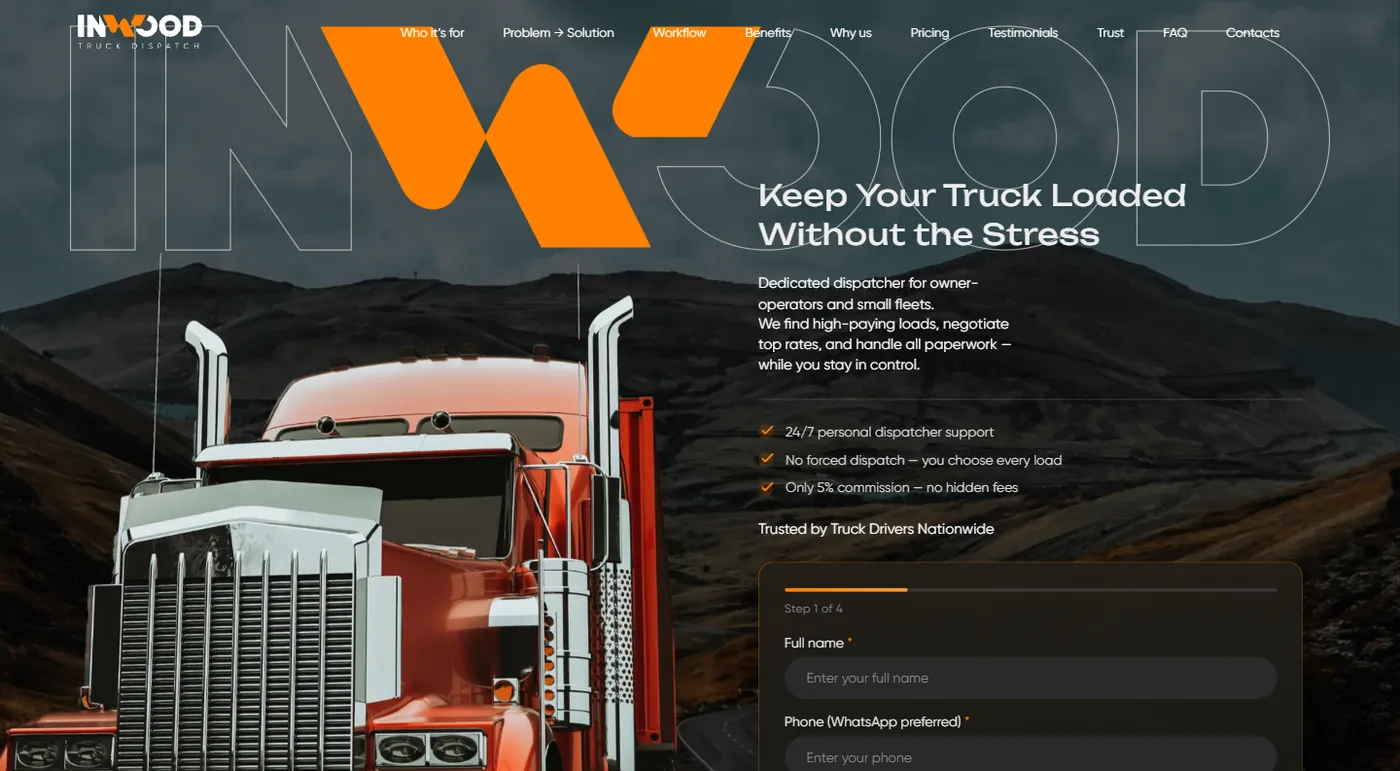
A carrier coming from an ad wants to understand right away what terms the dispatcher works on. So the hero promises a loaded truck without extra stress and lists the terms (a dispatcher available 24/7, no load without the carrier's approval, payment by commission only), with a form next to it. Those who have already decided leave their contacts without scrolling.
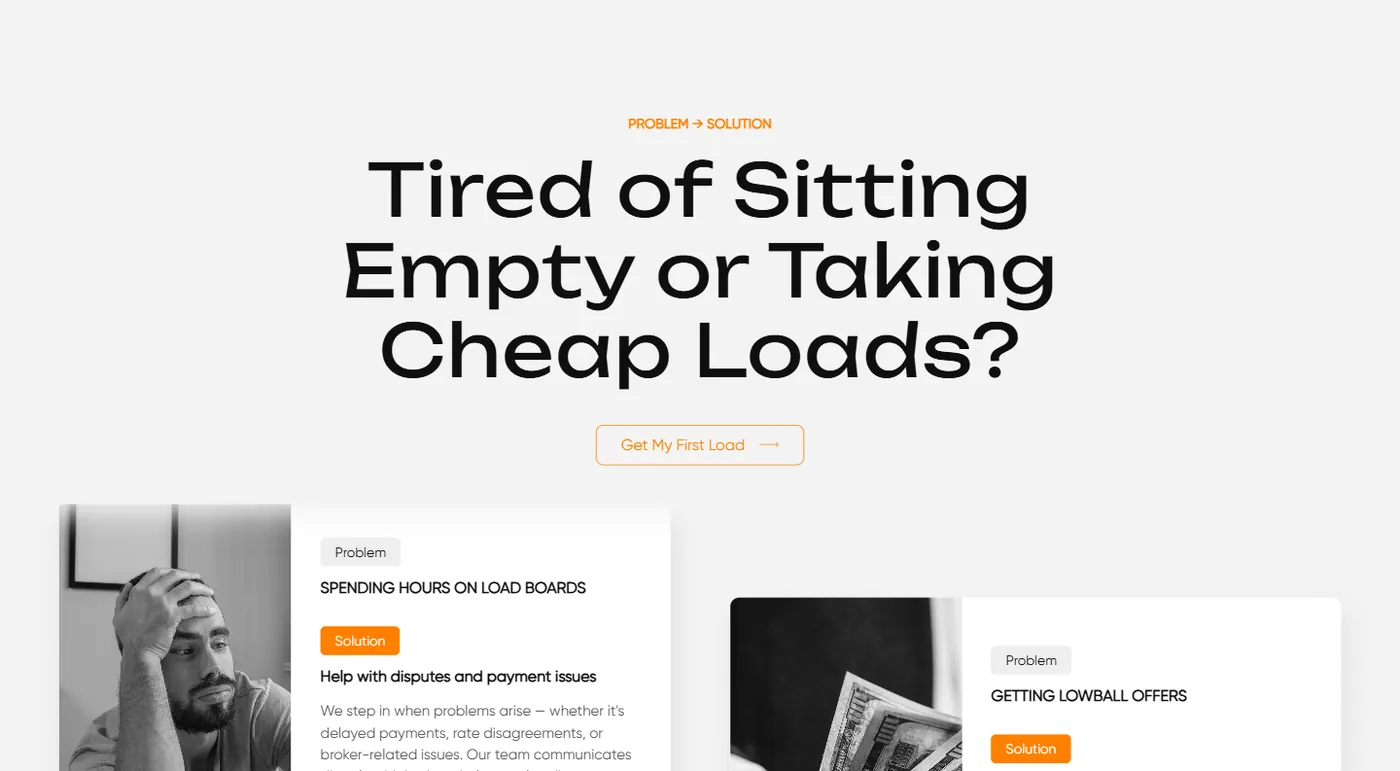
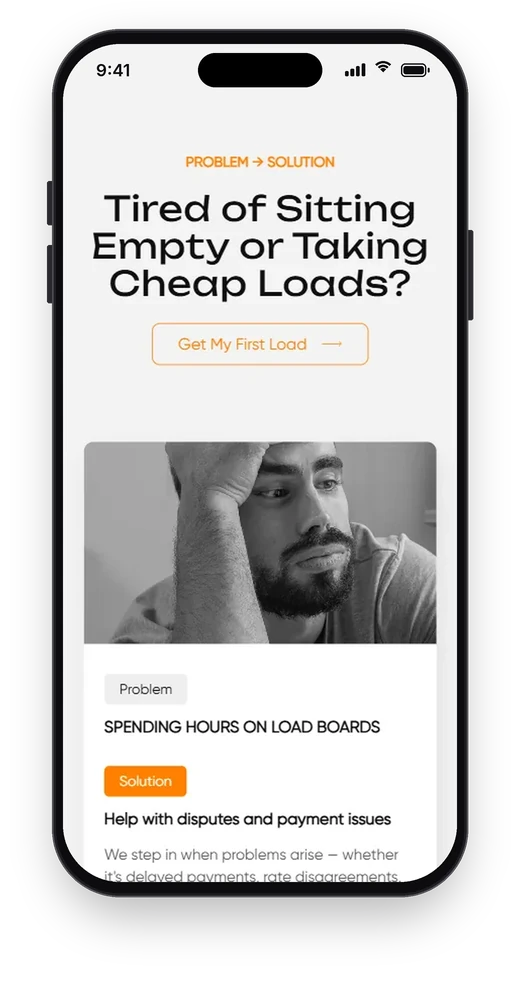
A carrier searching for loads without a dispatcher spends hours on load boards, gets lowball rates and prepares broker paperwork alone. So the block puts each of these problems next to how the dispatcher solves it. The carrier recognizes their own work week and sees what exactly the dispatcher will take off their plate.
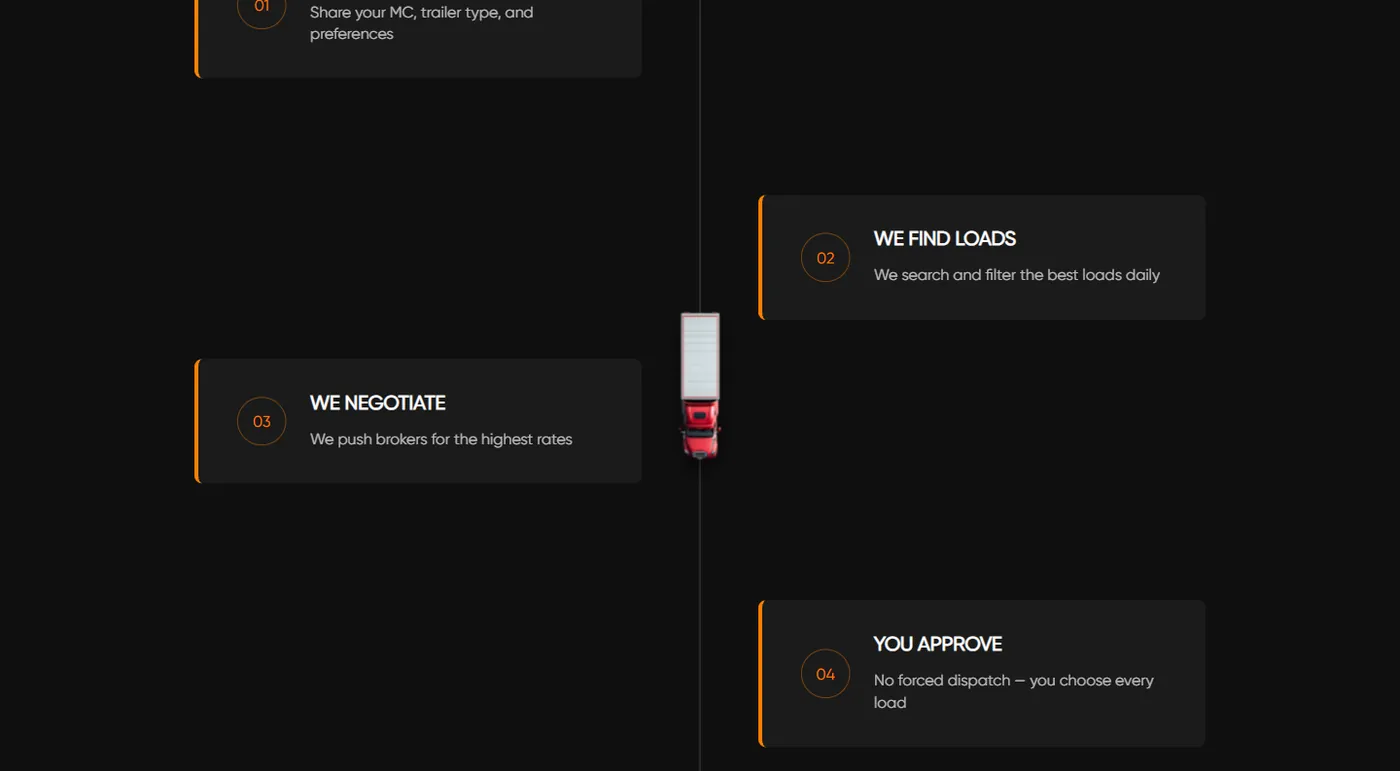
A carrier wants to know what happens after the request and where they have a say. So the steps go in order, from MC and trailer details to load search, rate negotiation, paperwork and payment, and approval of each load is a separate step. That step shows that the dispatcher will not decide for the carrier.
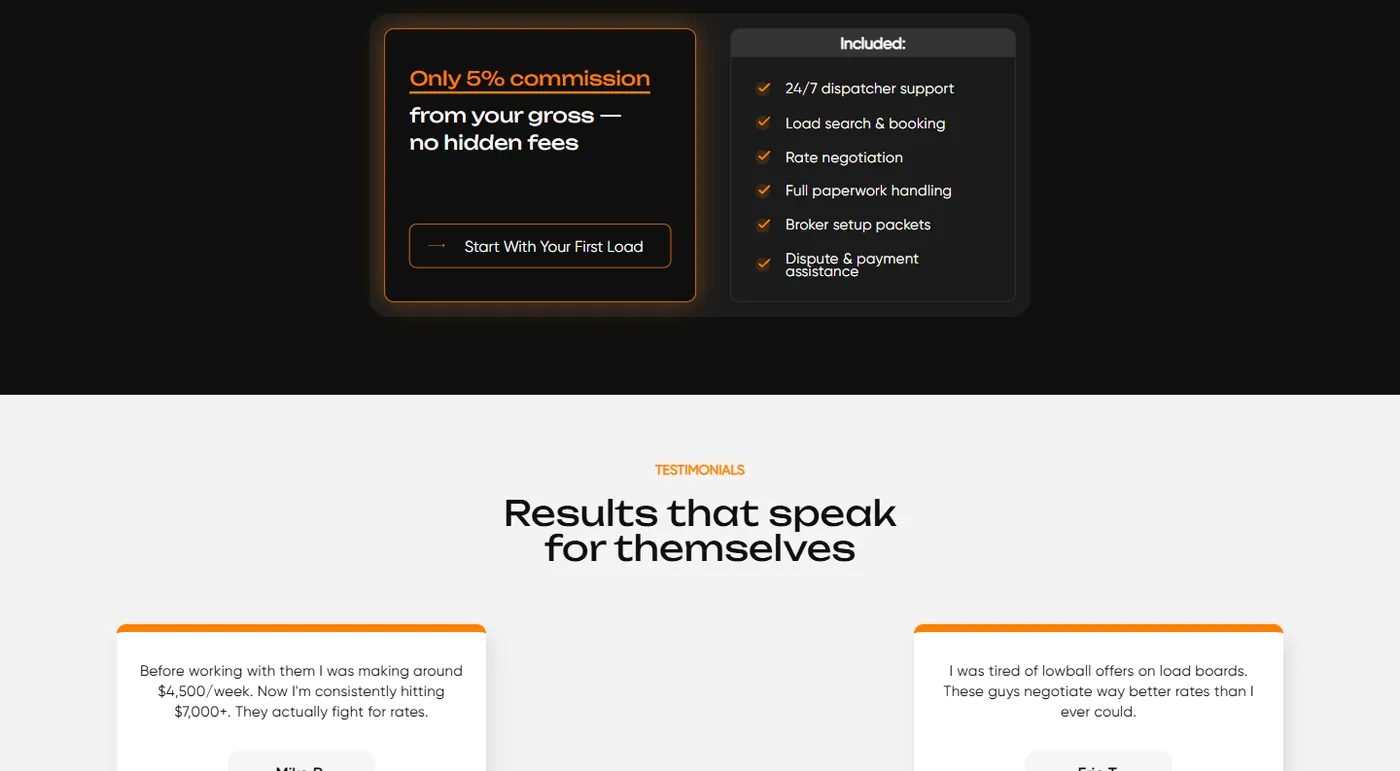
Before applying, a carrier asks how much the dispatcher costs and who gets paid for the trip. So the price is shown openly, 5% of gross revenue with no prepayment or long contract, and the commission is paid only after the load is delivered and paid for. A block next to it explains that loads are booked under the carrier's company, the broker pays the carrier directly, and the MC authority stays in the carrier's hands.
The form is split into short steps (contacts with WhatsApp, MC number, trailer type, number of trucks, target weekly revenue). It is easy to fill in on a phone between trips, and the dispatcher knows what fleet they will be talking to before the call.
Answers are grouped by topic, from price and payment to MC control and contact with the dispatcher. A carrier with one question left opens their topic right away.
Forms are protected by Google reCAPTCHA and a hidden honeypot field that only bots fill in. The dispatcher does not waste time on fake leads.
A carrier comes to the conversation with a dispatcher already knowing the commission and that they approve every load themselves.
The dispatcher knows right away who they are talking to, a newcomer with one truck or a small fleet.
The carrier learns about the commission and the contract from the site, so the call goes straight to loads and routes.
The carrier finds answers about MC, broker payments and the right to turn down a load on their own, without calling the dispatcher.
Google Tag Manager is already on the site, so analytics and ad pixels can be added without a developer.
The team edits texts, terms and FAQ on its own in the WordPress admin.
Lifetime guarantee on fixing bugs in our work, written instructions and training materials for the team.
If your question is not answered here, message us and we reply in writing.
Ask a questionThe Inwood landing page was built by the Bravo Digital team. It is a WordPress site for a dispatch service that finds loads for truck owners in the US.
A landing page from Bravo Digital costs from $250. We confirm the exact amount after a short brief.
Yes. We split the form into short steps and add the fields the manager needs for the first conversation, such as the MC number or the number of trucks.
Yes. We build English-language websites for US companies and work with clients remotely.
Yes. We install Google Tag Manager and run Google and Meta ads. Google Ads management costs $100/mo, and Meta ads management costs $100/mo.
Get a quote
Thank you!