Homes and businesses need different things
A homeowner thinks about backup power and electricity bills, while a business owner thinks about production costs and downtime. A general text about solar energy answers neither of them.
Websites, online stores, apps, integrations and support
Google Ads, Instagram and Facebook, Microsoft Ads, TikTok, ChatGPT and marketplaces
Google Search, Google Maps and answers in ChatGPT, Gemini and Google AI
Instagram and TikTok management, Reels and design
GA4, Google Tag Manager, Conversions API and reports
Chatbots, AI agents, workflow automation and CRM
Email campaigns and automated email sequences
Marketing strategy and a free website audit
We built a landing page for Solar Energy. The company installs systems on private homes, farms and commercial sites, and homeowners and business owners measure the benefit of solar differently. The page had to explain to each of them what a system changes for them and show the payback in numbers before the first conversation.
I want a project like this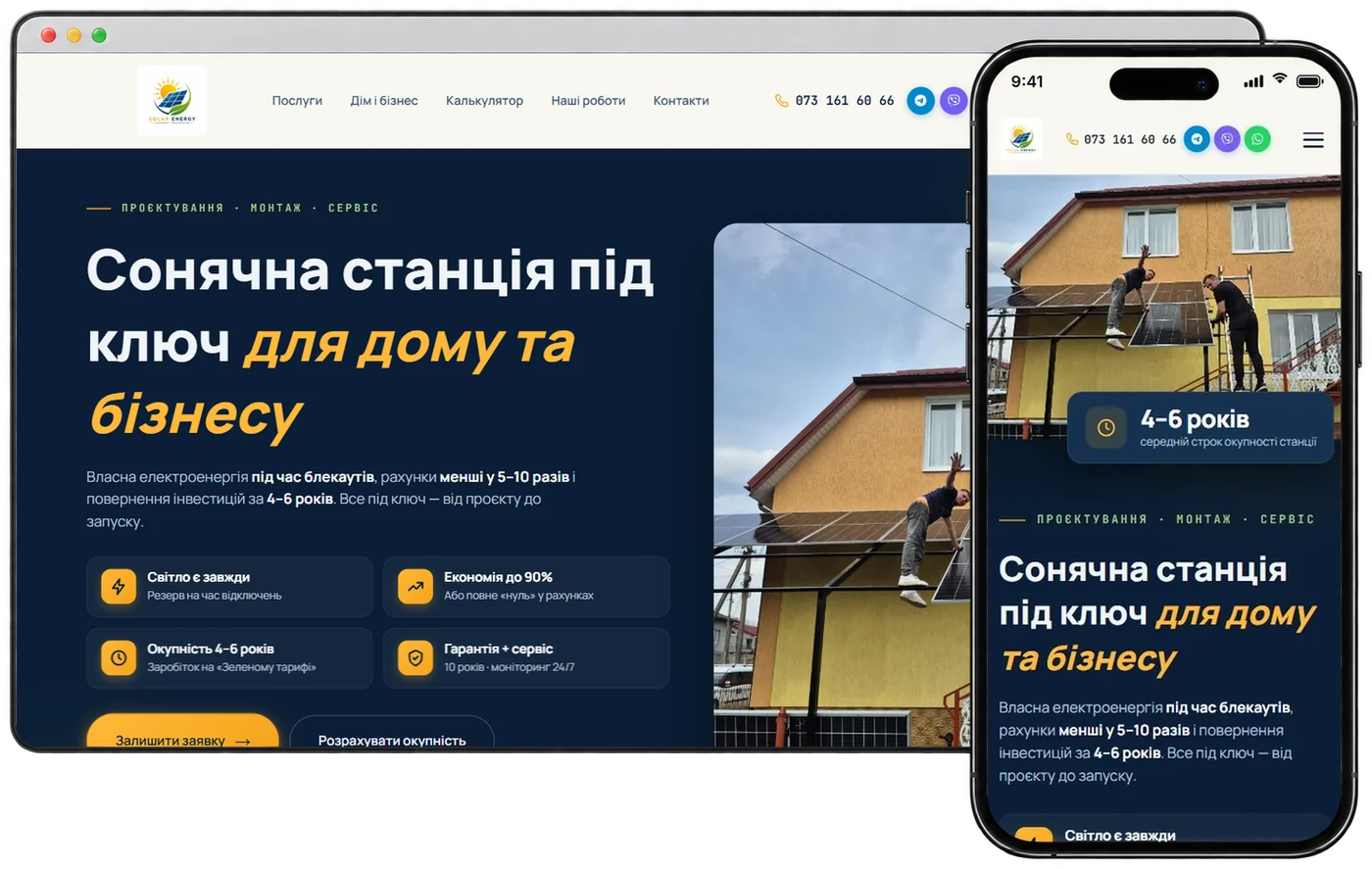
Solar Energy designs, supplies, installs and services solar systems for private homes, farms and businesses (grid-tied, hybrid with batteries, off-grid and commercial). The company also handles the paperwork for the feed-in tariff.

A homeowner thinks about backup power and electricity bills, while a business owner thinks about production costs and downtime. A general text about solar energy answers neither of them.
A solar system is expensive, and general talk about savings doesn't convince a buyer. They want to know how much they will save per year and how many years it takes to get the money back.
Buyers see the terms grid-tied, hybrid and off-grid but don't know how these systems differ. Until they figure it out themselves, they put off contacting the company.
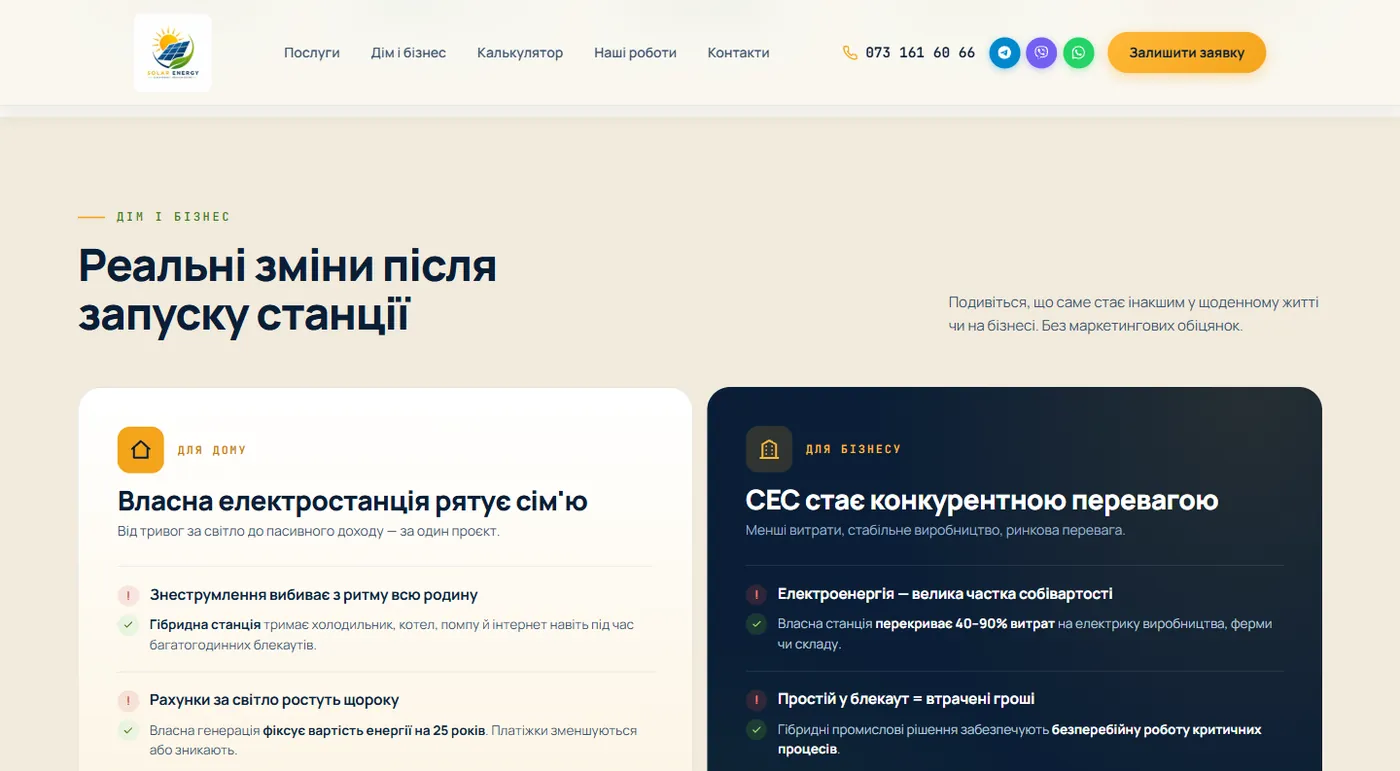
A homeowner wants the boiler and fridge to keep running on backup power, while a business owner cares about what the plant pays for electricity. So the “Home and business” block is split into two columns, each with the problems of its audience and what a solar system changes for it. Each reader goes to their own column and sees right away what they get.
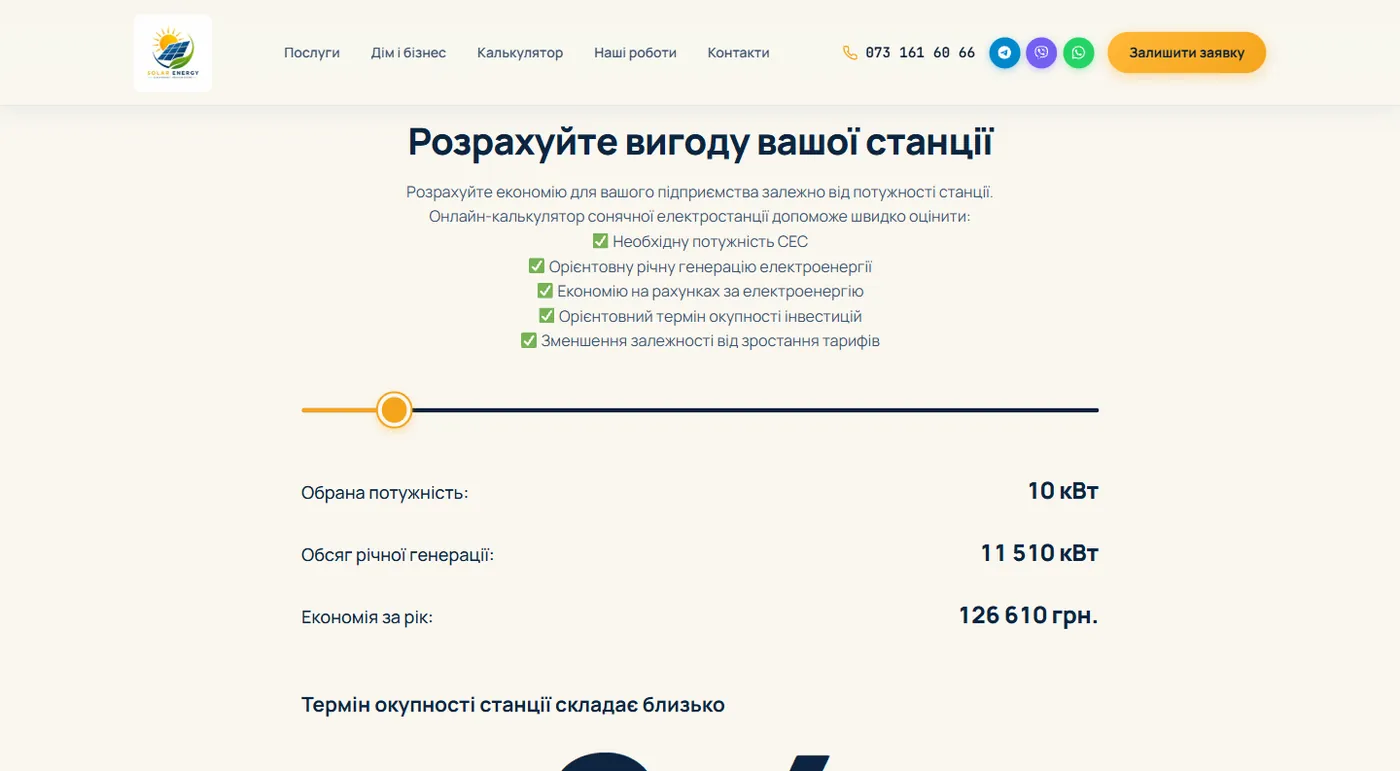
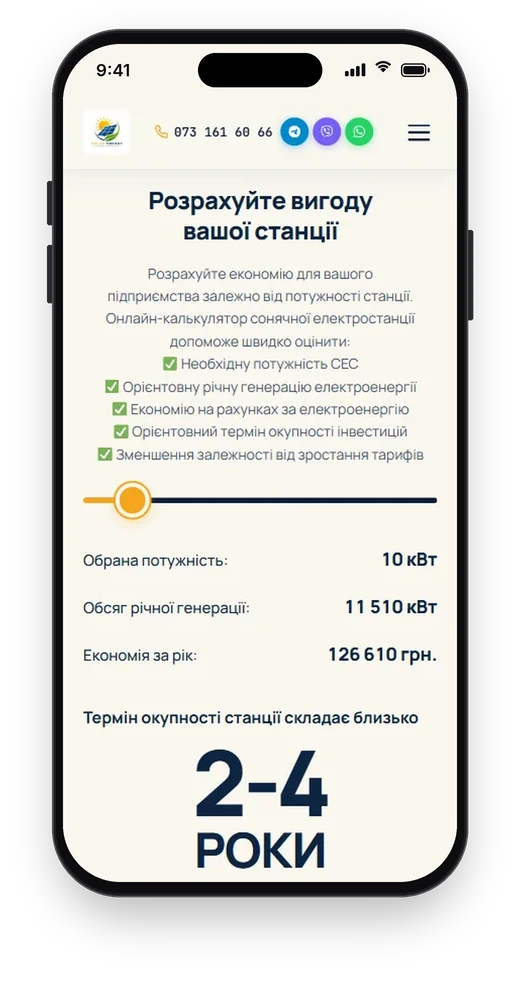
A buyer wants to know whether the system will pay off before talking to anyone. So the calculator takes the chosen system size and estimates annual generation, savings and the payback period, with an inquiry button right under the result. Anyone who has seen their number can ask for an exact estimate right away.
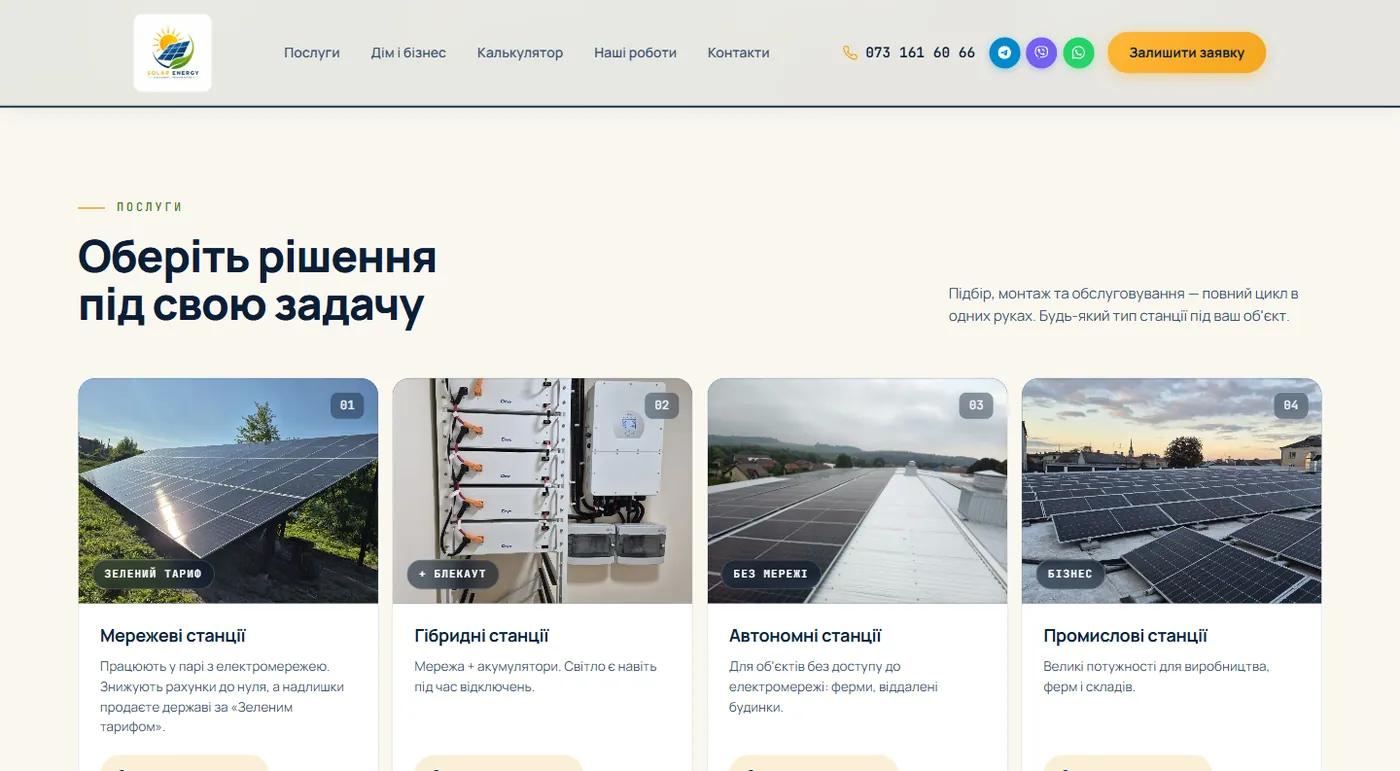
Not everyone wants to learn the system types, some people simply wait for advice. So each type in the services block has a short explanation and its own inquiry button, and below it a separate block serves those who don't know what to choose. From there a visitor can ask for a recommendation without reading about the difference between hybrid and grid-tied systems.
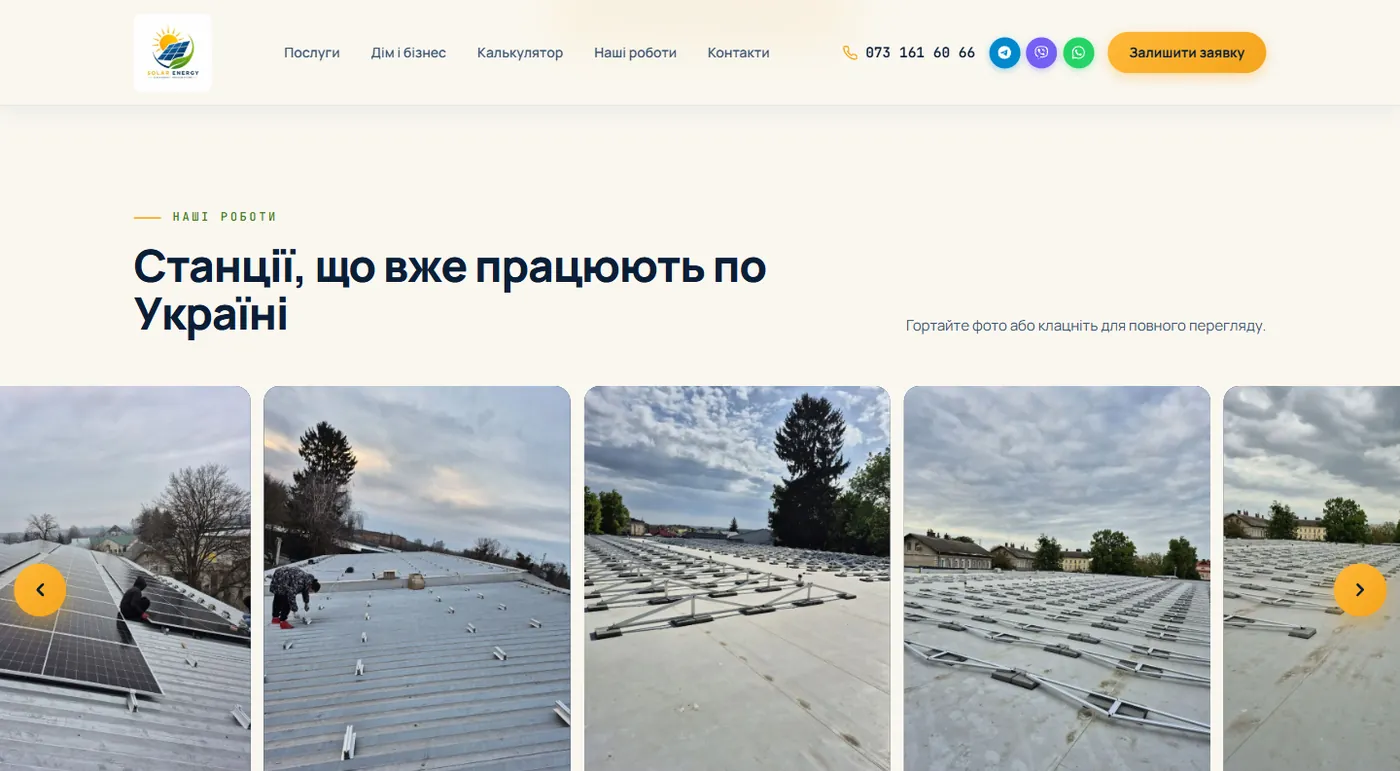
Before a big purchase, a future system owner wants to see real installations and find out whether solar works in winter, how long installation takes and whether financing is available. So the “Our work” gallery shows photos of installed systems that open full screen, and the answers to these questions sit in a separate block. The buyer sees real projects and gets answers while still deciding.
Right below the first screen are the number of installed systems, their combined capacity, the warranty and 24/7 monitoring. Visitors see the company's scale as soon as they start scrolling.
A text about cost, the feed-in tariff and payback is collapsed under a “Read more” button. Google sees all of it, and it doesn't stand between the visitor and the form.
In the inquiry form, a visitor marks the property type (home, business or other), and the manager replies in Telegram or WhatsApp. Before the first message it is already clear whether the conversation is with a homeowner or a company.
The landing page explains which system a buyer needs and when it will pay off, and the manager receives requests for an exact estimate.
The page brings in inquiries from both homeowners and companies, because each of them finds their own situation in it.
Before the conversation, the buyer has already seen the estimated savings and payback period for their system size.
Visitors who haven't figured out the system types still leave their contacts through the selection block.
Visitors see photos of installed systems and the company's numbers before they leave a phone number.
Google Tag Manager is already on the site, so analytics and ad pixels can be connected right after launch.
Lifetime guarantee on fixing bugs in our work, written instructions and training materials for the team.
If your question is not answered here, message us and we reply in writing.
Ask a questionThe Solar Energy landing page for a solar installation company was built by the Bravo Digital team. The page has separate blocks for homes and businesses, a payback calculator and a gallery of installed systems.
A landing page from Bravo Digital costs from $250, and we confirm the exact amount after a short brief, because the calculator and other features change it.
Yes. We build a calculator that uses the system size to show annual generation, savings and the payback period, with an inquiry button under the result.
Yes. We make a separate block for each audience with its problems and the solution, so homeowners and business owners each read about their own case.
Yes. We place a text written for search queries at the bottom of the page and hide most of it under a “Read more” button.
Get a quote
Thank you!