Handwork doesn't show in photos
Cheaper factory-made bags that look similar sit right next to them on social media and in search. Until it is clear how much handwork goes into each model, buyers don't see what they would pay more for.
Websites, online stores, apps, integrations and support
Google Ads, Instagram and Facebook, Microsoft Ads, TikTok, ChatGPT and marketplaces
Google Search, Google Maps and answers in ChatGPT, Gemini and Google AI
Instagram and TikTok management, Reels and design
GA4, Google Tag Manager, Conversions API and reports
Chatbots, AI agents, workflow automation and CRM
Email campaigns and automated email sequences
Marketing strategy and a free website audit
We built an online store for UNO Atelier, a brand of woven bags. In a photo, a handwoven bag is easy to mistake for a factory-made one, because a picture doesn't show the days one artisan spends on it. The site had to show this work so the price makes sense, and accept payment from buyers at home and abroad.
I want a store like this
UNO Atelier makes hand-crocheted bags. Each bag is woven from start to finish by one artisan from premium polyester yarn and finished with gold hardware. The brand doesn't make copies, so every new bag differs slightly from the ones before it.

Cheaper factory-made bags that look similar sit right next to them on social media and in search. Until it is clear how much handwork goes into each model, buyers don't see what they would pay more for.
A local buyer is used to the local carrier and payment service, while a buyer abroad pays by card or Apple Pay and receives the bag by courier. Both have to place an order without messaging the brand.
Buyers order a bag without holding it. Before paying, they want to know when it will be woven, how long delivery takes and whether it can be returned.
The price of handwork is easier to accept when you can see who weaves the bag and how long it takes. So the home page shows a photo of the artisan at work and her first-person story about how long each bag takes (5-7 days) and how every one is packed by hand in a signed black box. The reason for the price is clear before the catalog.

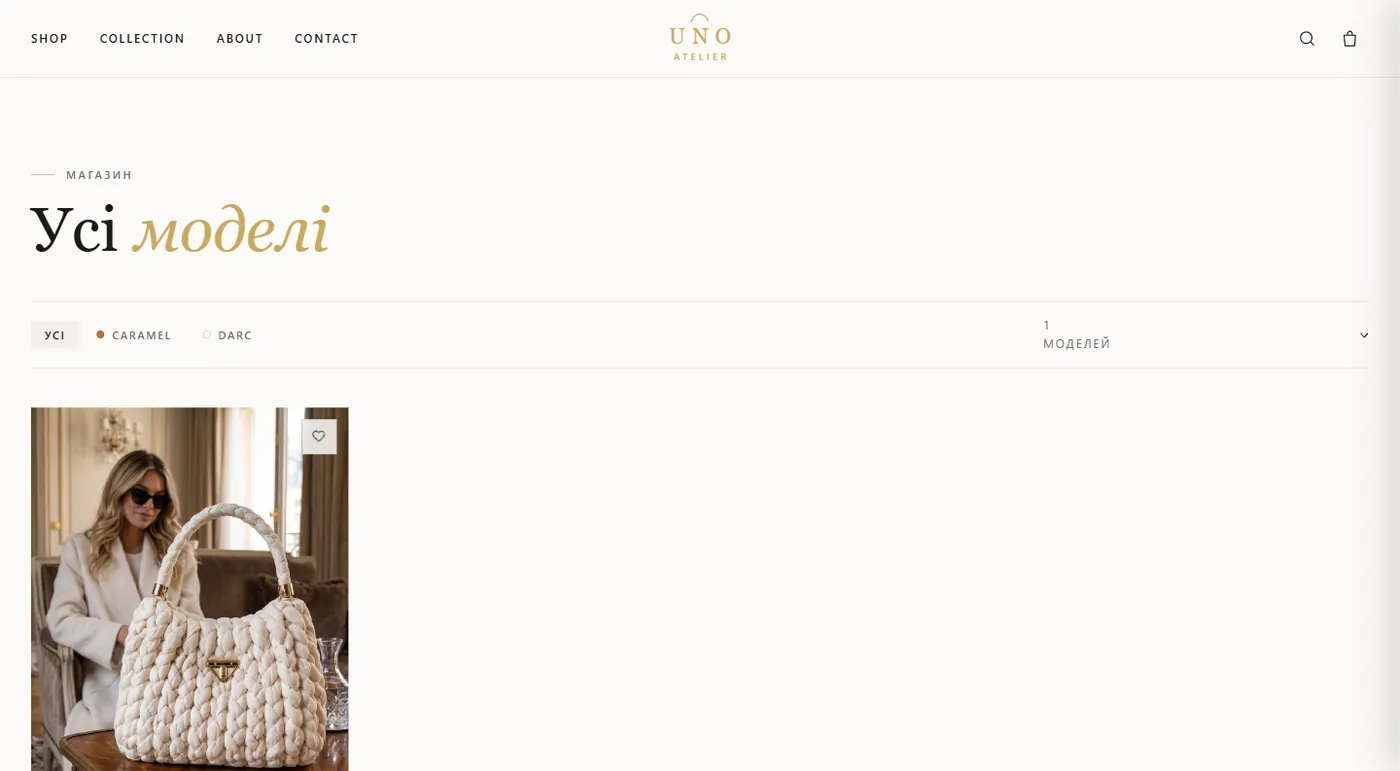
People shop for an everyday bag and an evening bag differently. So the collection is split into Hobo, Clutch & pouch, Mini bags and Evening, and the catalog lets buyers filter models by color and sort them by price or newest. Buyers see bags for their occasion and color right away.
Once a model is chosen, questions still come up before the “Add to cart” button, such as how to pay, when the parcel will arrive and what to do if the bag doesn't suit. So secure payment, delivery and the quality guarantee sit right under that button, and tabs below cover returns and care for a woven bag. The answers are on the product page, so nobody has to message the brand on Instagram.
Adding a bag to the cart doesn't always mean the choice is made. So the cart slides out as a side panel with the total and a checkout button, while the catalog stays in place. The buyer keeps browsing and goes to payment when ready.
International buyers pay through Stripe, Apple Pay or Google Pay, and local buyers through a local payment provider. Visa, Mastercard and Amex logos in the footer of every page show which cards are accepted.
A 14-day return window and a 12-month quality guarantee are stated on the home page next to the delivery times, from 1-2 days within the country to 10-14 days by international courier.
Buyers can write through the form, Telegram, Instagram or email, and the brand promises a personal reply within 24 hours.
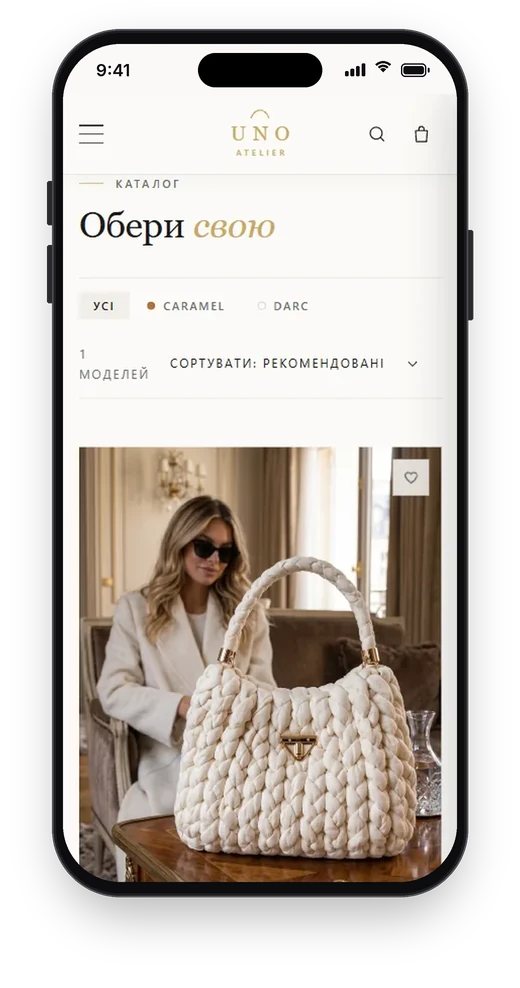
A one-artisan brand got a store where photos and the brand story explain the price of handwork, and orders from home and abroad arrive already paid.
The price of handwork comes with an explanation the buyer sees before reaching the cart.
New bag types and colors fit into the same categories and filters, so even a bigger collection won't confuse buyers.
Orders from abroad go through the same checkout as local ones, with no separate site and no manual invoicing.
The artisan spends less time answering the same questions about delivery and returns, and more time weaving.
The brand adds a new bag or color in the WooCommerce admin on its own.
Lifetime guarantee on fixing bugs in our work, written instructions and training materials for the team.
If your question is not answered here, message us and we reply in writing.
Ask a questionThe UNO Atelier online store on WordPress and WooCommerce was built by the Bravo Digital team.
A store with up to 100 products costs $500 on the Starter plan, and a store with up to 1,000 products and integrations costs $700 on the Business plan. We confirm the exact amount after a short brief.
Yes. We connect Stripe, Apple Pay and Google Pay for international buyers and a local payment provider for domestic ones, as we did for UNO Atelier.
Yes. The cart slides out from the side, and the buyer sees the total and goes to checkout without leaving the catalog.
Launch takes 14 days on the Starter plan and 21-28 days on the Business plan. The timeline depends on the number of products and on whether photos and descriptions are ready.
Get a quote
Thank you!