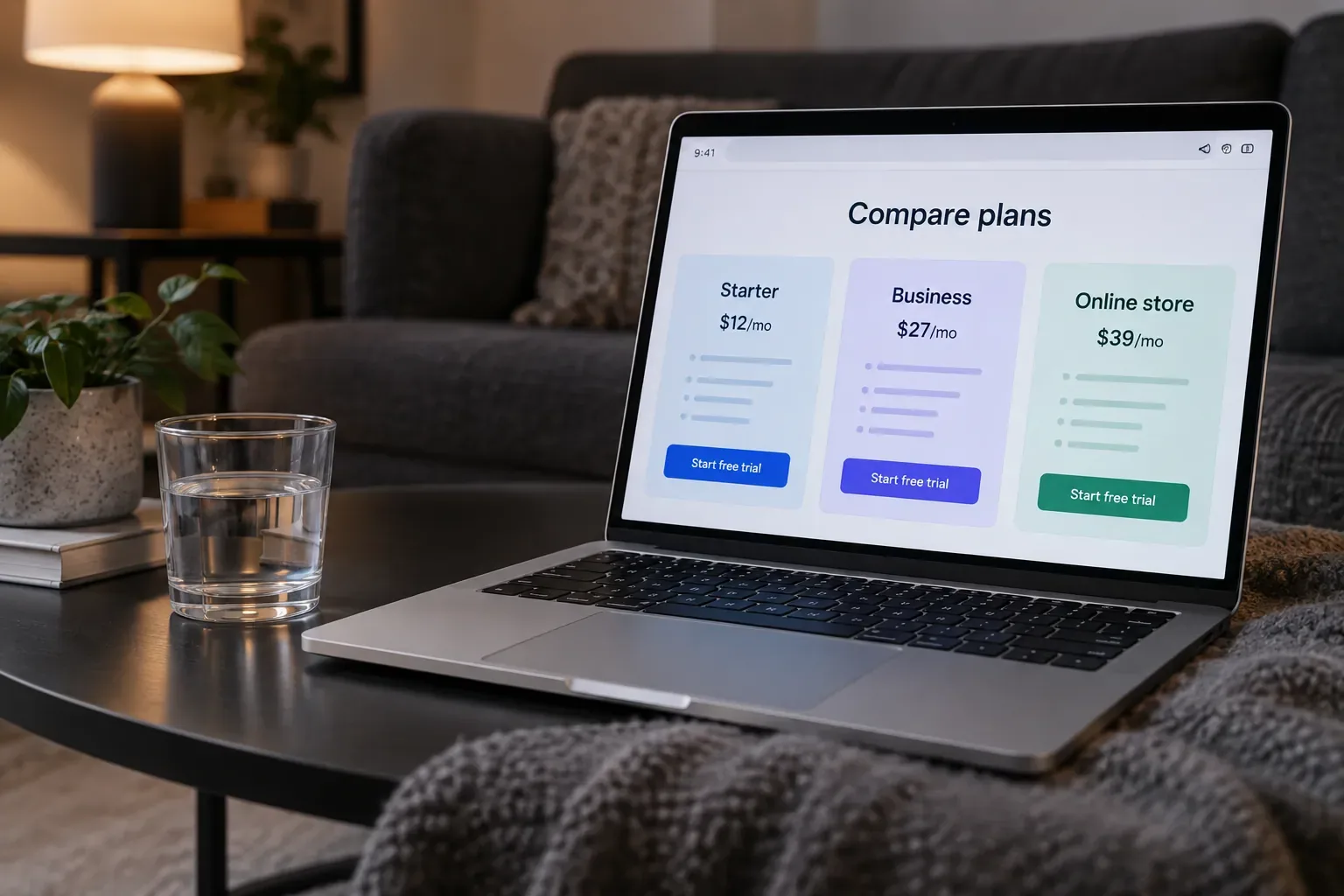
- The price depends on the number of unique page designs, the content work, integrations and who writes the texts.
- A one-page landing page is the cheapest option, a multi-page site with a catalog or integrations costs more.
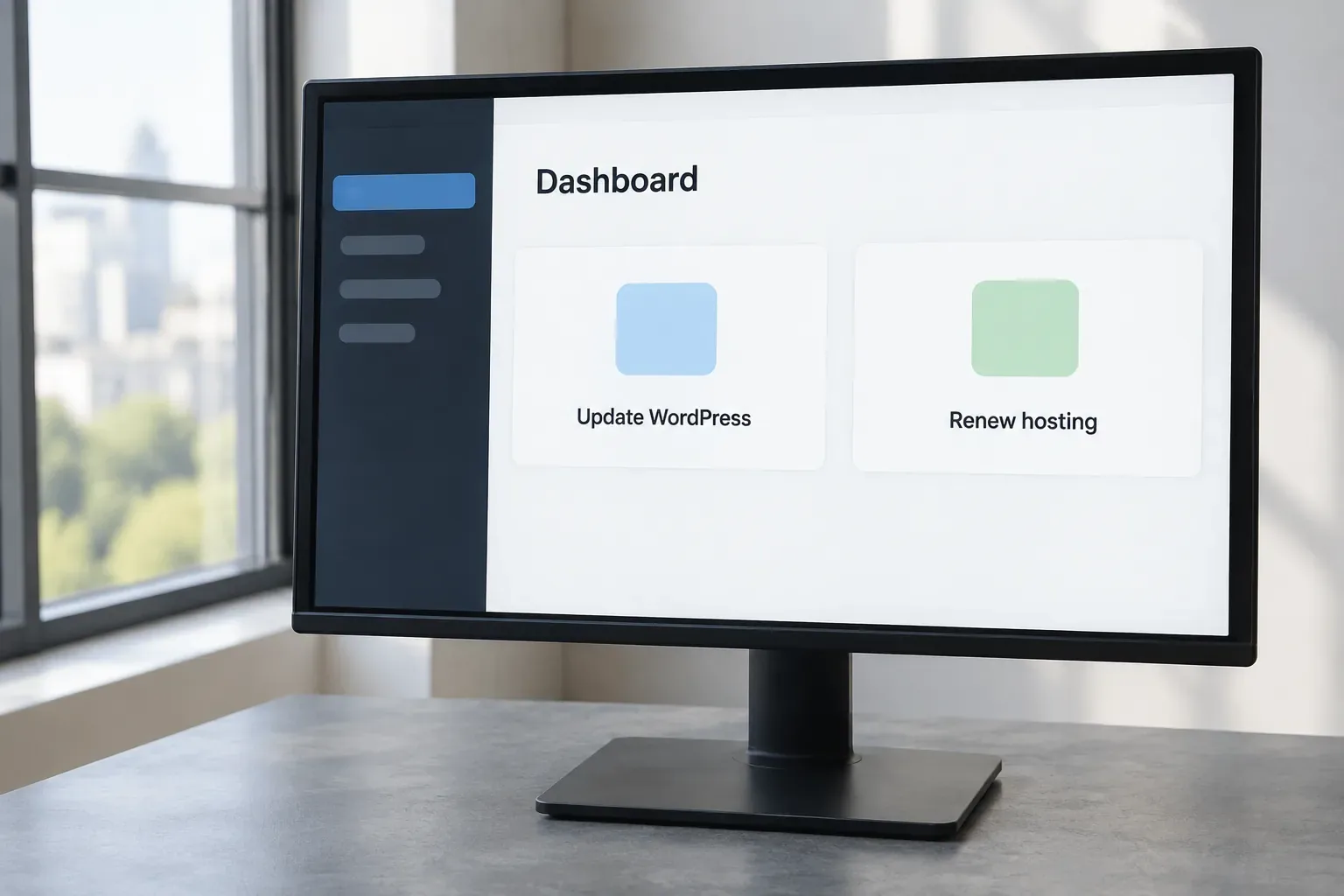
- Besides the build, budget for a domain, hosting, paid plugins or a builder plan and support.
- Compare quotes by what is included, not by the total. Ask about content, SEO setup, tracking and ownership of accounts.
Contents 8 sections
- What determines the price of a website?
- Which type of website does your business need?
- What does our price include?
- What costs come after launch?
- Agency, freelancer or website builder?
- How can you lower the cost without hurting results?
- How do you compare website quotes?
- Can a cheap website still bring clients?
A small business website costs as much as the work it needs. A one-page site with a contact form is the cheapest option, while a site with many unique pages, a catalog and integrations with your CRM or booking system costs several times more. Below is what drives the price, what our prices look like and which costs come after launch, so you can compare quotes with confidence.
What determines the price of a website?
Five things move the price more than anything else.
- Number of unique page designs. Ten service pages built on one template cost far less than ten pages each designed from scratch.
- Content. Texts written for you, photo selection and structure work take time. If you bring ready texts, the price goes down.
- Features and integrations. Online booking, a quote calculator, a CRM connection, payments or a member area each add work.
- Platform. A WordPress site, a Webflow site and a custom build have different costs to build and to run.
- Launch work. SEO setup, analytics and conversion tracking, redirects from an old site and speed work are part of a good launch but not part of every quote.
Which type of website does your business need?
Most small businesses fit one of three types.
| Type | Who it suits | Typical scope | Price |
|---|---|---|---|
| Landing page | One service or offer, traffic from ads | One long page, a form, tracking | From $250 |
| Small business website | Local services, contractors, studios | Home, services, about, contact, a few service pages | From $200 |
| Corporate website | Several directions, B2B, a team to present | Many service pages, cases, a blog | From $350 |
A landing page is enough when you sell one thing and plan to run ads to it. A small business website suits a company that wants to show up in Google for each service and city it covers. A corporate site makes sense when you have several directions and decision makers who compare suppliers.
What does our price include?
Our price for a small business website covers the structure, the design of each page type, texts written for search and for people, the build on WordPress, a contact form with notifications, basic SEO setup and Google Analytics 4 with lead tracking. A typical site takes 7-10 days. You own the domain, hosting and every account from day one, and every site comes with a lifetime guarantee on fixing bugs in our work.
The price goes up with extra page types, a catalog, integrations or texts in several languages. It goes down if you bring ready texts and photos.
What costs come after launch?
The build is a one-time cost. These come every month or year.
- Domain. A yearly renewal for a .com domain.
- Hosting. A small WordPress site runs well on managed hosting at a modest monthly cost. A Webflow site needs a site plan from Webflow instead.
- Licenses. Some premium themes, form plugins and backup tools charge yearly.
- Support. Plugin updates, backups, small edits and checks after updates. Our website support costs from $50/mo.
- Marketing. A site does not bring visitors on its own. Budget for search optimization or ads from the start.
Agency, freelancer or website builder?
The same budget buys different things depending on who builds the site.
- Website builder (Wix, Squarespace). The lowest start cost and a monthly plan. You choose a template and fill it yourself. It suits a business that needs an online card and has time to write and set up everything. Limits show up when you need custom features, better speed or full control over SEO.
- Freelancer. Often cheaper than an agency for the build. Quality depends on one person, and texts, SEO and tracking may be outside their skills. Ask who will update the site in a year.
- Agency. A team covers structure, texts, design, the build, SEO and analytics. The price is higher than a freelancer's for the same number of pages, and the site usually brings more leads per visitor because each page is planned around a search and an action.
There is no wrong choice, only a mismatch between the option and the job. A local plumber who gets most work from referrals can start with a builder. A company that plans to spend on Google Ads needs pages built to convert that traffic, because every visitor who leaves without a request is paid for.
How can you lower the cost without hurting results?
- Start with fewer pages. Launch the home page, the top three services and a contact page. Add the rest once you see what people look for.
- Reuse one design for similar pages. Service pages and location pages can share a template, which costs far less than unique designs.
- Bring your own photos. Real photos of your team and work beat stock images and save the time spent searching for pictures.
- Write a first draft of your texts. Even rough notes about your process, prices and typical questions shorten the writing stage.
- Skip features nobody asked for. Animations, sliders and a blog with no plan to post add cost and slow the site down.
How do you compare website quotes?
Two quotes for "a website with five pages" can describe very different work. Ask each developer the same questions and compare the written answers.
- Is the design made for your business, or is it a template with your logo?
- Who writes the texts, and are they written for the searches your clients make?
- Is SEO setup included (titles, descriptions, sitemap, schema markup, redirects from the old site)?
- Are Google Analytics 4 and lead tracking set up, so you know which channel brings requests?
- Whose name are the domain, hosting and admin accounts registered to?
- What does the guarantee cover, and what does support cost after launch?
- How is payment split, and what happens if the project stops halfway?
A cheaper quote that leaves out texts, SEO and tracking often ends up costing more, because these have to be paid for later, often with extra work on pages that are already built.
Can a cheap website still bring clients?
Yes, if it answers the questions your clients ask before they contact you. A one-page site with a clear offer, prices or a price range, proof of work and a short form often brings more leads than an expensive site built around design effects. Spend the budget on the things a visitor needs to decide, and add pages as you grow. If you are unsure which type fits, read how long it takes to build a website to see how scope changes the timeline as well.
Questions and answers
Is it cheaper to build a website myself with a website builder?
A builder plan is cheaper up front, and it works for a simple site you have time to set up yourself. You pay with your time, the monthly plan never ends and you are limited by the templates. A developer makes sense when the site has to bring leads from ads and search, where structure, speed and tracking matter.
What yearly costs come after a website is built?
A domain name renews every year, hosting is paid monthly or yearly, and some themes, plugins or builder plans have yearly licenses. Add support if you want someone to update the site, make edits and keep backups.
Why do website quotes differ so much?
Quotes cover different work. One includes a unique design, texts, SEO setup and analytics, another installs a template and leaves the content to you. Ask each developer for a written list of what is included and compare the lists.
Who owns the website after it is built?
You should. The domain, hosting account, admin access, analytics and ad accounts should be registered to your business. Check this in the contract before you start.
Thank you. Share the article with someone who needs it.
Tell us what was missing in the article and we will reply. Ask a question