- An abandoned cart sequence is two or three automatic emails to shoppers who left items in the cart or checkout.
- Send the first within a few hours, the second the next day and an optional third a day or two later.
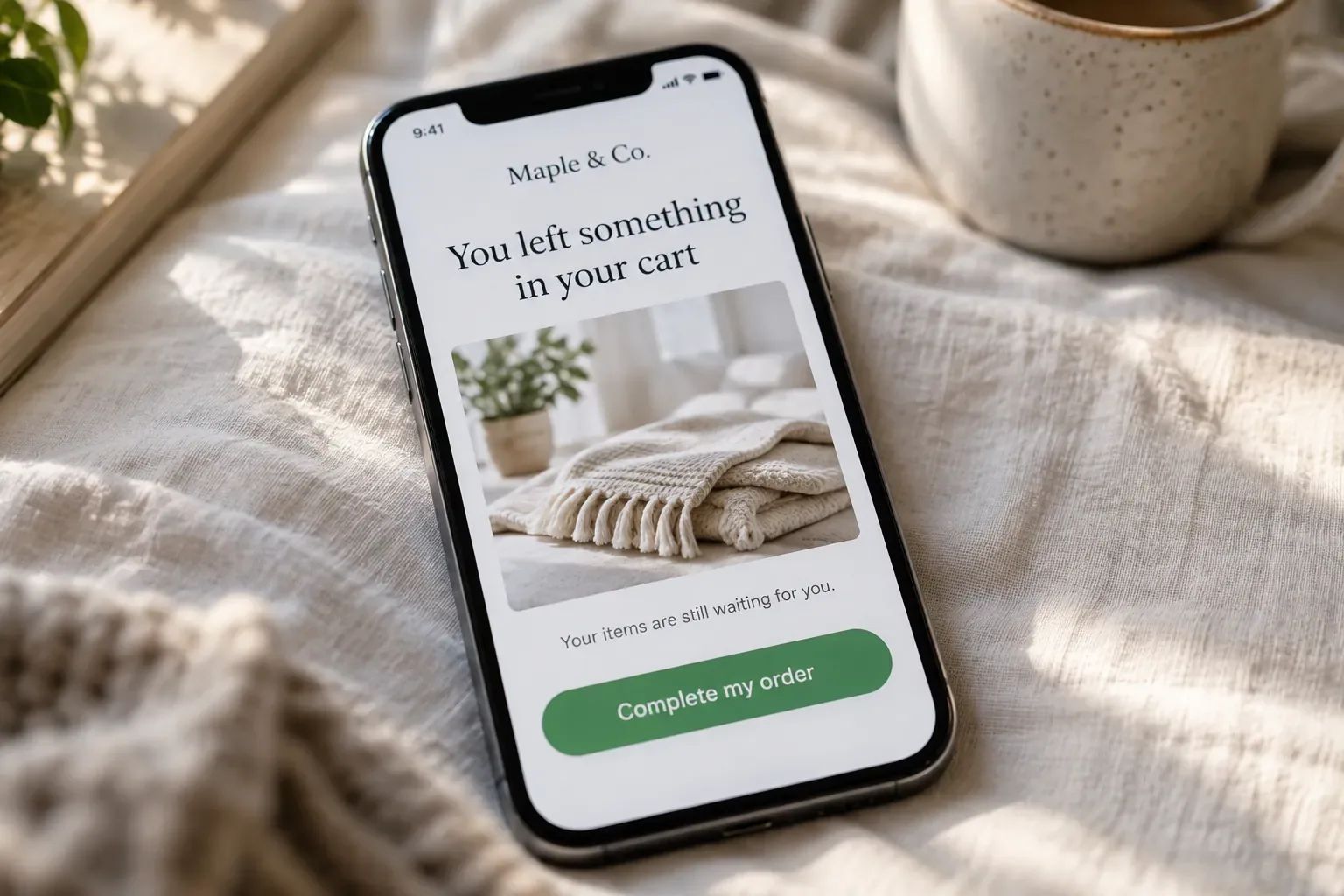
- Show the products, the total and a link back to the cart, and answer common doubts about shipping and returns.
- Keep discounts for the last email or skip them, so shoppers do not learn to wait for a coupon.
Contents 9 sections
An abandoned cart email sequence is a set of two or three automatic emails sent to shoppers who added products to their cart or started checkout and left without buying. It is one of the most effective automated emails a store can run, because it reaches people who were close to buying. The sequence reminds them of the products, answers the doubts that stopped them and gives a one-click way back to the cart.
Who receives abandoned cart emails?
You can only email shoppers whose email address you know. That means people who typed their email in checkout before leaving, and subscribers or past customers whom your email tool recognizes on the site. This is why the email field should be the first field in checkout. Shopify has a built-in abandoned checkout email, and Klaviyo, Mailchimp and other tools offer flows triggered by checkout or cart activity on Shopify and WooCommerce.
What does a good sequence look like?
| When | Goal | |
|---|---|---|
| 1. Reminder | 1 to 4 hours after leaving | Show the products and the cart link |
| 2. Answer doubts | About 24 hours later | Shipping, returns, reviews, sizing |
| 3. Last chance | 48 to 72 hours later | Optional incentive or real stock information |
Every email in the sequence stops automatically once the shopper buys. If they buy on another device, the purchase event still ends the flow when the email tool tracks orders.
Email 1. The reminder
Short and helpful. Product images, names, chosen options, prices and a button back to the cart with the items still in it. Add the store's contact details in case something went wrong in checkout.
Subject line examples.
- You left something in your cart
- Your wide-fit loafers are still waiting
- Did something go wrong at checkout?
Email 2. Answer the doubts
Address the reasons people leave carts. Shipping cost and delivery time, the return policy in plain words, reviews of the product in the cart and help with sizing or choice. If you know the most common questions from support, answer them here. A personal tone, signed by a real person, often works better than a design-heavy promo email.
Subject line examples.
- Free returns within 30 days on your order
- What other customers say about the Trail 2 backpack
- Not sure about the size? Here is how it fits
Email 3. The last nudge
This is where some stores add a small incentive, such as free shipping or a modest discount with an expiry date. Others mention real low stock or the end of a seasonal offer. Do not invent urgency. A fake countdown or "only 2 left" that is not true damages trust and can break consumer protection rules.
Should you use a discount?
Many shoppers return after the first or second email without any incentive. A discount in the first email trains customers to abandon carts on purpose to get a coupon. If your margins allow a discount, keep it for the last email, make it single-use and time-limited, and exclude shoppers who received a discount in the last month. Free shipping often works as well as a percentage discount and costs less on higher-priced orders.
What rules apply to cart emails?
Under the CAN-SPAM Act in the US, commercial emails need an unsubscribe option and a valid postal address of the business, and the subject line must not mislead. Treat abandoned cart emails as commercial messages. If you sell to customers in the EU or the UK, you generally need consent to send marketing emails, so check how your checkout collects it. Respect unsubscribes across all your flows.
How do you measure the sequence?
- Recovery rate. The share of shoppers who received the sequence and bought.
- Revenue per recipient. Revenue from the flow divided by the number of people who entered it, which allows fair comparison between versions.
- Performance by email. Which of the three emails brings most orders, and whether the discount email adds profit or only moves purchases that would have happened anyway.
Test one change at a time, such as the timing of the first email or the subject line, and give each test enough orders to compare.
Which other flows should a store run?
Abandoned cart is one of several core automated flows. A welcome series for new subscribers, browse abandonment for people who viewed products without adding them, a post-purchase series with care tips and a review request, and a win-back series for customers who have not ordered in a while complete the set. Fixing the checkout itself matters too, which we cover in why shoppers abandon carts and how to reduce it.
We set up these flows in Klaviyo or Mailchimp as part of email automation, from $250.
Questions and answers
What is the difference between abandoned cart and abandoned checkout emails?
An abandoned checkout email goes to shoppers who started checkout and entered their email. An abandoned cart email can also reach known subscribers who added items to the cart without starting checkout, if your email tool tracks them on the site.
How soon should the first abandoned cart email be sent?
Within one to four hours. Earlier can feel intrusive while the shopper may still be on the site, and later lets the interest fade.
Should abandoned cart emails include a discount?
Not in the first email. Many shoppers come back without one. If you use a discount, put it in the last email and limit it, so regular buyers do not learn to abandon carts on purpose.
Thank you. Share the article with someone who needs it.
Tell us what was missing in the article and we will reply. Ask a question