- Instant forms are easy to submit, which brings volume and also people who tapped by accident.
- Higher intent forms, qualifying questions and a clear price in the ad filter out weak leads.
- Sending lead outcomes from your CRM back to Meta lets it optimize for leads that become customers.
- Answering within minutes matters as much as the form settings.
Contents 9 sections
- Why do instant form leads often go cold?
- Which form settings improve lead quality?
- Choose the higher intent form type
- Add a qualifying question
- Write the intro and context card clearly
- Ask for the contact detail you actually use
- How does the ad itself affect lead quality?
- How do you teach Meta which leads are good?
- Why does follow-up speed matter so much?
- Which qualifying questions work?
- How do you measure lead quality?
- Should you switch to a website form instead?
- What does a good setup look like?
Facebook and Instagram lead ads bring low-quality leads when the form is too easy to submit and Meta has no information about which leads turned into customers. You raise the quality with a higher intent form, one or two qualifying questions, a clear offer in the ad and data from your CRM that teaches Meta which leads matter. Fast follow-up does the rest.
Why do instant form leads often go cold?
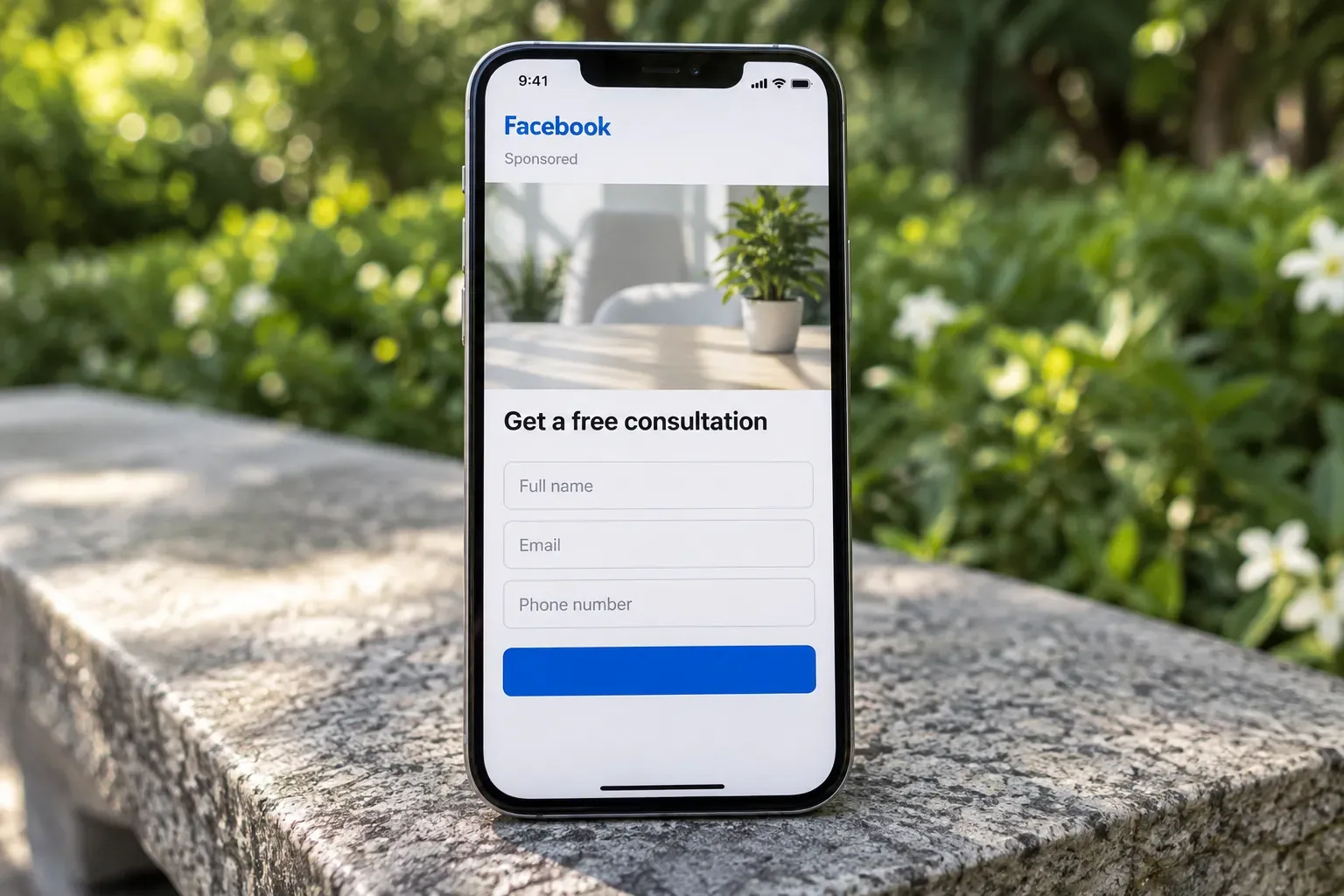
Meta's instant forms open inside the app and fill in name, email and phone from the user's profile. Submitting takes two taps. That makes the cost per lead low, but it also brings people who tapped out of curiosity, misread the offer or used an old email. When the phone rings a day later, many do not remember the ad.
Low quality is a setup problem, not a channel problem. The same audience gives good leads when the form asks a little more and the reply comes fast.
Which form settings improve lead quality?
Choose the higher intent form type
When you create an instant form, Meta offers a form type for more volume and one for higher intent. The higher intent type adds a review screen where the person confirms their details before submitting. Fewer people finish it, and the ones who do expect your message.
Add a qualifying question
Ask one or two questions that separate buyers from browsers, such as the project timeline, the budget range or the property type. Multiple choice answers keep it quick. Use conditional logic, so the next question depends on the previous answer, and route leads who do not fit to a different message.
Write the intro and context card clearly
Repeat in the form what the person will get, the price or starting price and what happens after they submit. "We send a written estimate by email" sets a clear expectation and filters out people who expected something else.
Ask for the contact detail you actually use
If you follow up by text or WhatsApp, make the phone field required and say so. If you reply by email, ask for email. Prefilled data is often old, so ask people to confirm it on the review screen.
How does the ad itself affect lead quality?
An ad that promises something free or vague attracts people who want free things. Show the actual product or service, the starting price and who it is for. "Bathroom remodeling in Austin, projects from 15,000 dollars" gets fewer leads than "Get a free quote", and far more of them are serious. Use real photos of your work rather than stock images.
Targeting matters less than it used to, because Meta's automation finds people on its own. The ad and form text now do most of the filtering.
How do you teach Meta which leads are good?
By default, Meta optimizes for the form submission. If you mark lead stages in a CRM, such as contacted, qualified and won, you can send those stages back to Meta through the Conversions API. Meta can then use the conversion leads optimization goal, which looks for people similar to the leads that became qualified or bought.
The setup needs the leads to reach your CRM automatically with the lead ID from Meta. HubSpot, Pipedrive, Zoho CRM and Salesforce can receive Meta leads through native integrations or Zapier and Make.
Why does follow-up speed matter so much?
A lead from an instant form is warm for minutes, not days. Send an automatic email or text right after submission with what happens next, notify your sales person immediately and call or write while the person is still on their phone. Leads that wait until the next day often do not answer at all.
Which qualifying questions work?
A good question is quick to answer and tells you whether to call first. Examples by type of business.
- Home services. "When do you want the work done?" with options from "This month" to "Just researching".
- B2B services. "How many employees does your company have?" or "What is your monthly budget for this?"
- Real estate and finance. "Are you pre-approved for a mortgage?" or "What price range are you looking at?"
- Courses and coaching. "What is your main goal?" with three to four specific answers.
Keep the form to one or two such questions. Each extra question lowers the number of leads, so add one only if the answer changes what you do with the lead.
How do you measure lead quality?
Mark each lead in your CRM with an outcome, such as no answer, not a fit, qualified, proposal sent and won. After a month, compare campaigns and ads by the share of qualified leads and by the cost per customer. An ad with a cost per lead twice as high can still be the better one if three times as many of its leads become customers.
Should you switch to a website form instead?
Sometimes. A landing page with a form takes more effort, so it brings fewer leads at a higher cost per lead, often with better quality. It also lets you show reviews, examples and prices before the person decides. Run both for a few weeks and compare the cost per qualified lead or per customer, not the cost per lead. The cheapest lead is rarely the cheapest customer.
What does a good setup look like?
- Ad with the real offer, starting price and a photo of real work.
- Higher intent instant form with one or two qualifying questions.
- Leads go to the CRM instantly, with an automatic first reply.
- Lead stages go back to Meta through the Conversions API.
- Reports compare campaigns by qualified leads and customers.
Connecting the Meta lead form to your CRM or messenger is part of our Meta Ads management, which costs $100/mo. The ad budget is paid to Meta directly from your card.
Questions and answers
Why are my Facebook leads so bad?
Instant forms prefill name, email and phone from the profile, so a lead takes two taps. Some people submit without reading, and others forget they did it. Add friction where it filters, such as a review step and a qualifying question, and reply fast while the person still remembers the ad.
Should I use Facebook instant forms or send traffic to my website?
Instant forms bring more leads at a lower cost per lead, website forms bring fewer and usually warmer leads. Test both. If instant form leads rarely answer, a website form or a higher intent form often gives a lower cost per customer.
What is the conversion leads optimization goal?
It is an optimization option in Meta Ads that learns from which leads progressed in your CRM, such as became qualified or bought. It needs lead stages sent back from your CRM through the Conversions API.
Thank you. Share the article with someone who needs it.
Tell us what was missing in the article and we will reply. Ask a question