- Search campaigns show text ads on Google Search for keywords you choose, with full control over searches and ads.
- Performance Max runs one campaign across Search, Shopping, YouTube, Display, Discover, Gmail and Maps, driven by Google's automation.
- Performance Max needs reliable conversion tracking and works best for stores with a product feed.
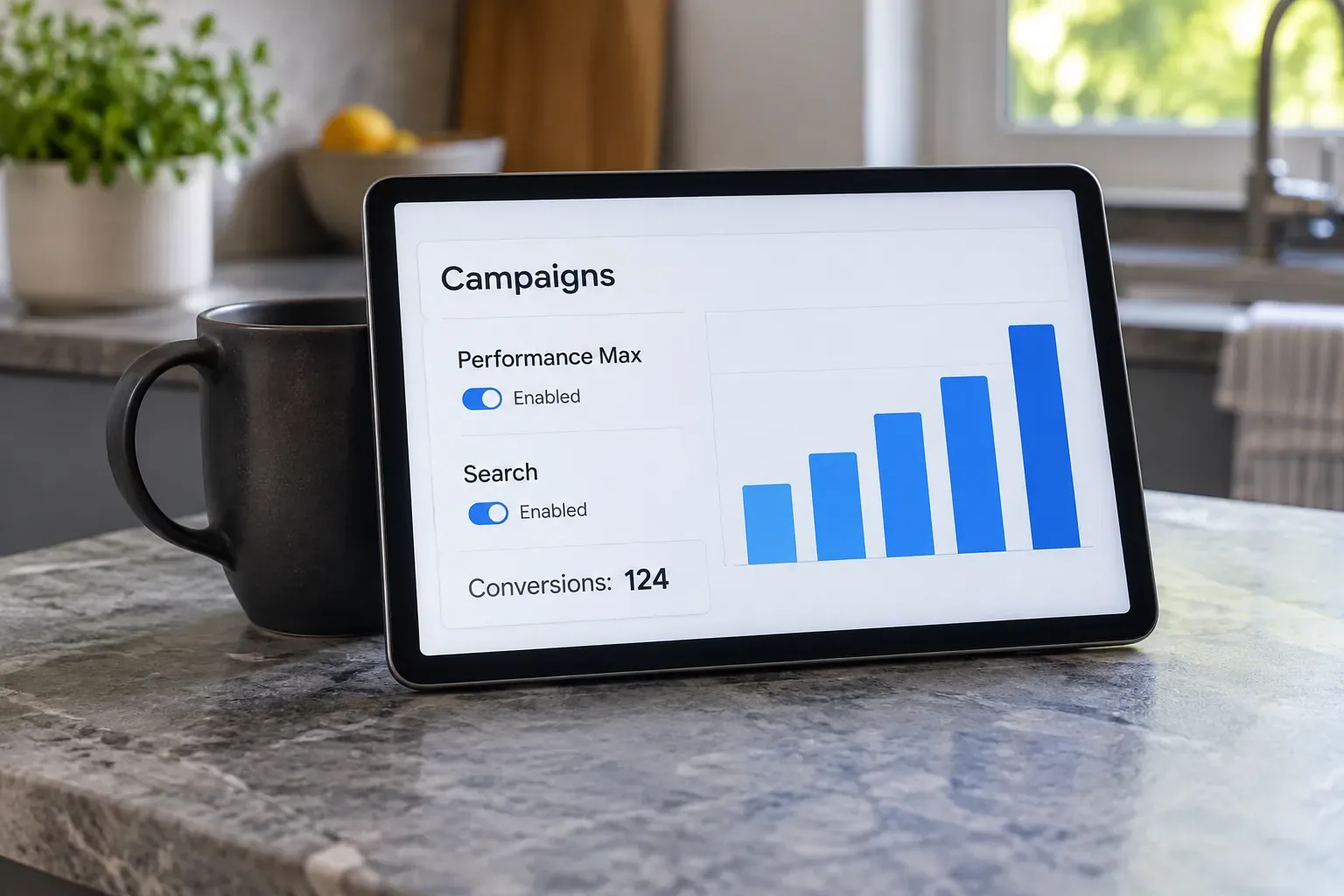
- Many accounts run both, with Search for core and brand keywords and Performance Max for products and reach.
Contents 9 sections
- How does a Search campaign work?
- How does Performance Max work?
- What are the main differences?
- When should you use Search campaigns?
- When should you use Performance Max?
- Can you run both at the same time?
- What does Performance Max need before you launch it?
- How do you know whether Performance Max works?
- What mistakes do we see most with Performance Max?
Search campaigns show your text ads to people searching on Google for keywords you choose, and you control every keyword, ad and landing page. Performance Max is a single campaign that shows ads across Search, Shopping, YouTube, Display, Discover, Gmail and Maps, with Google's automation choosing where, when and to whom. Search fits lead generation and tight budgets. Performance Max fits online stores with a product feed and accounts with reliable conversion data.
How does a Search campaign work?
You pick keywords and match types, write responsive search ads and choose a landing page for each ad group. Google shows your ads when someone searches for something that matches your keywords and your bid and ad quality win the auction. The search terms report shows every search that triggered a click, so you see exactly what you pay for and can exclude irrelevant searches with negative keywords.
Search campaigns reach people who are already looking for what you sell. That makes them the most predictable channel for services, local businesses and B2B leads.
How does Performance Max work?
You give Google assets, such as headlines, descriptions, images, logos and videos, plus a product feed from Merchant Center if you sell products. You add audience signals, such as your customer lists and website visitors, as hints. Google's automation then builds ads for each placement and bids for conversions across all its channels from one budget.
Performance Max is the main way to run Shopping ads with automation, since Standard Shopping campaigns offer less automation. It can find buyers outside your keywords, for example on YouTube or in Discover, which a Search campaign never reaches.
What are the main differences?
| Factor | Search | Performance Max |
|---|---|---|
| Where ads show | Google Search and optional partners | Search, Shopping, YouTube, Display, Discover, Gmail, Maps |
| Targeting | Keywords you choose | Automated, guided by audience signals and assets |
| Control | Full control over keywords, ads and pages | Limited, with brand exclusions and negative keywords |
| Reporting | Search terms, keywords, ads | Asset groups, search term insights, channel data |
| Needs | Keyword research and a good landing page | Conversion data, many assets, a feed for stores |
| Best for | Services, local, B2B, small budgets | Ecommerce, accounts with steady conversions |
When should you use Search campaigns?
- You sell services, and people search for them with clear words, such as "kitchen remodeling near me" or "bookkeeping for restaurants".
- The budget is limited, and every click has to come from a relevant search.
- Conversion tracking is new or incomplete, so automation has little to learn from.
- You need to protect brand searches from competitors bidding on your name.
When should you use Performance Max?
- You run an online store with a product feed in Merchant Center.
- Conversion tracking records purchases or qualified leads reliably, with enough volume every month.
- You have images and ideally videos for the asset groups. Without video, Google can create one from your images, which may not fit your brand.
- You want reach beyond Search, such as YouTube and Discover, without managing separate campaigns.
Can you run both at the same time?
Yes, and many accounts should. A common structure for a store is a Search campaign for brand and the most profitable non-brand keywords, plus Performance Max for products. For a service business, a Search campaign usually carries the account, and Performance Max is tested once lead quality is tracked.
When both could show for the same search, Google gives priority to the Search campaign if the search is identical to an exact match keyword. For other searches, the campaign with the higher ad rank wins. Add your brand terms as exclusions in Performance Max if you want brand searches to stay in Search, where the reporting is clearer.
What does Performance Max need before you launch it?
- Purchase or qualified lead tracking. Conversion values for stores, so the campaign can bid for revenue, not order count.
- A clean product feed. Titles with brand, product type and key attributes, correct prices, GTINs and good images.
- Assets for each asset group. Several headlines and descriptions, landscape, square and portrait images, a logo and at least one video.
- Audience signals. Customer lists, website visitors and search themes that describe your buyers.
- A budget that lets it learn. A daily budget that covers several conversions a week at your target cost.
How do you know whether Performance Max works?
Performance Max reports conversions it took part in, including some that would have happened anyway, such as brand searches and returning customers. Judge it by the total for the account. Compare total revenue or qualified leads and total spend before and after the launch, not only the numbers inside the campaign. The channel performance report shows how spend splits between Search, Shopping, YouTube and Display, which helps you spot budget going to low-value placements.
What mistakes do we see most with Performance Max?
- Counting soft conversions. Page views or button clicks as goals make Performance Max chase cheap actions.
- One asset group for everything. Separate asset groups by product category or service give relevant ads and clearer data.
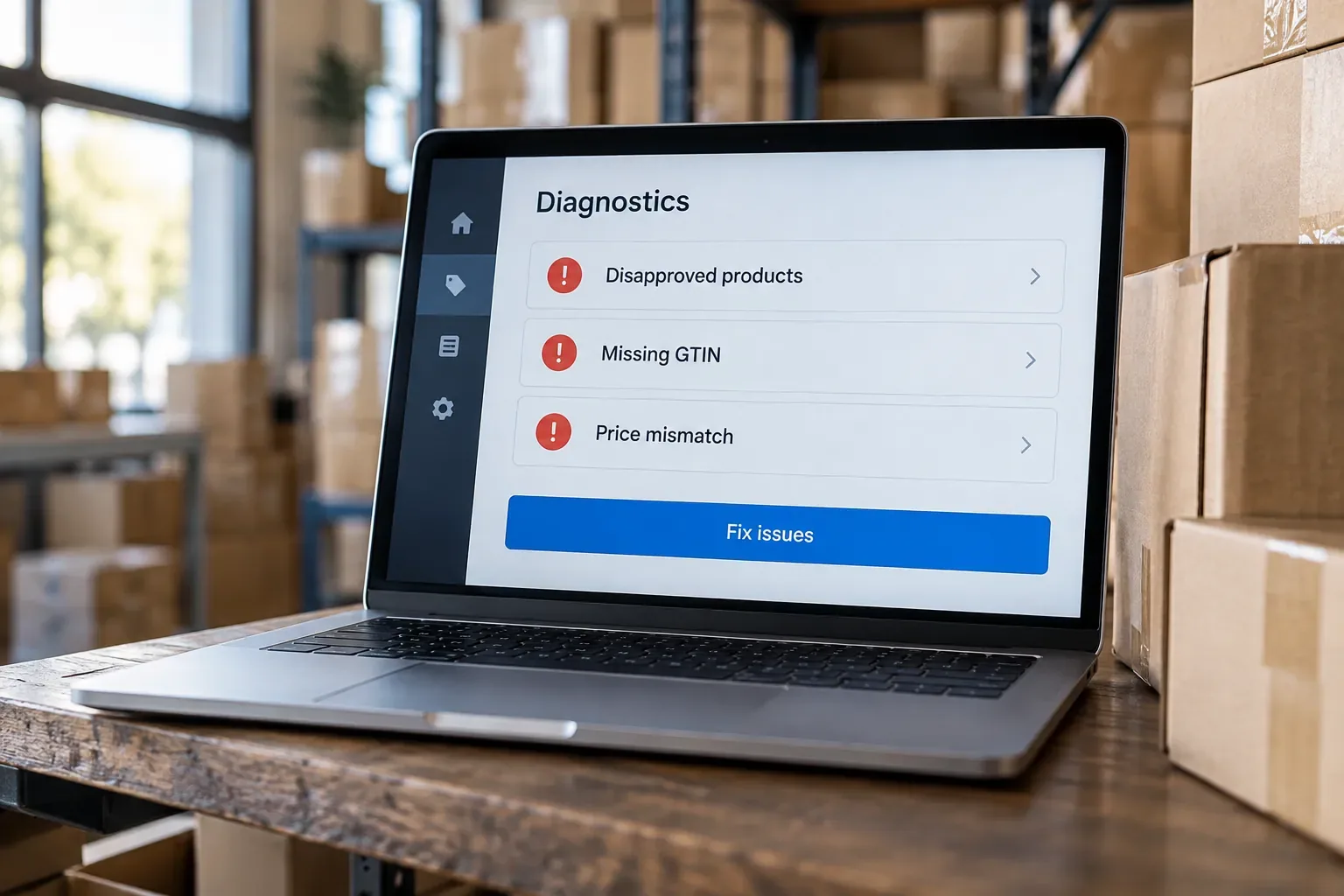
- Weak feed data. Product titles without the attributes people search for, missing GTINs and poor images limit Shopping reach. Our guide to Merchant Center errors covers the usual fixes.
- Judging too early. The first weeks are a learning period. Changing budgets and assets every few days restarts it.
- No brand exclusion. Performance Max takes credit for brand searches you would have won anyway, which makes it look better than it is.
We set up Performance Max and Search campaigns as part of Google Ads management at $100/mo, and stores get the product feed and Merchant Center setup as well.
Questions and answers
Does Performance Max replace Search campaigns?
No. Performance Max can show ads on Search, but Search campaigns give more control over keywords, ad text and landing pages. When a search exactly matches an exact match keyword in a Search campaign, Google gives the Search campaign priority.
Is Performance Max good for lead generation?
It can be, when conversion tracking separates real leads from spam and the account has steady conversion volume. Without that, Performance Max often finds cheap, low-quality form fills, especially on Display and partner placements.
Can I see which searches Performance Max ads appear for?
Partly. Performance Max shows search term insights grouped into categories and some search term data. You can add brand exclusions and negative keywords, but control is still less precise than in a Search campaign.
Thank you. Share the article with someone who needs it.
Tell us what was missing in the article and we will reply. Ask a question