- UTM parameters are tags added to a link that tell analytics where a visit came from.
- utm_source, utm_medium and utm_campaign are the core three. GA4 uses source and medium to assign channels.
- Use lowercase and a fixed naming list, or the same channel splits into several rows.
- Never add UTM tags to links between pages of your own site, and keep Google Ads auto-tagging on.
Contents 8 sections
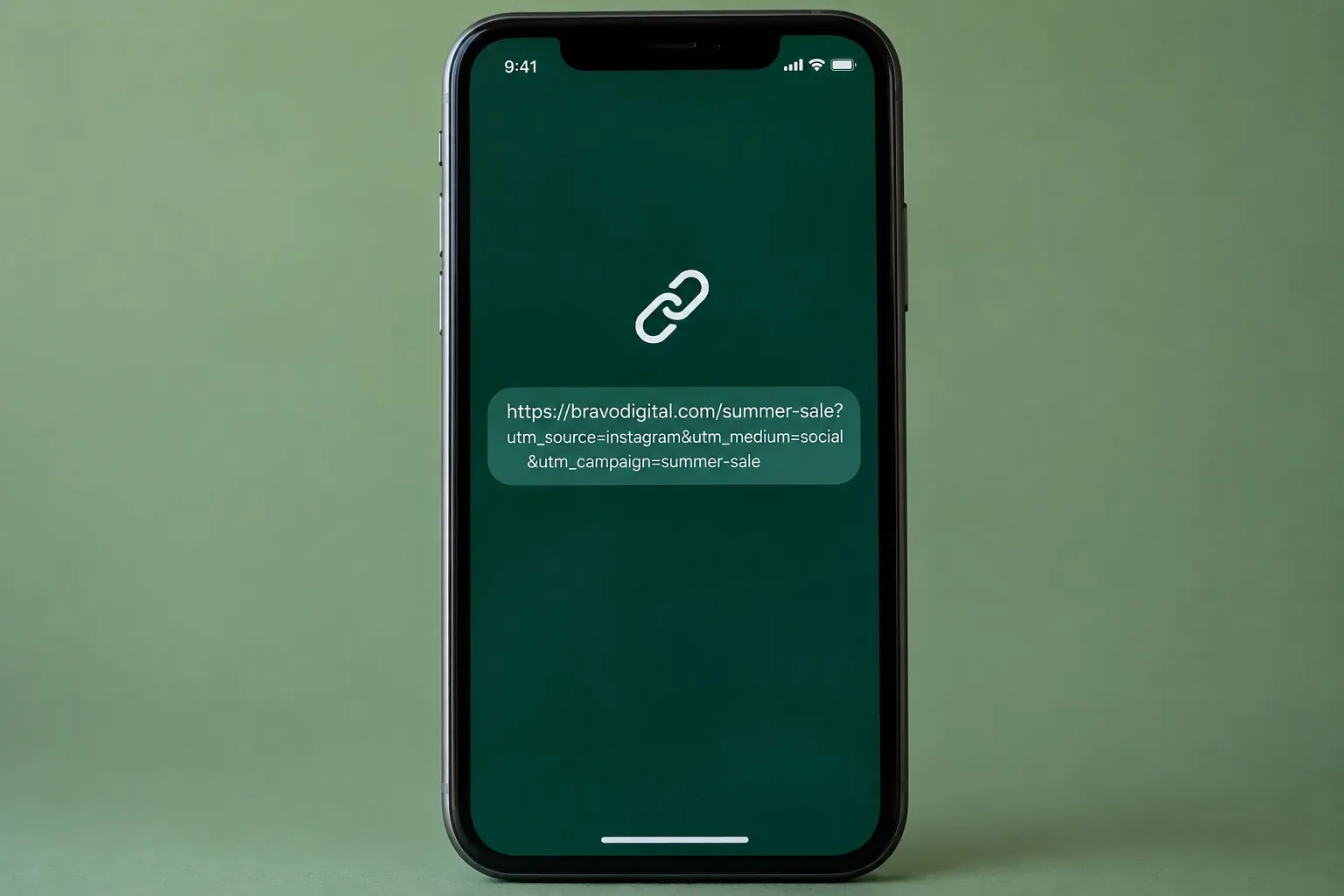
UTM parameters are short tags added to the end of a link, such as ?utm_source=facebook&utm_medium=paid_social&utm_campaign=spring_sale, that tell Google Analytics where a visit came from. Without them, clicks from emails, social posts and many ads arrive as direct or unknown traffic, and you cannot tell which campaign brought leads. With a consistent naming system, every channel and campaign shows up as its own row in GA4.
What are the five UTM parameters?
| Parameter | What it describes | Example |
|---|---|---|
| utm_source | The site or platform that sent the visit | facebook, newsletter, linkedin |
| utm_medium | The type of traffic | paid_social, email, cpc, social |
| utm_campaign | The campaign or promotion | spring_sale, kitchen_remodel_austin |
| utm_content | Which ad or link, for comparing versions | video_a, header_button |
| utm_term | The keyword, mostly for paid search | roof_repair |
Source, medium and campaign are the core three. Content and term are optional and useful for comparing ads or links inside one campaign.
How does GA4 use source and medium?
GA4 sorts traffic into default channels, such as Paid Search, Paid Social, Organic Social, Email and Referral, based on rules for source and medium. If the medium does not match the rules, the visit lands in Unassigned. Some practical values that GA4 groups as expected.
- Paid social ads. Source facebook, instagram or tiktok, medium paid_social or cpc.
- Organic social posts. Source facebook, instagram or linkedin, medium social.
- Email. Source newsletter or the tool name, medium email.
- Paid search outside Google Ads. Source bing, medium cpc.
What naming rules keep reports clean?
- Lowercase only. Facebook and facebook are two different sources in GA4.
- Underscores instead of spaces. Spaces become %20 in links and are easy to mistype.
- A fixed list of sources and mediums. Agree on the values and keep them in a shared sheet, so the team does not invent fb, FB and facebook_ads.
- Readable campaign names. Name, topic and month or offer, such as black_friday_boots, so the report makes sense a year later.
- Build links with a tool. Google's Campaign URL Builder or a spreadsheet formula prevents typos.
How do you add UTM tags in Meta Ads?
In the ad, use the URL parameters field rather than editing the website link. Meta supports dynamic values that fill in automatically.
utm_source=facebook&utm_medium=paid_social&utm_campaign={{campaign.name}}&utm_content={{ad.name}}
Meta replaces the values in curly brackets with the campaign and ad names, so each ad shows up separately in GA4. Name campaigns and ads in Meta with the same rules, lowercase and without spaces, to keep the report readable.
What about Google Ads?
Keep auto-tagging on. Google Ads adds a gclid parameter to every click, and GA4 reads it to show campaigns, ad groups and keywords with more detail than manual tags. Manual UTM tags are only needed when another tool, such as a CRM, has to see the source. In that case, add them through tracking templates and keep auto-tagging on as well.
What about email and social posts?
Klaviyo, Mailchimp and most email tools can add UTM tags to every link automatically. Check the default values they use and change them to match your naming list. For organic social posts, link-in-bio tools and scheduling tools usually have a UTM setting. For QR codes on print materials, add UTM tags to the link inside the code, so offline campaigns show up too.
Which mistakes break UTM tracking?
- UTM tags on internal links. A tagged link from your home page to a service page starts a new session and replaces the real source. Never tag links between your own pages.
- Redirects that drop the parameters. Some short links and redirects strip everything after the question mark. Test the final URL.
- Different spellings. The same channel split across several rows.
- Missing medium. A link with only a source ends up in Unassigned.
- Personal data in UTM tags. Never put emails or names into a parameter. It breaks Google's policies and privacy laws.
Where do you see UTM data in GA4?
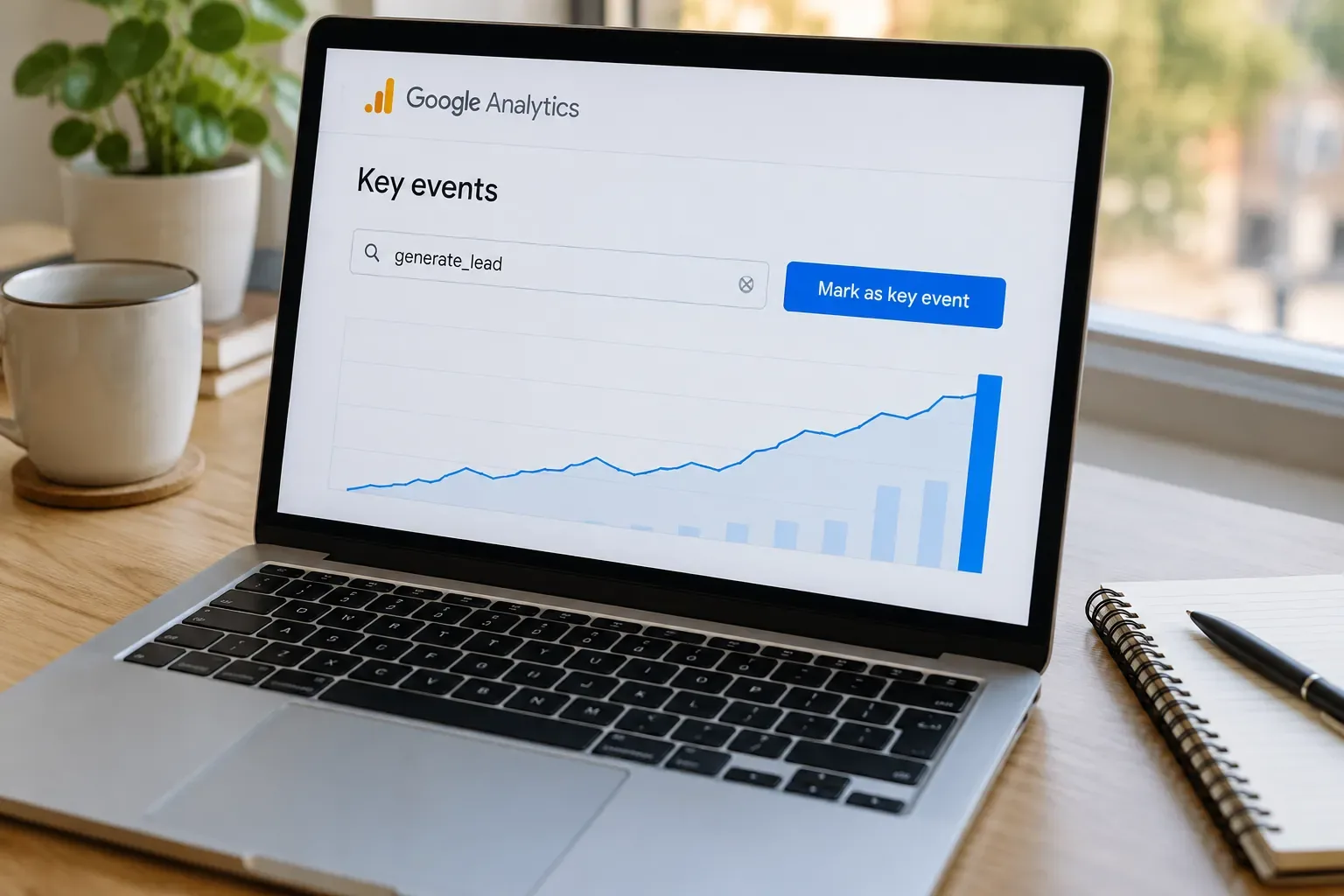
Open Reports, then Acquisition, then Traffic acquisition, and choose session source / medium or session campaign as the dimension. Add key events, such as generate_lead, as a metric to see which campaigns bring leads. If key events are not set up yet, start with our guide on tracking form leads in GA4. Our GA4 and Google Tag Manager setup includes a naming sheet for UTM tags and connects leads with their source.
Questions and answers
Do I need UTM tags for Google Ads?
Usually not. With auto-tagging on, Google Ads adds a gclid parameter that GA4 reads, with more detail than manual tags. Add UTM tags only if another tool needs them, and keep the values consistent with auto-tagging.
Are UTM parameters case sensitive?
Yes. GA4 treats Facebook and facebook as different sources. Use lowercase everywhere to keep reports clean.
Do UTM parameters affect SEO?
Not when used on external links, such as ads, emails and social posts. On internal links, they create duplicate URLs and break sessions, so do not use them there.
Thank you. Share the article with someone who needs it.
Tell us what was missing in the article and we will reply. Ask a question