Two industries
Auto transporters and moving companies buy different leads on different plans. When everything is mixed, each of them hunts for their plans among someone else's and goes to a supplier that works only with their industry.
Websites, online stores, apps, integrations and support
Google Ads, Instagram and Facebook, Microsoft Ads, TikTok, ChatGPT and marketplaces
Google Search, Google Maps and answers in ChatGPT, Gemini and Google AI
Instagram and TikTok management, Reels and design
GA4, Google Tag Manager, Conversions API and reports
Chatbots, AI agents, workflow automation and CRM
Email campaigns and automated email sequences
Marketing strategy and a free website audit
We built a website for Lenox, a company that sells live leads to two different US industries, auto transporters and moving companies. A car shipping broker needs data on the vehicle and the route, a moving company needs the move size and date, and their plans differ. The site had to separate these audiences into their own pages and show the price of a lead on each one right away.
I want a project like this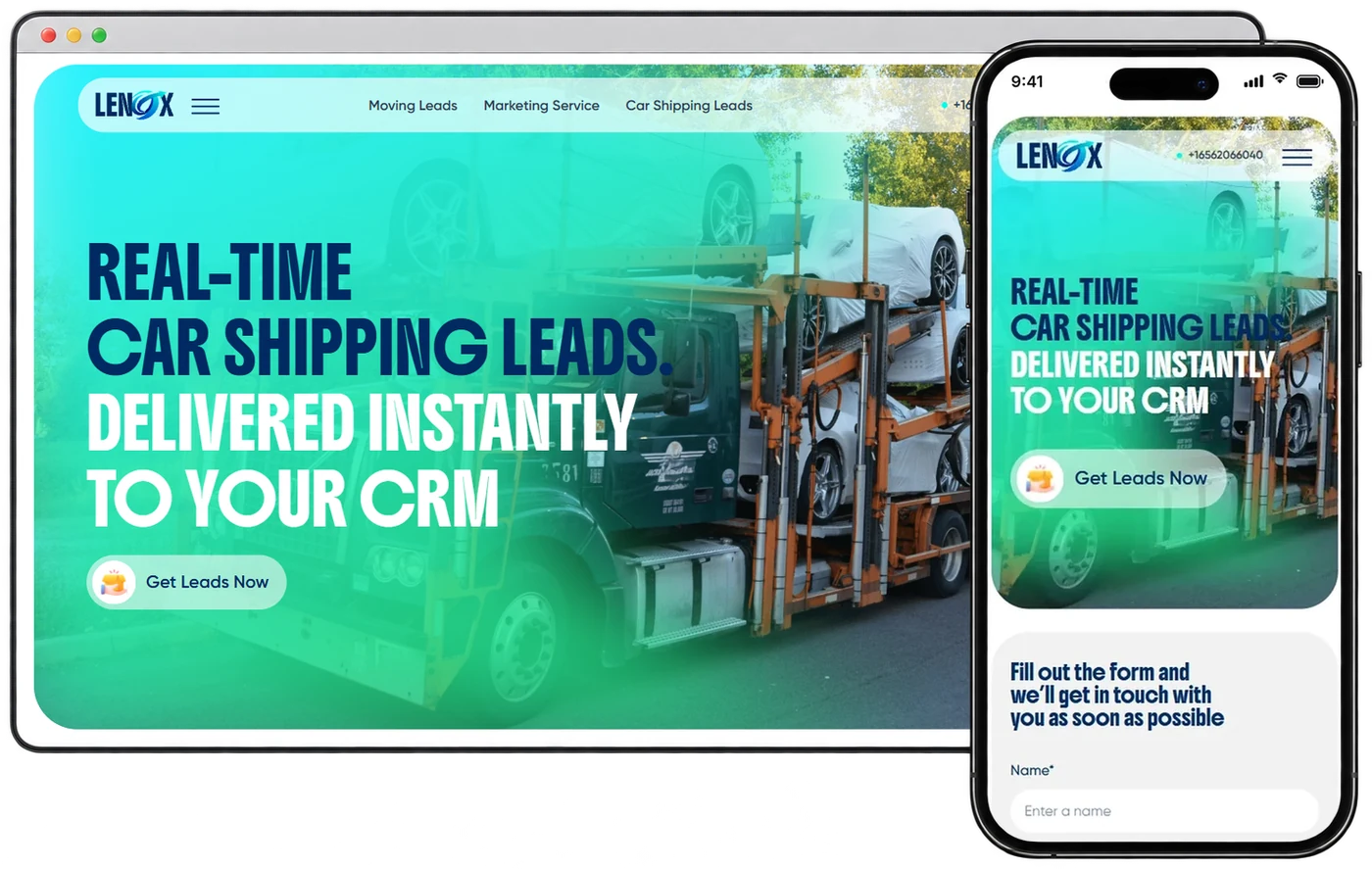
Lenox sells leads from people who want to ship a car or move to brokers, auto transporters and moving companies in the US. Leads are either exclusive or shared with a limited number of companies and are delivered to a CRM or by email. Separately, the company runs SEO, Google and Meta ads and marketing automation for its clients.

Auto transporters and moving companies buy different leads on different plans. When everything is mixed, each of them hunts for their plans among someone else's and goes to a supplier that works only with their industry.
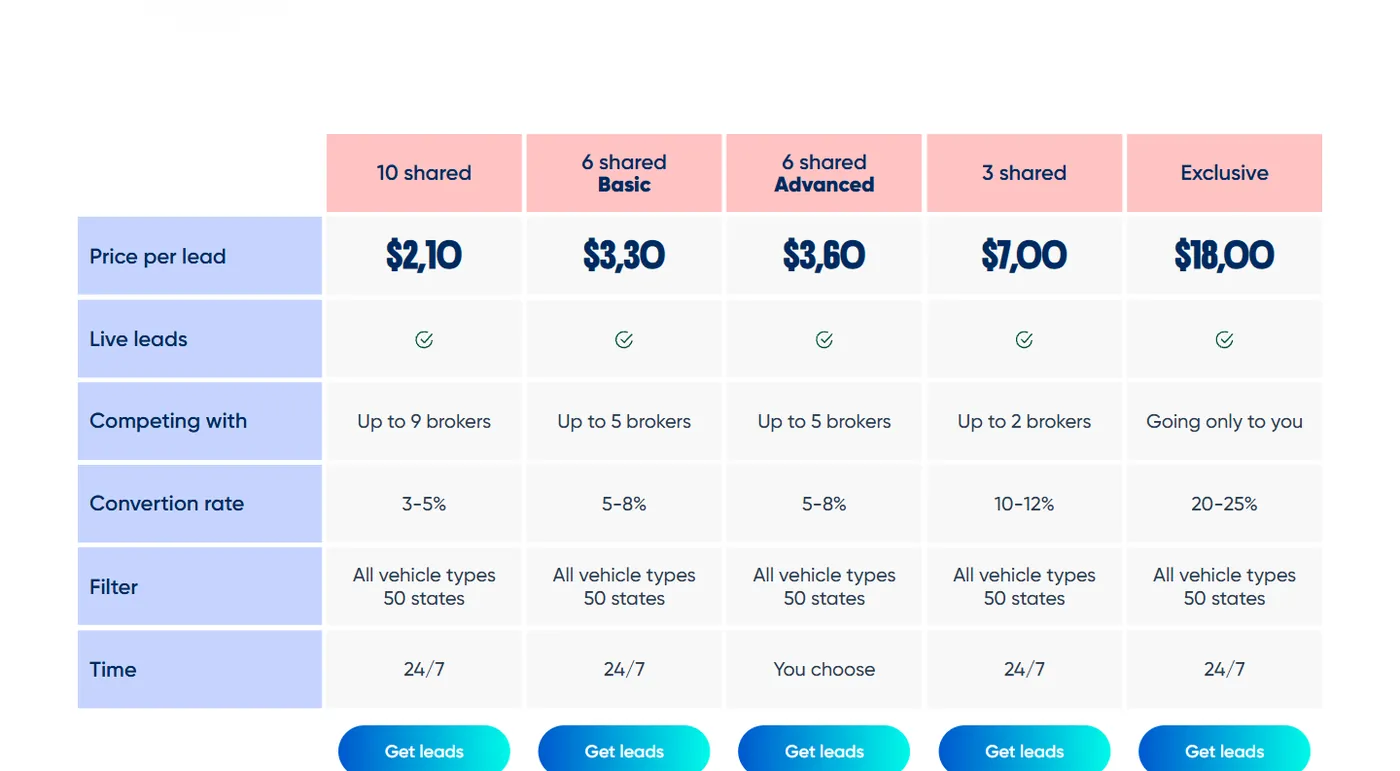
A broker compares suppliers by the price of a lead and by how many companies get the same contact. If these numbers are missing from the site, the broker goes to someone who shows them openly.
Brokers search Google separately for auto transport leads and for moving leads. A general page about everything at once answers neither query precisely.
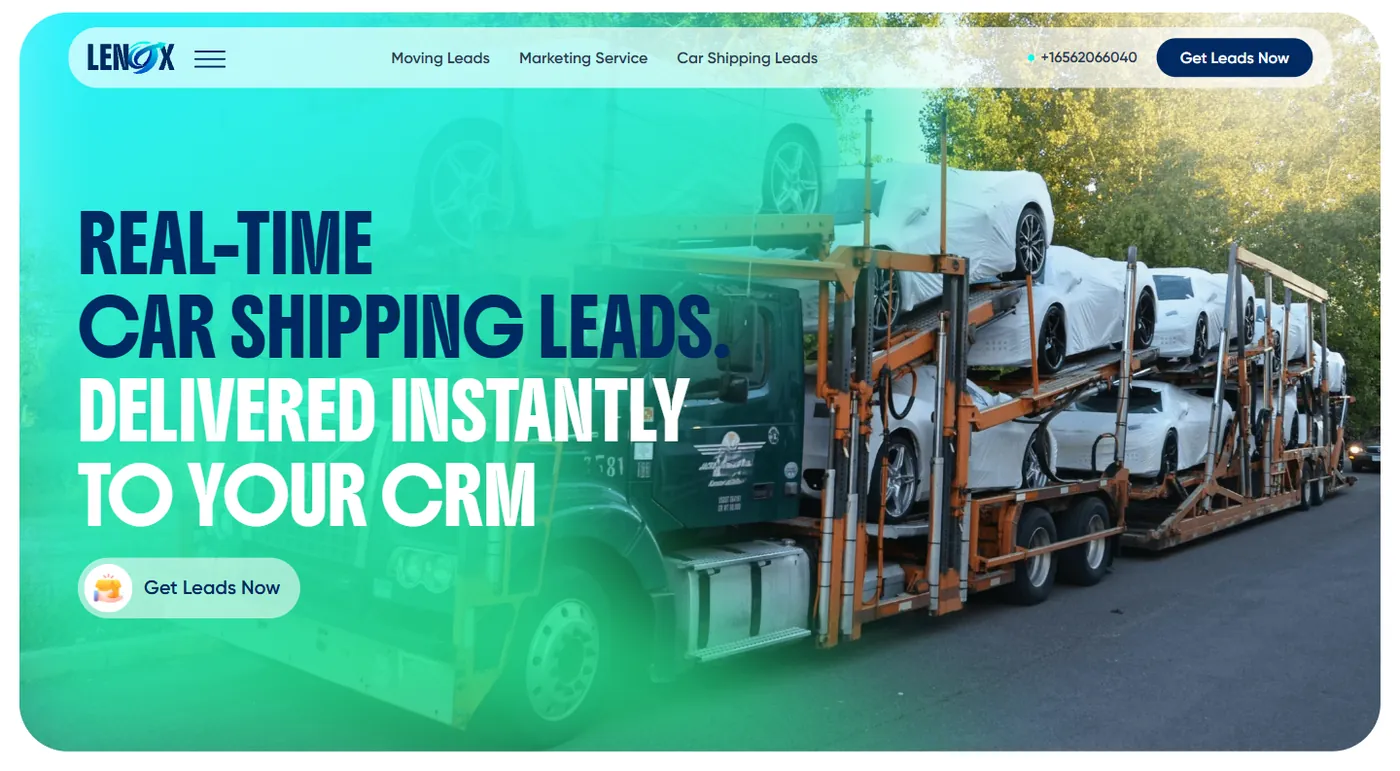
An auto transporter and a moving company need their own leads, plans and answers. So auto transport leads, moving leads and marketing each got a separate page, and visitors switch between them from the main menu. Ads and search send each client straight to the page for their industry, without other industries' plans.
An auto transporter looks first at how many competitors will share a lead, and a moving company also checks whether the move is local or interstate. So the auto transport page lists plans from a lead shared with ten companies up to an exclusive one, with a comparison table under the cards, and the moving page has separate plans for local and interstate moves, including Live Call. A broker chooses only from the plans of their industry and sees the price before talking to a manager.
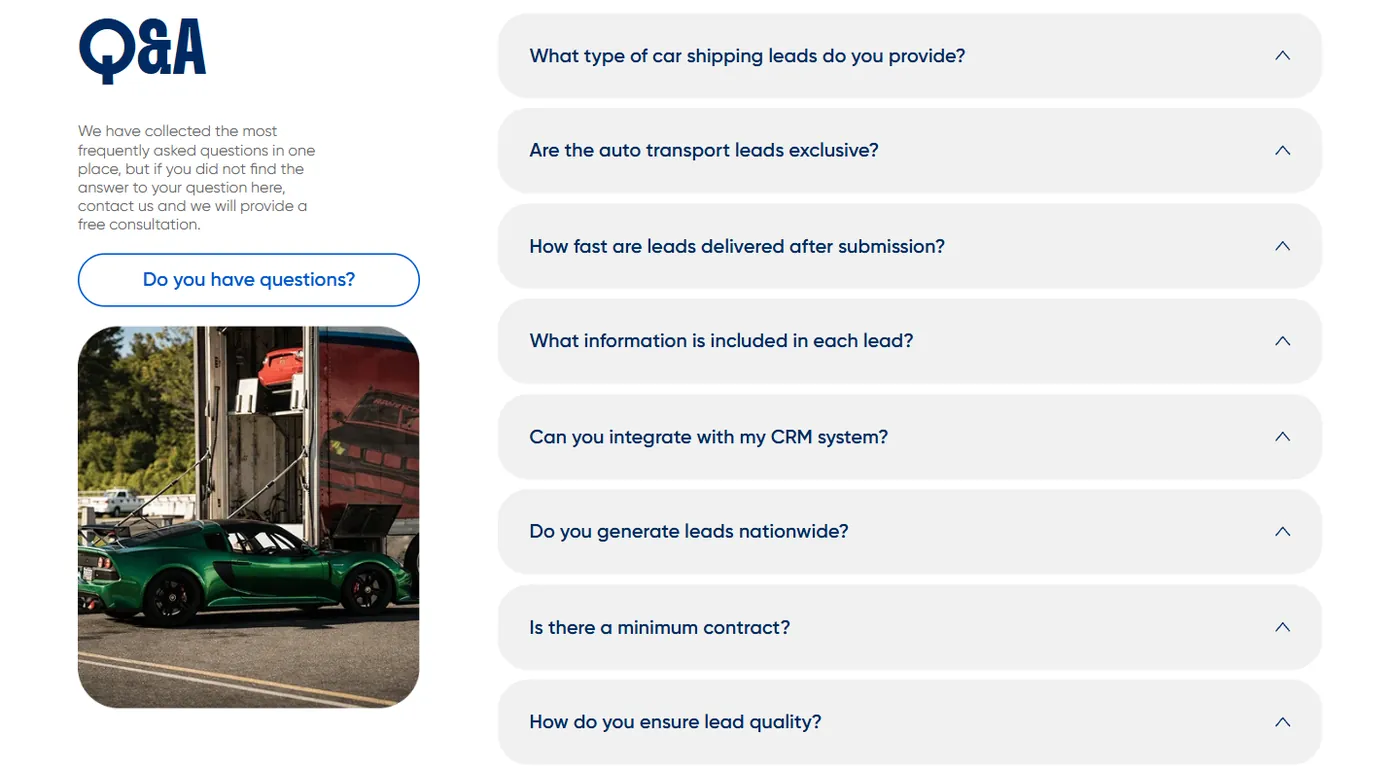
A broker who has already chosen a plan does not want to explain it over email. So the form sits right below the hero section and again further down, it has a list of plans, and the company name and MC number (the carrier's authority) are optional so they do not slow down the request. The manager receives the chosen plan and can set up lead delivery right away.
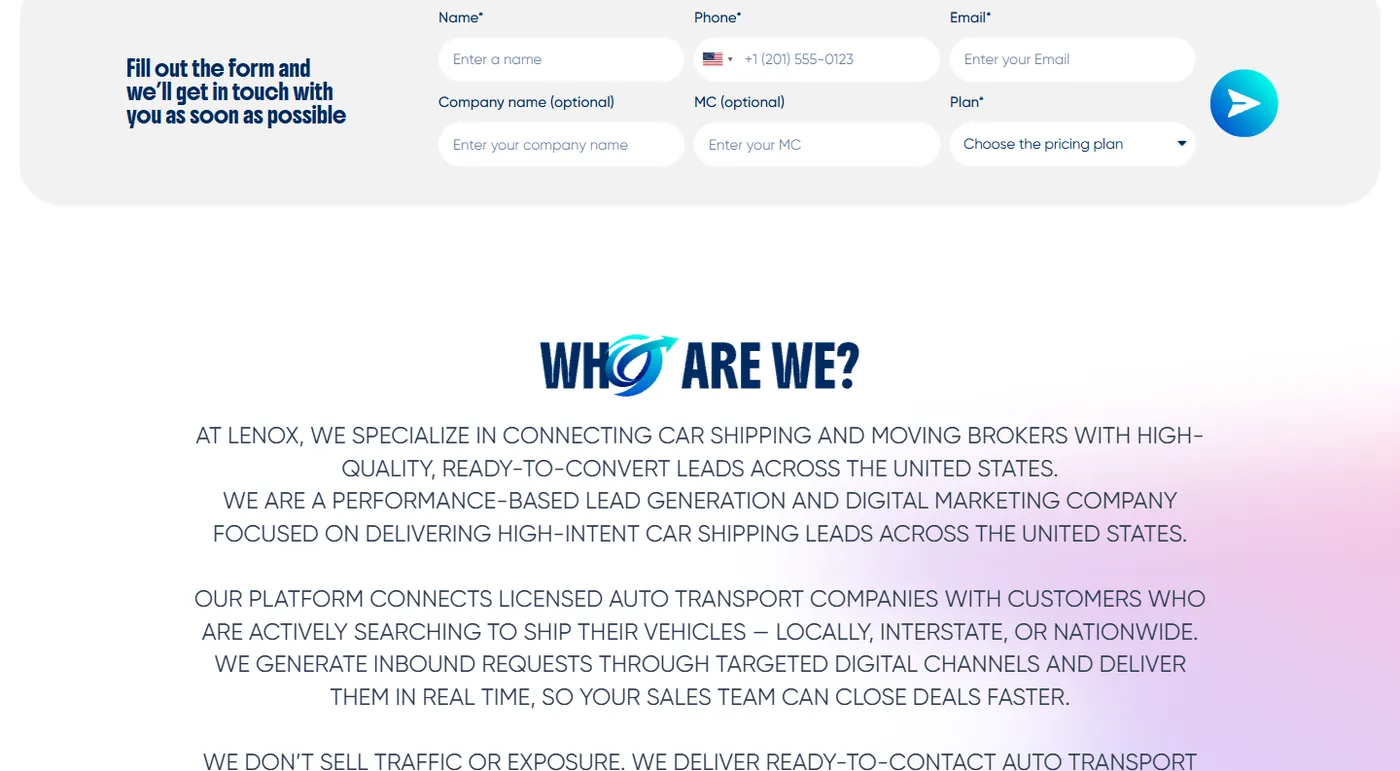
A broker will not pay until they know exactly what they will get. So each page has its own FAQ that explains what is inside a lead. An auto transport lead includes the vehicle, ZIP codes and dates, and a moving lead includes the move size and date. The same answers say that a lead arrives within minutes of the customer's inquiry and that there is no long contract, so before talking to a manager the broker already knows what they are paying for.
A steps block leads from choosing a plan to the first leads in a CRM or by email. Setup takes under 15 minutes, and the broker knows this before paying.
Below the plans and FAQ on each page is a long-form article about leads in that industry, with common broker mistakes and who these leads are not right for. A broker searching Google for how to work with live leads lands on a page where these leads can be ordered right away.
The marketing page offers brokers and moving companies Google and Meta ads, landing pages and CRM integration. Those who already buy leads from Lenox can also order their own flow of customers.
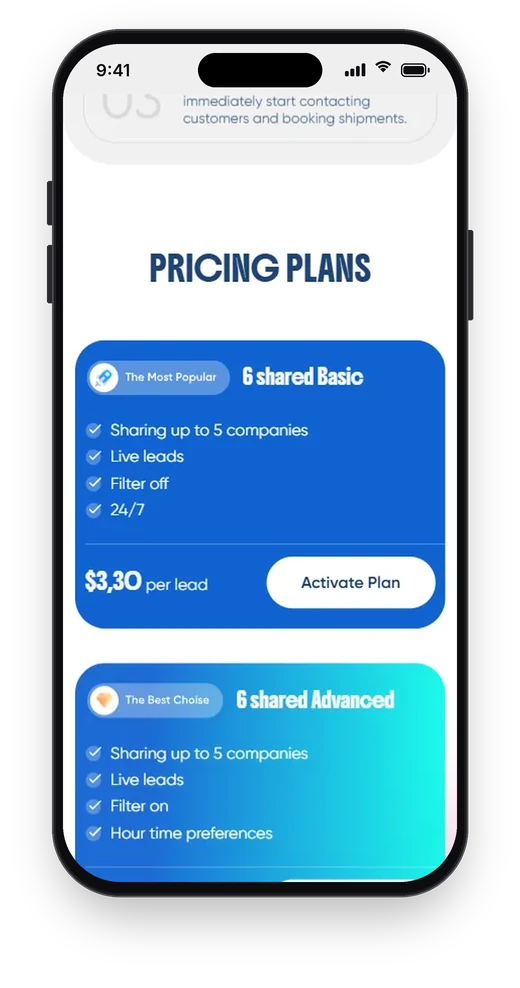
An auto transporter or a moving company sees the prices for its industry and orders a plan without any prior emails with a manager.
Ads for auto transporters and for moving companies can run to different pages and be tracked separately.
A broker compares plans alone, and the manager does not have to explain the difference between shared and exclusive leads to everyone.
Articles on the industry pages answer brokers' searches for live auto transport and moving leads.
A new broker arrives with a plan already chosen, so the manager sets up lead delivery right away.
The team edits plan prices, FAQ and articles on its own in the WordPress admin.
Lifetime guarantee on fixing bugs in our work, written instructions and training materials for the team.
If your question is not answered here, message us and we reply in writing.
Ask a questionThe Lenox corporate website was built by the Bravo Digital team. It is a WordPress site for a company that sells auto transport and moving leads to US brokers and carriers.
A corporate website from Bravo Digital costs from $350. We confirm the exact amount after a short brief, and the number of pages, service lines and integrations changes the price.
Yes. Under the plan cards we add a table with the price and terms of each plan, and if there are several industries, each gets its own. The request form has a list of plans, so the manager sees the client's choice right away.
Yes. We build a page for each line of business with its plans, form and FAQ, so ads and search can each send traffic to the right page.
Yes. We write texts for your clients' searches and the questions they ask before buying. SEO/GEO management with new texts costs $100/mo.
Get a quote
Thank you!