A service for each client
An owner who needs a logo does not care how the agency generates leads. When all service lines are described together, they do not find theirs and keep looking elsewhere.
Websites, online stores, apps, integrations and support
Google Ads, Instagram and Facebook, Microsoft Ads, TikTok, ChatGPT and marketplaces
Google Search, Google Maps and answers in ChatGPT, Gemini and Google AI
Instagram and TikTok management, Reels and design
GA4, Google Tag Manager, Conversions API and reports
Chatbots, AI agents, workflow automation and CRM
Email campaigns and automated email sequences
Marketing strategy and a free website audit
We built a corporate website for Pixelco, a US marketing agency. Clients come to the agency with different tasks, from a steady flow of leads to a brand book or a new website, and they choose a contractor by experience and by what other companies say. The site had to split the service lines into separate pages, show the agency's clients and lead visitors to book a call.
I want a project like this
Pixelco does lead generation, branding and websites for companies in the US. Its clients work in finance, logistics, real estate, construction, healthcare, ecommerce, SaaS and education.

An owner who needs a logo does not care how the agency generates leads. When all service lines are described together, they do not find theirs and keep looking elsewhere.
A US business picks a marketing agency from many similar ones and looks at who each has already worked with. Without client names and testimonials, it has no reason to contact Pixelco in particular.
A client wants to know how long a project takes, what it costs and whether they can edit the copy themselves. Until these questions are answered, the call gets put off.
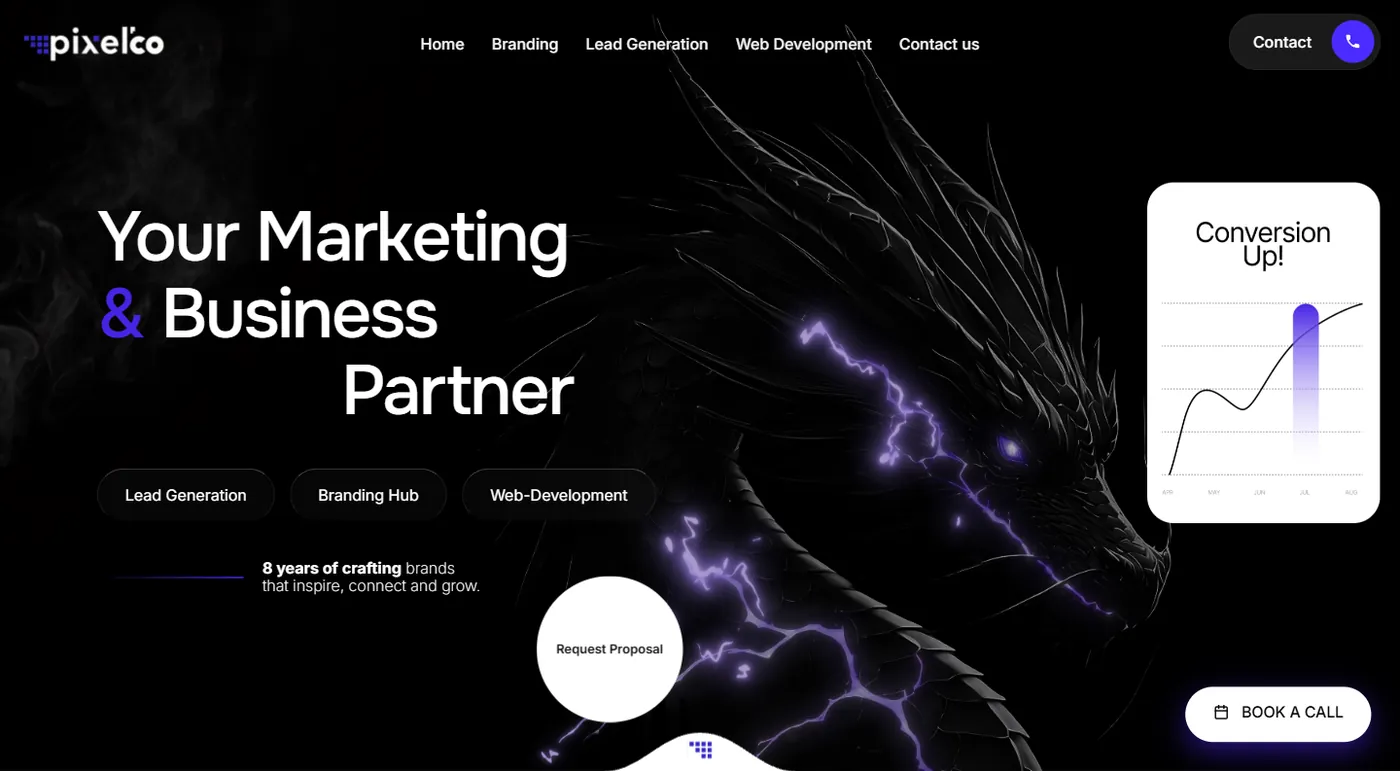
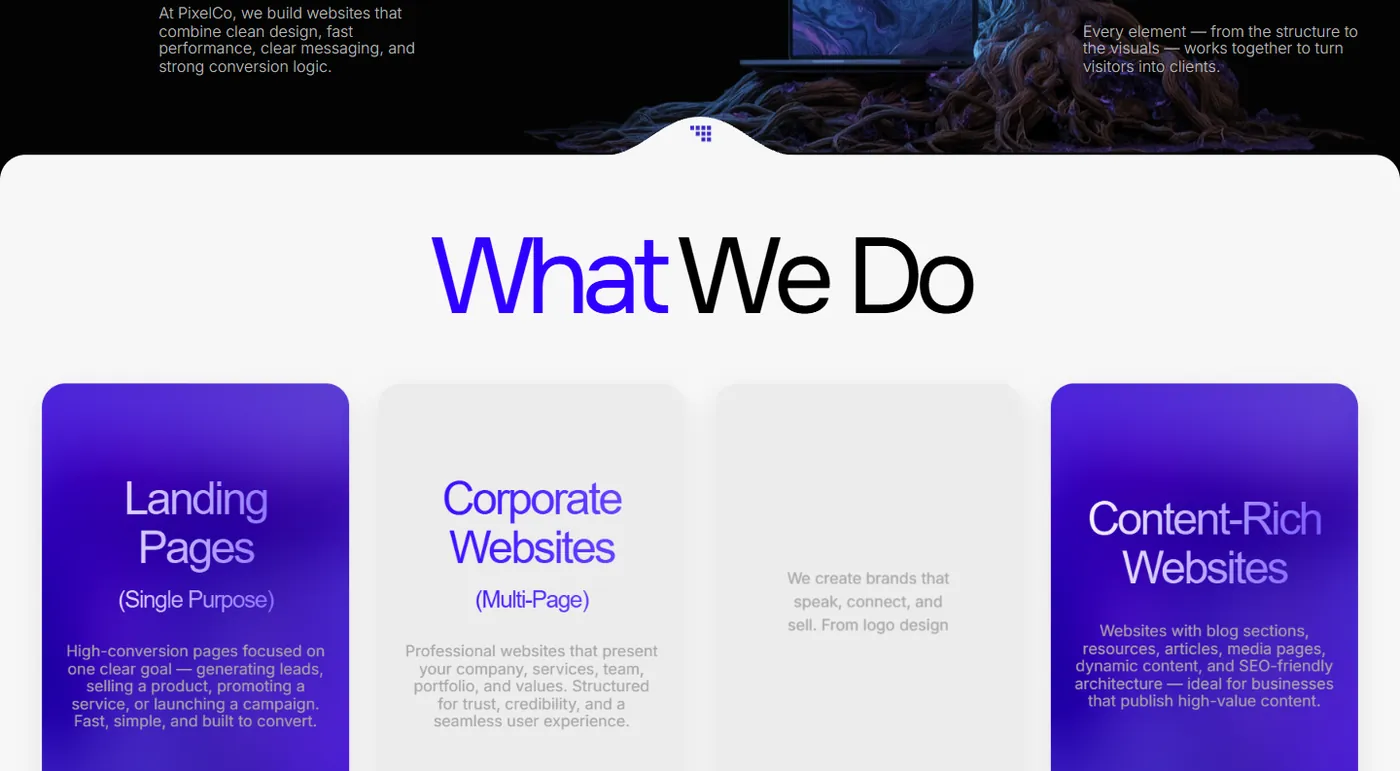
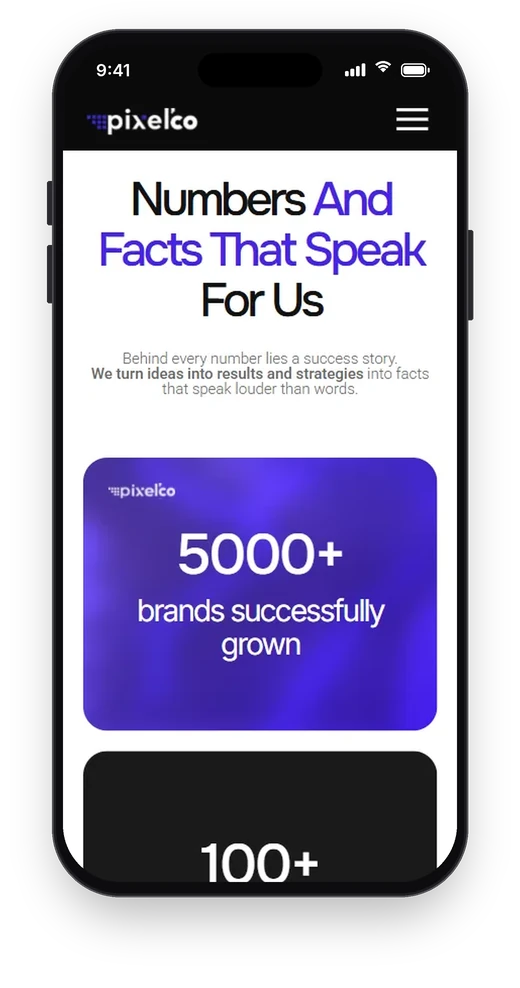
A visitor arrives with one task (a flow of leads, a logo or a new website). So the first screen already has Lead Generation, Branding Hub and Web-Development buttons, followed by the agency's numbers and client logos. The client goes to their service line without scrolling.
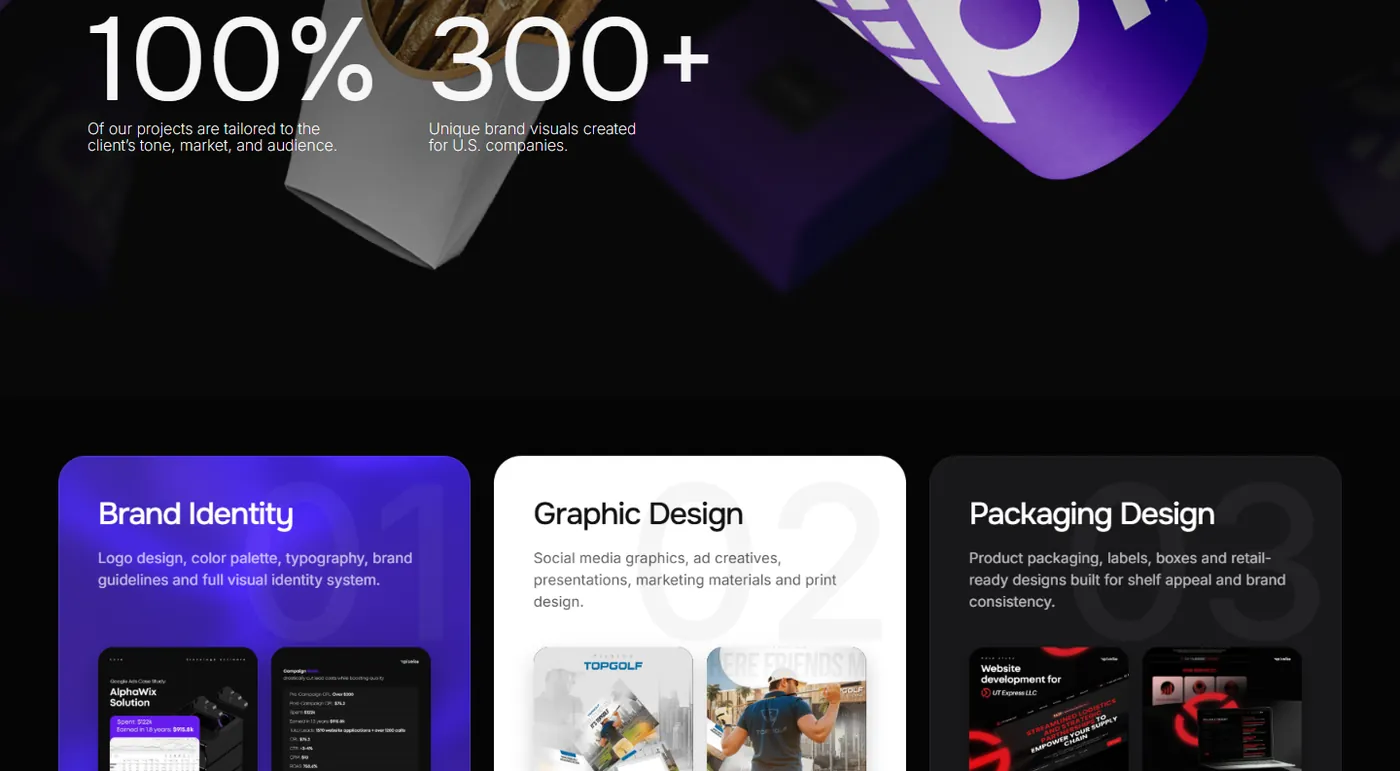
Branding sounds vague to a buyer until they see what exactly they will get. So the Branding Hub page splits the work into identity, graphic design and packaging, with a list of deliverables in each, from naming and a brand book to labels and gift boxes. The buyer picks what they need and comes to the call with their own list.
Not everyone who needs a website knows whether it should be a landing page or a store. So the web development page explains the types of sites, from a one-page landing page to a store and a portfolio, and the FAQ at the bottom covers timelines, price and edits after launch. The client gets answers to common questions before talking to a manager.
When the decision is almost made, back-and-forth emails about a convenient time only slow things down. So at the bottom of every page the BOOK A CALL button opens Calendly, with email and phone next to it. The client picks a free slot in the agency's calendar.
Testimonials on the home page include the logistics companies WTK Freight and JDM CO Freight. A carrier looking for an agency sees that it has already worked with companies in its market.
A separate block lists the agency's client industries, including hospitality and automotive. A business owner sees before the conversation whether the agency has worked in their industry.
The branding page features the Crafty Box, Yoga Drew and MSpace Dance Studio projects. A buyer sees how identity and packaging look on real brands.
The agency got a website from which US clients book a call on their own, already knowing what they will order.
Ads and search traffic for branding and for web development can be run separately, each to its own page.
A new company sees who the agency has worked with and does not have to take its word for it.
Timelines, price and edits after launch are explained on the site, so the call is about the client's task.
Calendly bookings go straight into the team's calendar, with no email back-and-forth about the time.
The agency team adds new case studies, testimonials and copy in the WordPress admin on its own.
Lifetime guarantee on fixing bugs in our work, written instructions and training materials for the team.
If your question is not answered here, message us and we reply in writing.
Ask a questionThe Pixelco corporate website was built by the Bravo Digital team. It is an English-language WordPress site with separate pages for branding and web development.
A corporate website from Bravo Digital costs from $350, and we confirm the exact amount after a short brief. The price depends on the number of service pages, case studies and language versions.
Yes. We build websites for clients in the US and other countries. We work remotely and communicate in writing, by email and messengers, which is convenient across time zones.
Yes. We add a button or an embedded Calendly calendar, the client picks a free time, and the meeting appears in the manager's calendar right away.
Get a quote
Thank you!