Unfamiliar methods
Gua sha, cupping therapy or the Redcord suspension system are just names to many patients. Until a patient understands what will be done and why, they do not book an appointment.
Websites, online stores, apps, integrations and support
Google Ads, Instagram and Facebook, Microsoft Ads, TikTok, ChatGPT and marketplaces
Google Search, Google Maps and answers in ChatGPT, Gemini and Google AI
Instagram and TikTok management, Reels and design
GA4, Google Tag Manager, Conversions API and reports
Chatbots, AI agents, workflow automation and CRM
Email campaigns and automated email sequences
Marketing strategy and a free website audit
We built a multilingual website for a rehabilitation clinic that combines acupuncture and cupping with device-based rehabilitation. Many patients know these methods only by name. The site also gets visits from service members, course students and researchers, and each of them needs something different. The site had to explain the methods in plain words and guide every visitor to their own section.
I want a project like this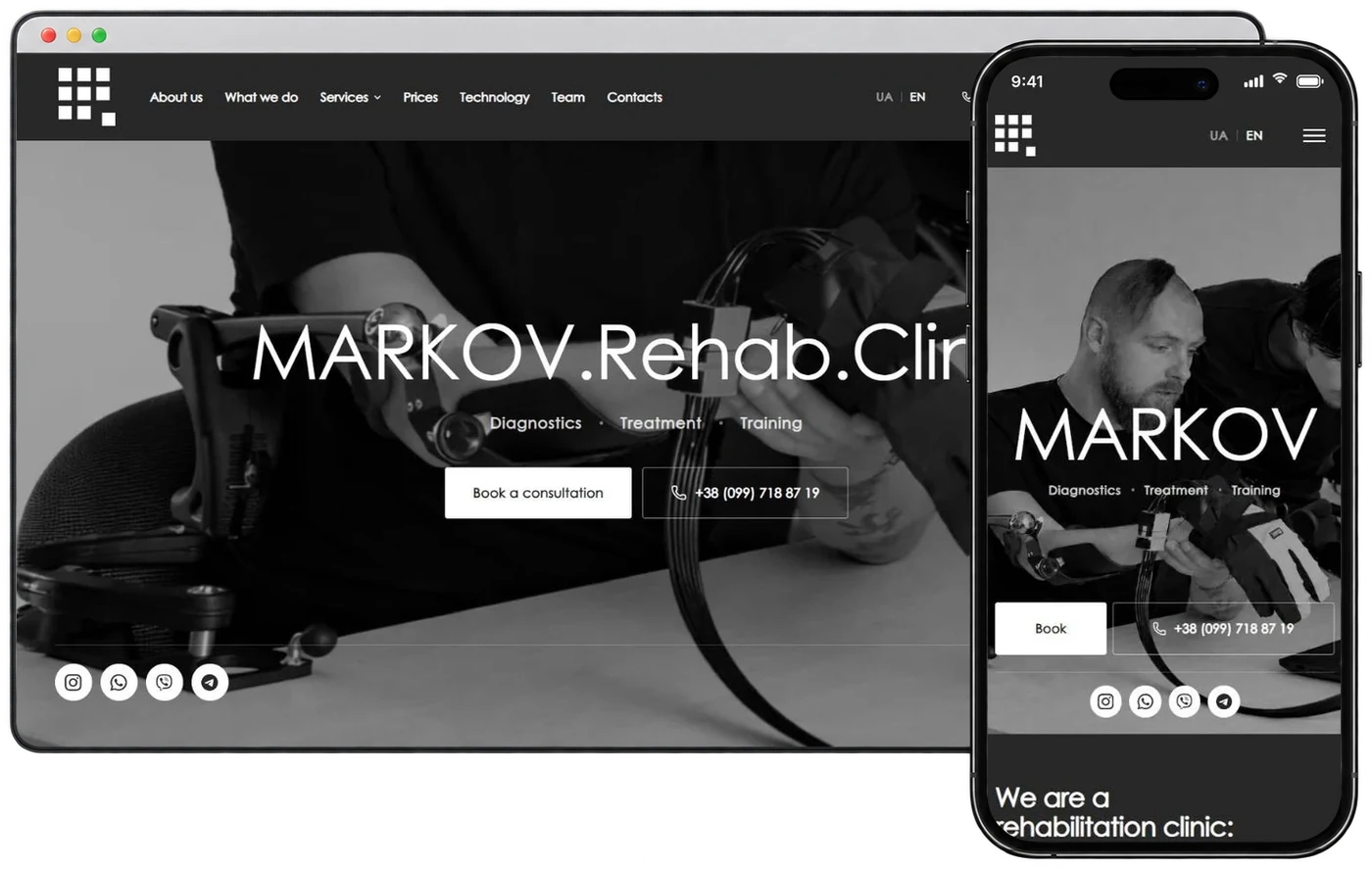
MARKOV.Rehab.Clinic helps patients recover after illness, surgery and injuries, treats chronic pain and runs diagnostics (ultrasound, EEG, ENMG). The clinic combines acupuncture, cupping therapy and other Chinese medicine methods with device-based rehabilitation, physical therapy and psychotherapy. It is a clinical base for a university department of general surgery, anesthesiology and palliative medicine, teaches the basics of Chinese medicine and acupuncture, and provides rehabilitation for service members and veterans.

Gua sha, cupping therapy or the Redcord suspension system are just names to many patients. Until a patient understands what will be done and why, they do not book an appointment.
A patient with back pain looks for a doctor, a veteran looks for reimbursement terms, and a doctor who wants to train looks for acupuncture courses. Mix it all together, and each of them gets lost in information meant for someone else and leaves.
Before treatment, a patient wants to know who will see them and what equipment will be used. If the site does not show this, they choose a clinic they know more about.
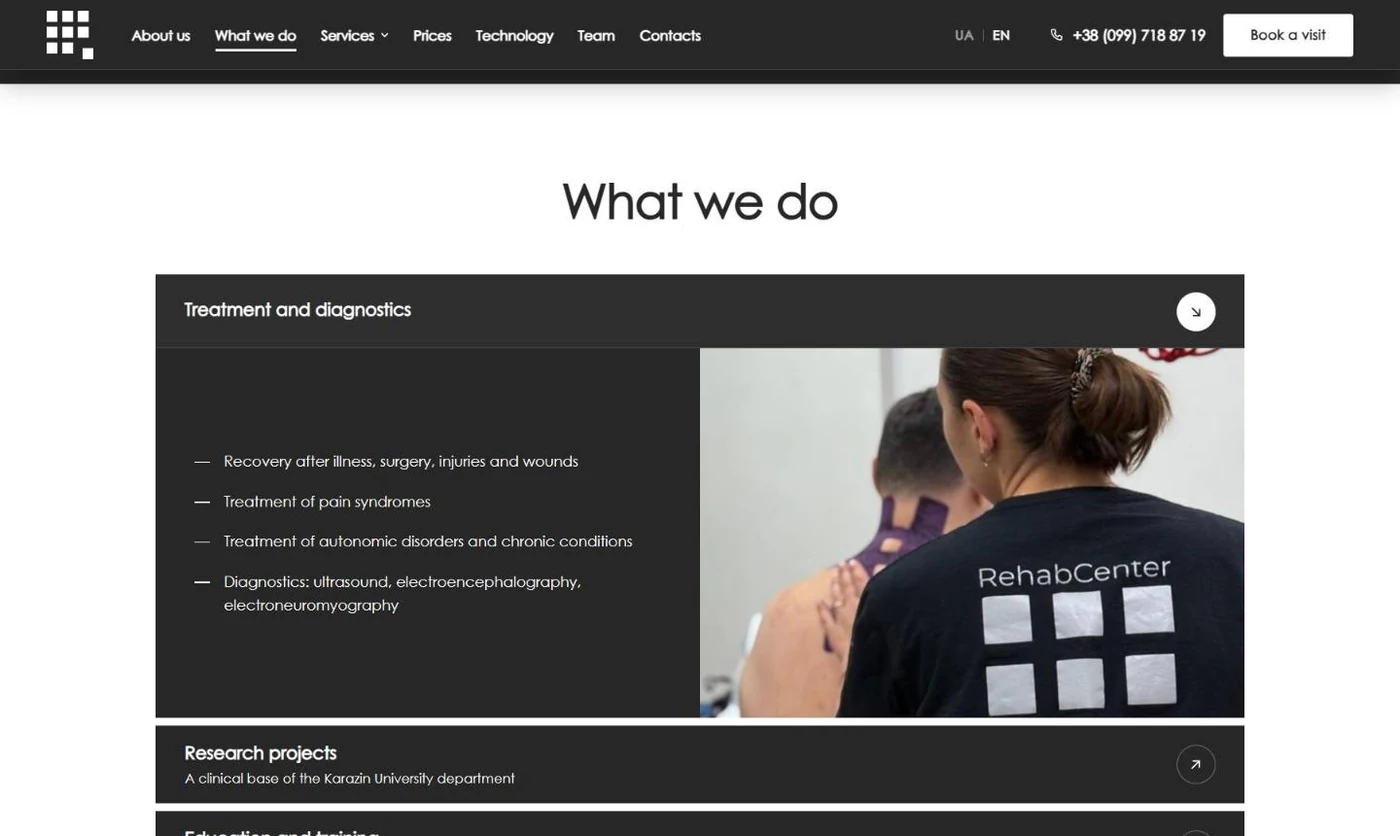
A patient, a service member and a course student open the site with different questions. That is why the section about the clinic is followed by separate blocks for each area, from treatment and diagnostics to research and training. A service member sees right there that 50 to 100% of the course cost can be reimbursed and that recovery can fit into a 1-2 day rotation break.
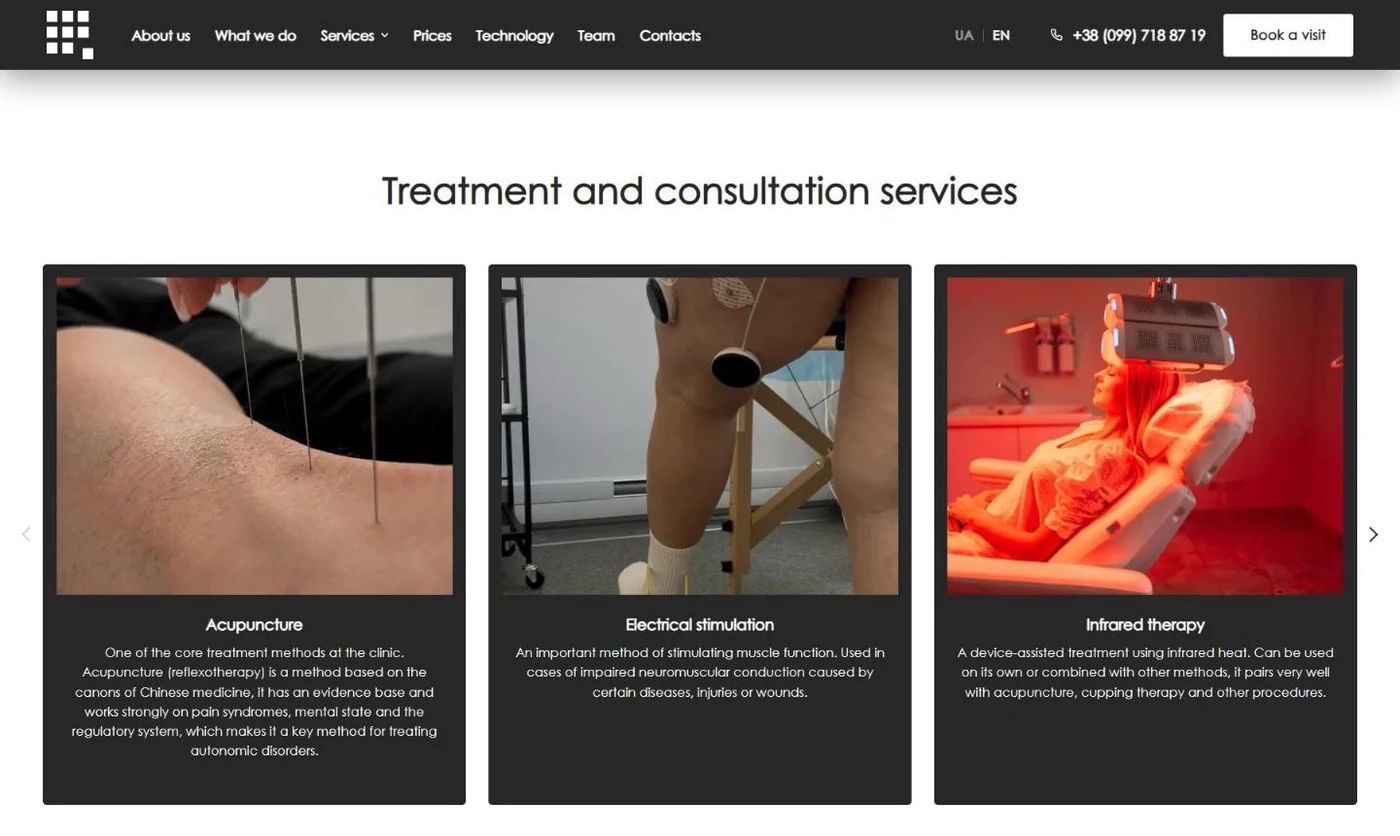
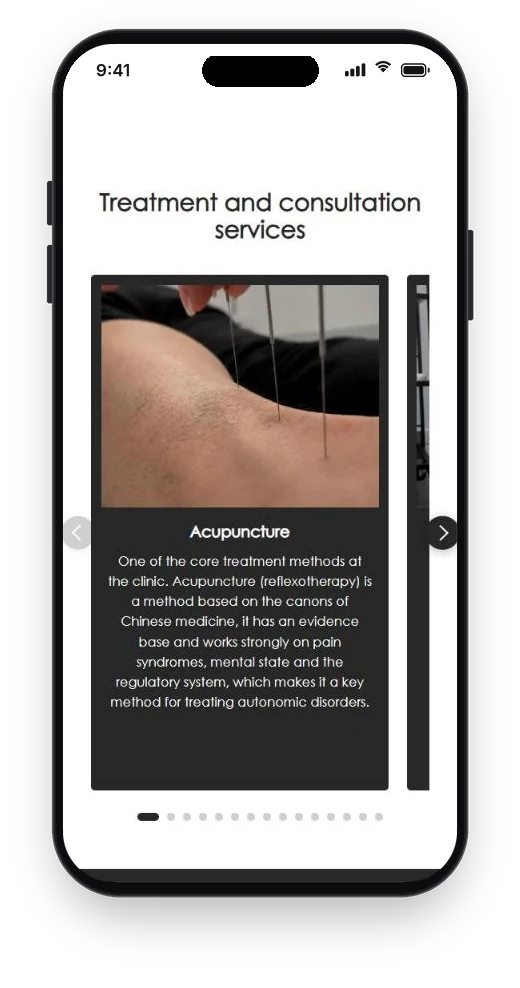
A name like “segmental myofascial correction” tells a patient nothing. So every service has a photo and a short description of the procedure, and acupuncture, one of the clinic's main methods, comes first. Diagnostics has its own section, so a patient who needs an exam first does not have to search for it among the procedures.
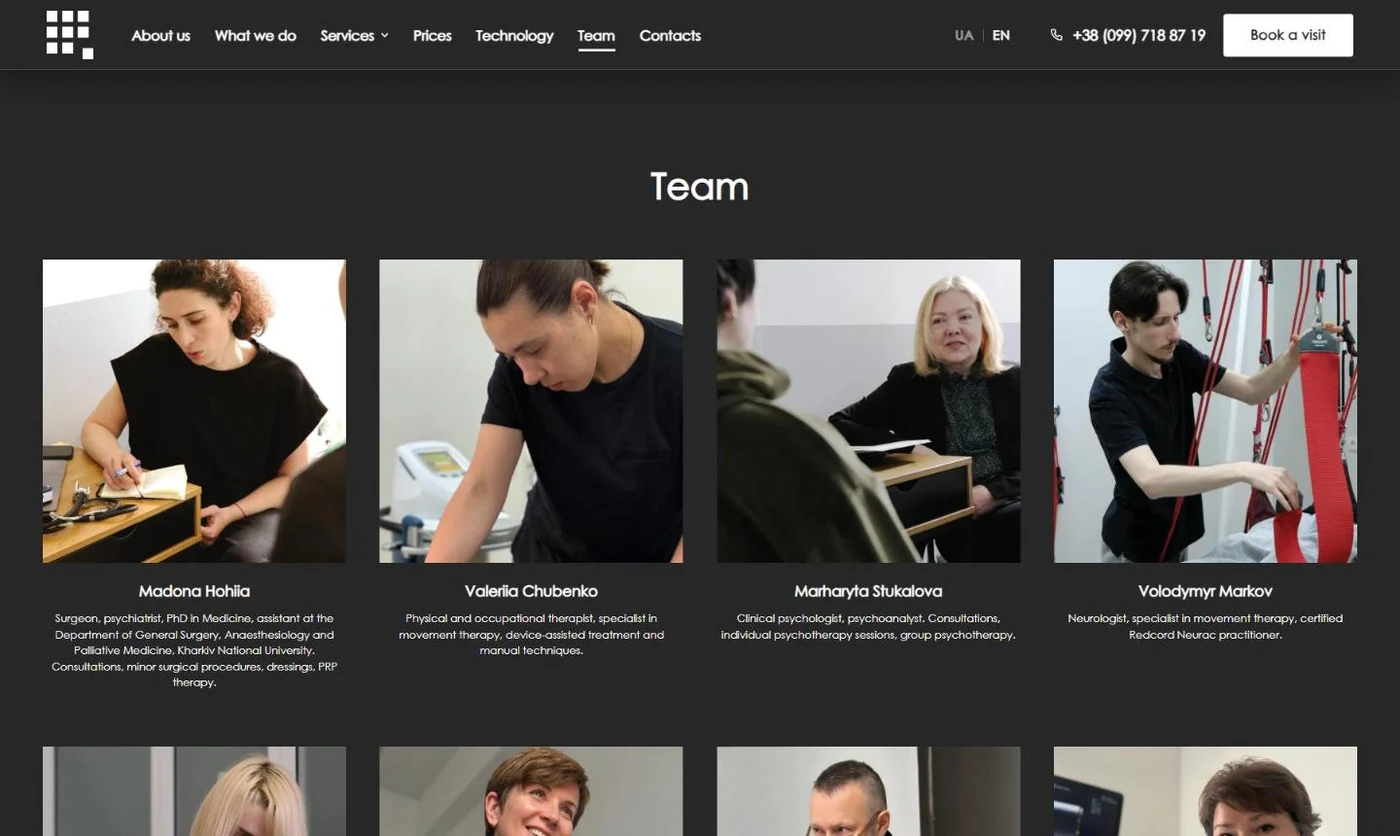
Before booking, patients want to see their doctor. The team section lists the specialty, academic degree and procedures next to each photo, and the technology section shows the equipment, from a hand function recovery device to a centrifuge for PRP therapy. The patient picks a doctor for their condition and knows what they will be treated with.
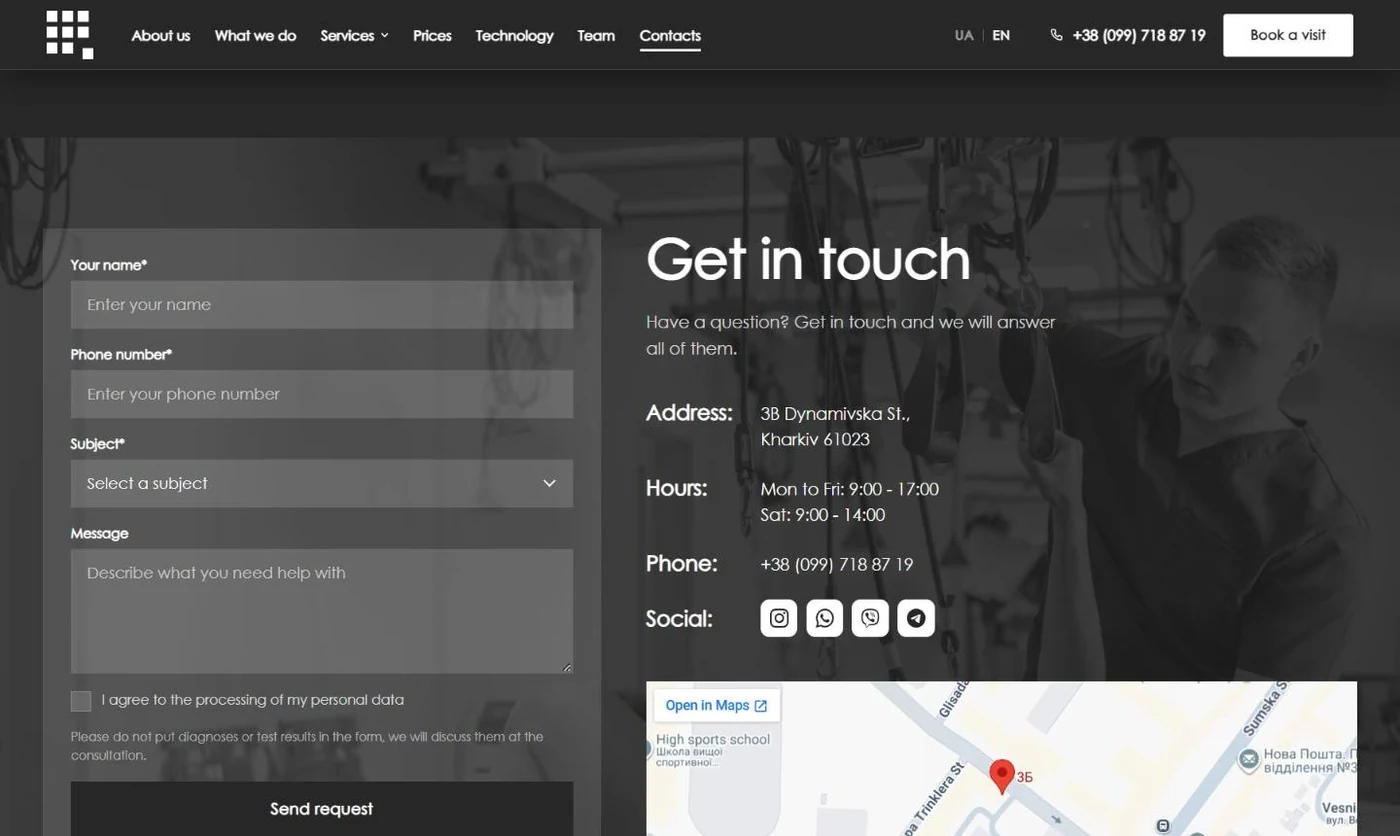
Patients often do not know which specialist they need, and they do not want to describe a diagnosis in a website form. The form asks only for a name, phone number and topic, from rehabilitation to psychological support, and a hint says plainly that diagnoses will be discussed at the consultation. The administrator calls back already knowing what the request is about.
The project support section tells about a nonprofit that funds research and treatment for service members. Visitors can donate online with a button or a QR code.
The clinic's partners include a university medical school, a veterans' fund and the Acuschool school of Chinese medicine. Each one is linked to its own area of work (research, veteran rehabilitation or training).
Messenger buttons sit right below the first screen and in the contacts, along with the address, opening hours and a Google map. A patient can message the clinic or get directions straight from the page.
The clinic gets appointment requests from patients who already understand what acupuncture or Redcord is and know which doctor they are going to see.
A veteran, a patient and a course student see their section right away, and the administrator does not have to explain over the phone what the clinic does.
The specialists' academic degrees and certificates are visible before booking, so patients choose the clinic by the people who will treat them.
Every request already has a topic, so the administrator matches a specialist and an appointment time right away.
The English version with the same services and team is clear to international patients and partners without a translator.
The clinic team adds a new doctor, service or news post in the WordPress admin on its own.
Lifetime guarantee on fixing bugs in our work, written instructions and training materials for the team.
If your question is not answered here, message us and we reply in writing.
Ask a questionThe MARKOV.Rehab.Clinic website was built by the Bravo Digital team. It is a multilingual WordPress site with an English version.
A corporate website from Bravo Digital costs from $350, and we confirm the exact amount after a short brief. The price depends on the number of sections, language versions and forms.
Yes. We build language versions with the same sections, services and team, and put a language switcher in the site header.
Yes. We build a booking form where the patient picks a topic or a doctor, and the request goes to the administrator by email or Telegram.
Yes. We build a team section with a photo, specialty and procedures for each doctor, and an equipment section with photos of the devices.
Get a quote
Thank you!